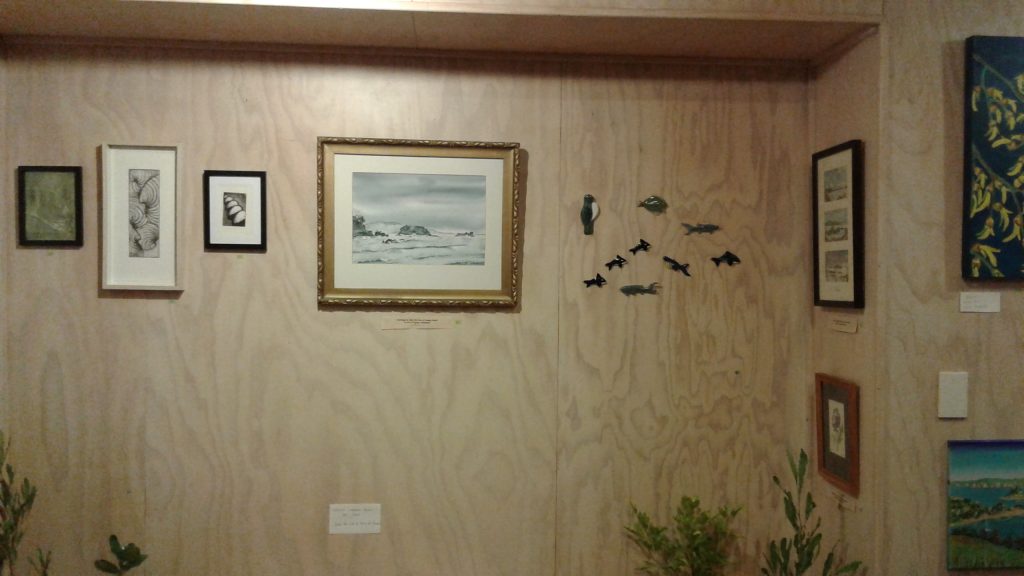
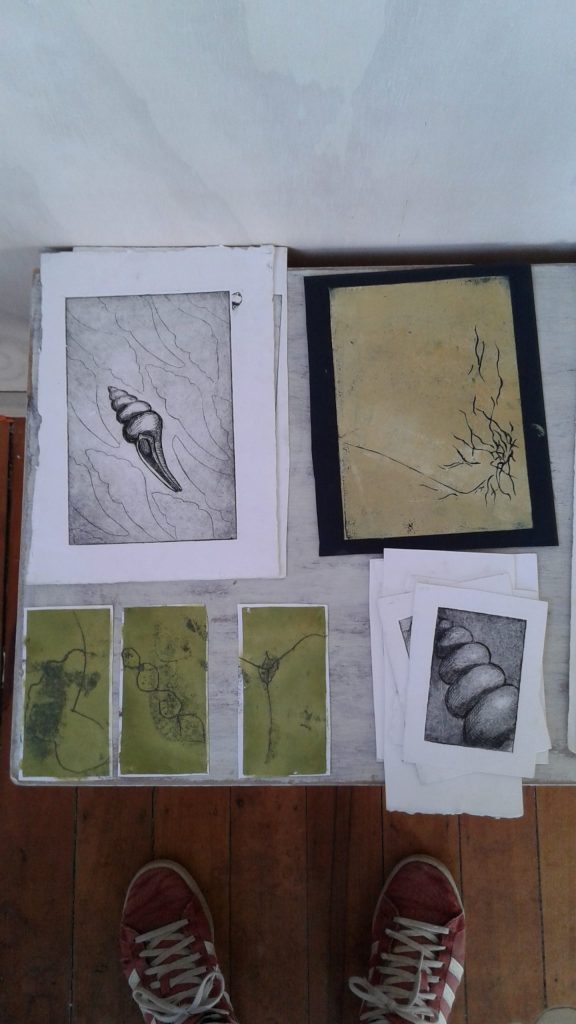
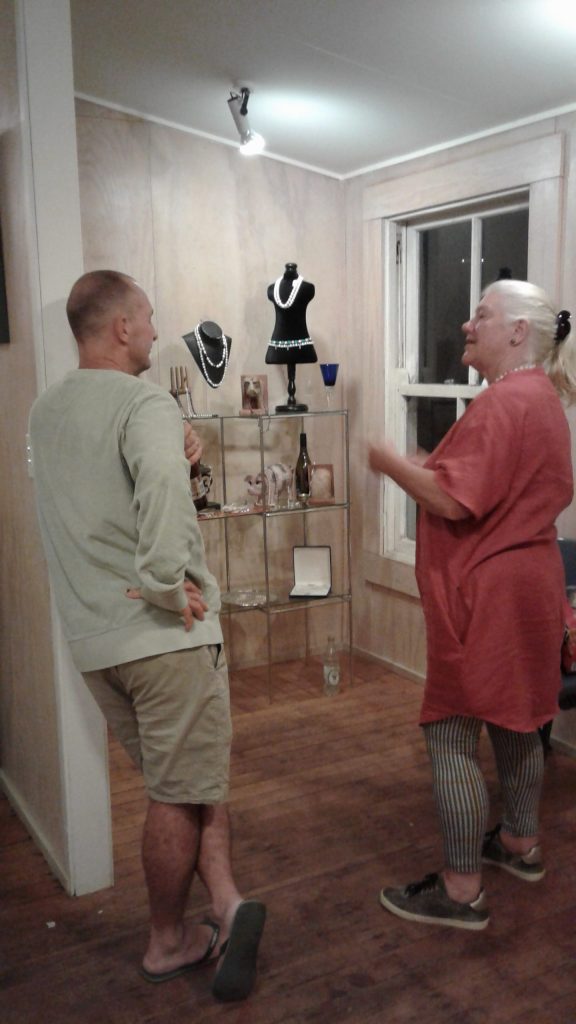
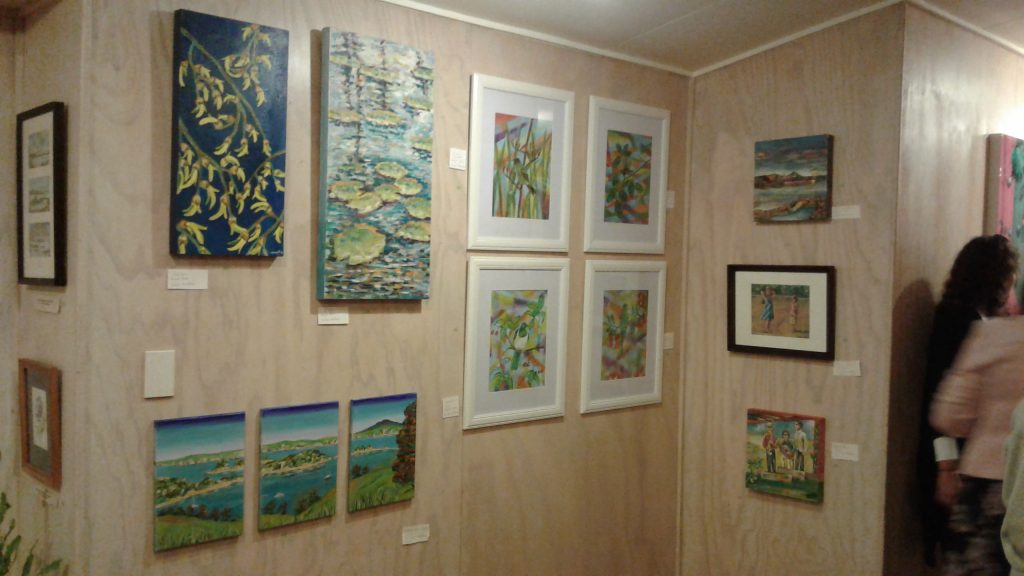
My documentation of the event could have been better, but I was a tad flustered as I was still running around at 5pm trying to assign numbers to the art work for sale. Thankfully Holly was keeping calm like a professional.
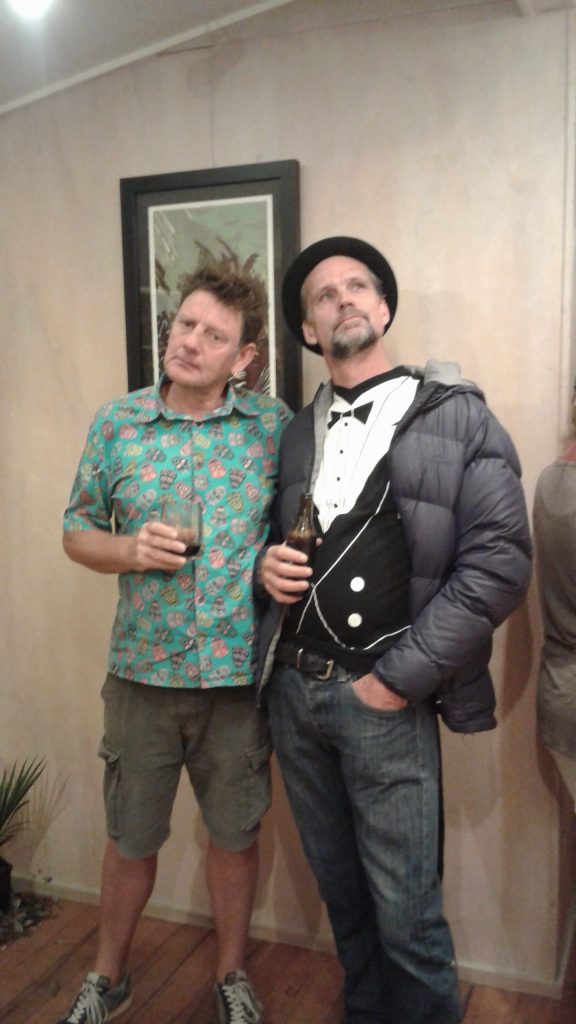
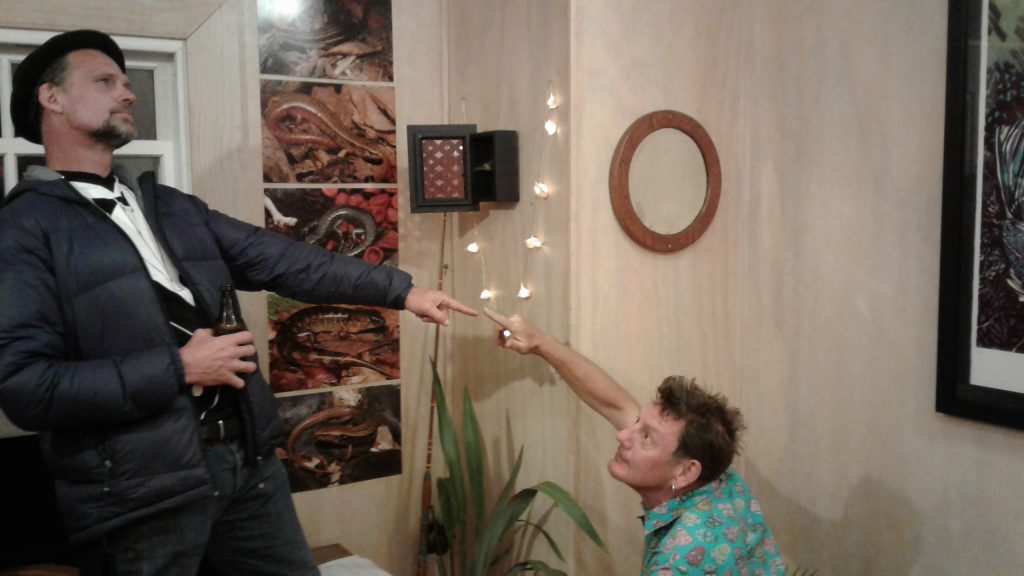
Dylan and Simon were happy to pose for paparazzi shots, but sadly I missed the opportunity to take any photos of the throng. I was too busy debating about how to play sea shanties successfully through the speaker to pay proper attention. I can confirm the ladies of the Backhouse-Smith household were the height of glamour, and I’m dismayed at my failure to document their fabulosity. 🙁
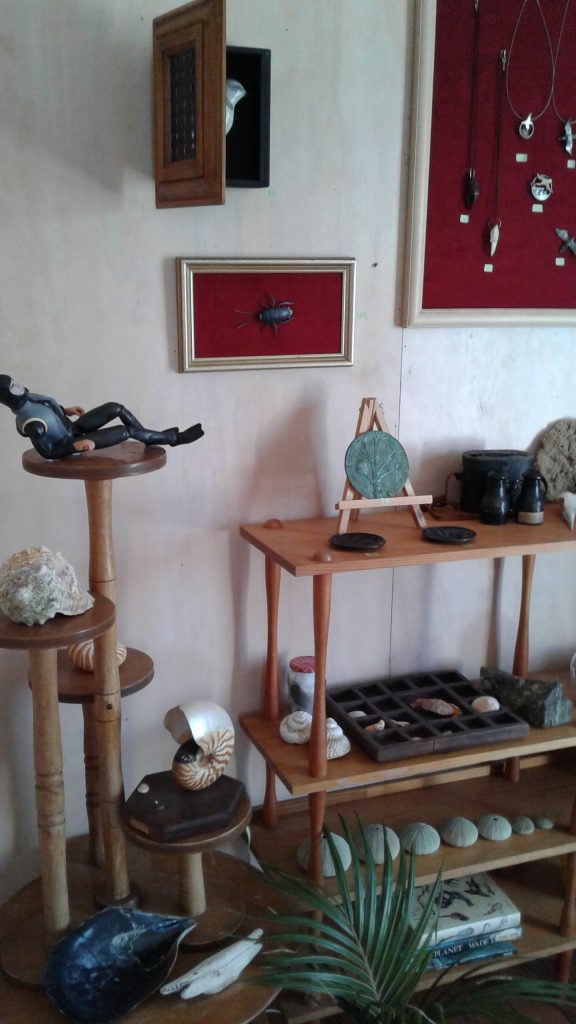
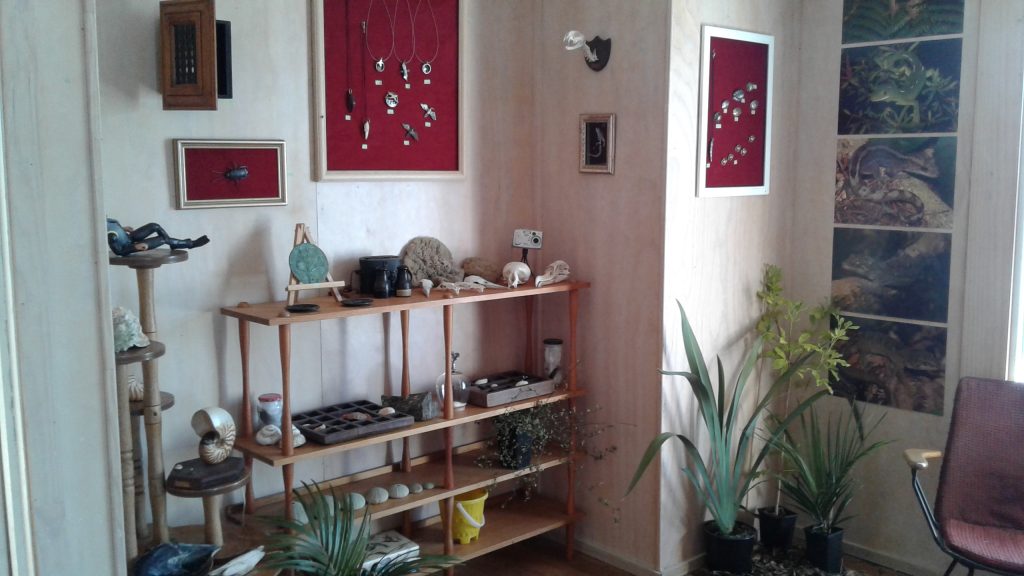
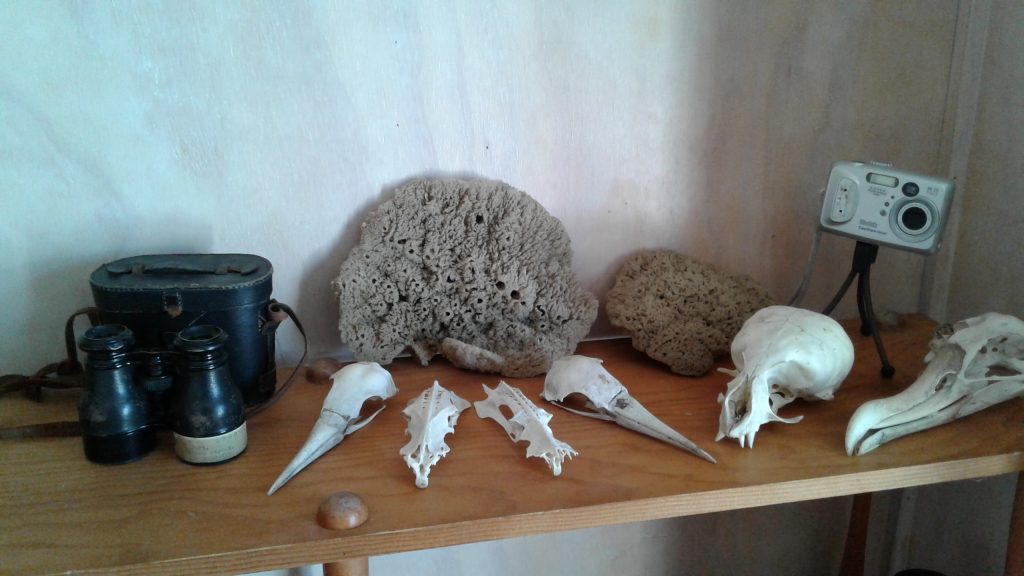
There was a brief flurry of consternation as Billie the Dog opportunistically made off with McCann family heirloom ‘shark-stick’, but the treasure was quickly retrieved, and the saliva removed. As Josh remarked drily “well technically, it is a stick”. I’ve made similar faux pas in galleries myself, so don’t wish to cast aspersions at Billie. Scuba Steve was also a very popular exhibit, as were Dylan’s beach fossicked skulls. A certain wall-mounted viciously fanged skull kept the punters guessing, and many were surprised to discover it was a feral cat.
‘Shark stick’ in lower center left of image.
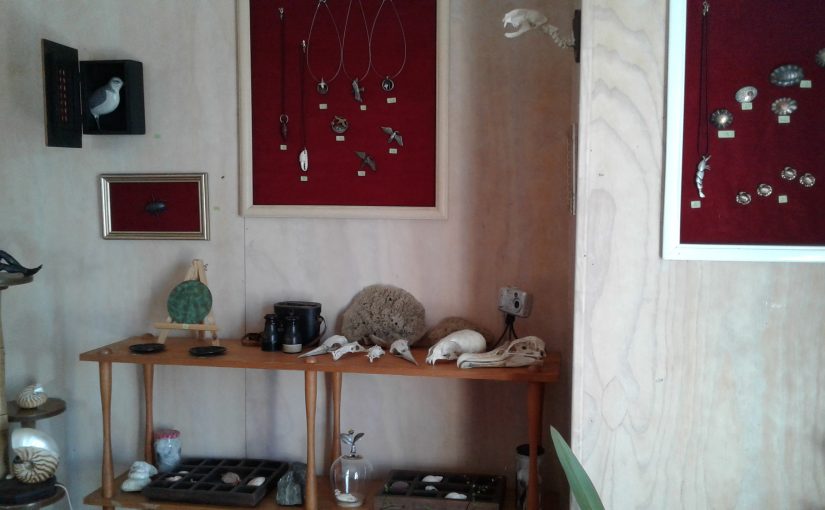
The Tiny Museum in situSkulls, sponges, and viewing devices.
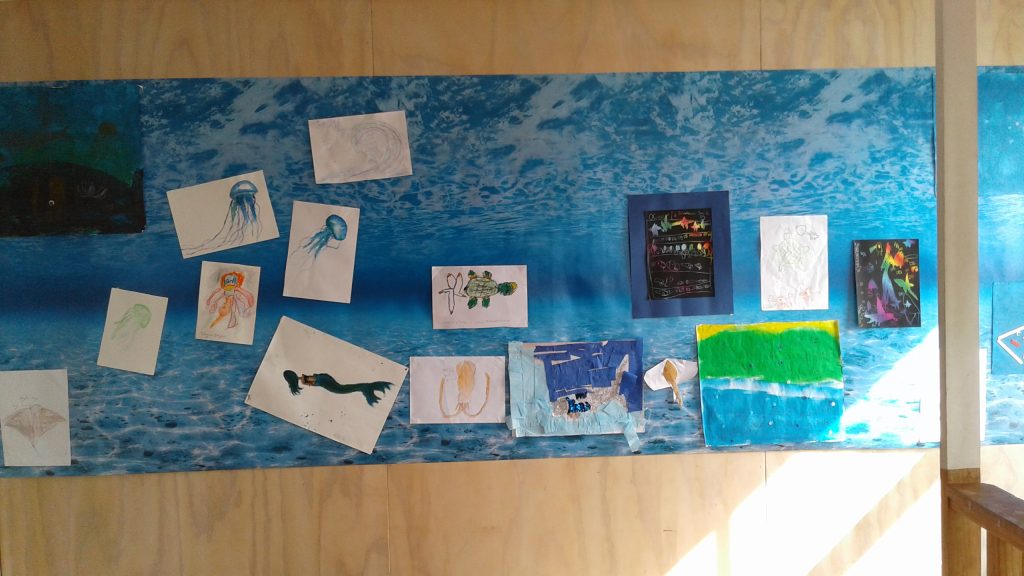
Many thanks to everyone who came to the opening event, visited the Tiny Museum, brought along delicious snacks, and generously lent their treasures, display units, trees, and artwork over the Easter period. The weather was a little unkind, but the turn out was pretty good regardless. I was particularly happy to see how many Rakino kids turned up with their beautiful artwork to stick to the undersea background!
Art from Rakino Kids!
The purpose of the Tiny Museum portion of the Easter art show was to draw attention to marine and terrestrial environment of Rakino, to celebrate our 20 years predator-free status, but also to make us think about where we might go from here. The displays of gecko & skink posters will remain for now, as will the posters of the photographs taken of the Woody Bay & Otata snorkel trips. There are QR codes next to some items, and if you scan them with a code reader you can find out more about them. There is also plenty of artwork still available. Money was raised for the Westpac Helicopter thanks to Harriet’s generosity, and there is still potentially more money to be raised thanks to a further donation of an art work by Anne McCabe, courtesy of Mark & Julianne.
Work from Julianne Taylor, Christine Rose, Albie McCabe, and Carolyn MacKenzie.
I’m arrogantly confident I’m speaking for all who turned out when I say that JT & Agnostics with Holly Shepheard was another ripper of an island event.
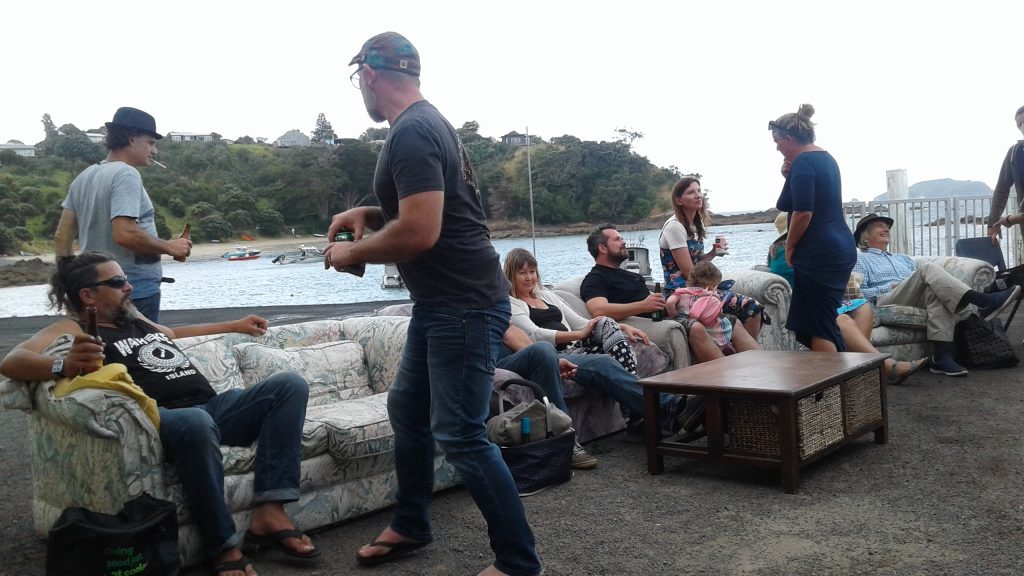
The pre-gig outdoor lounge with likely lads.
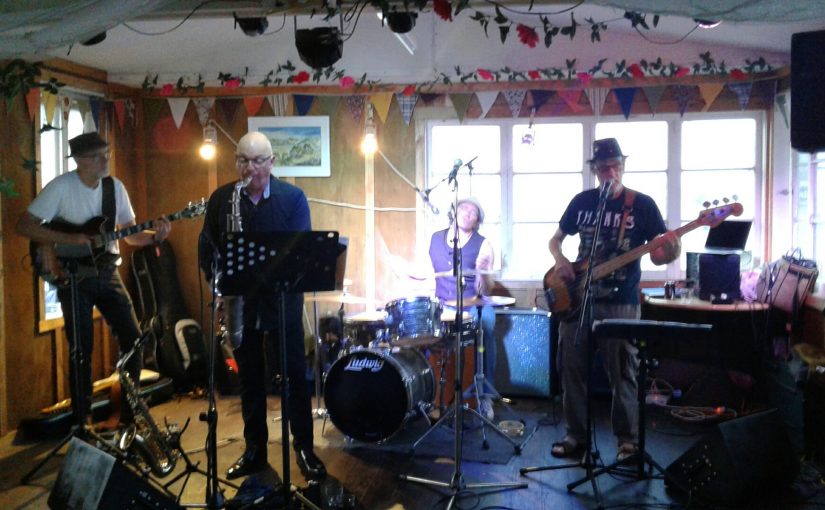
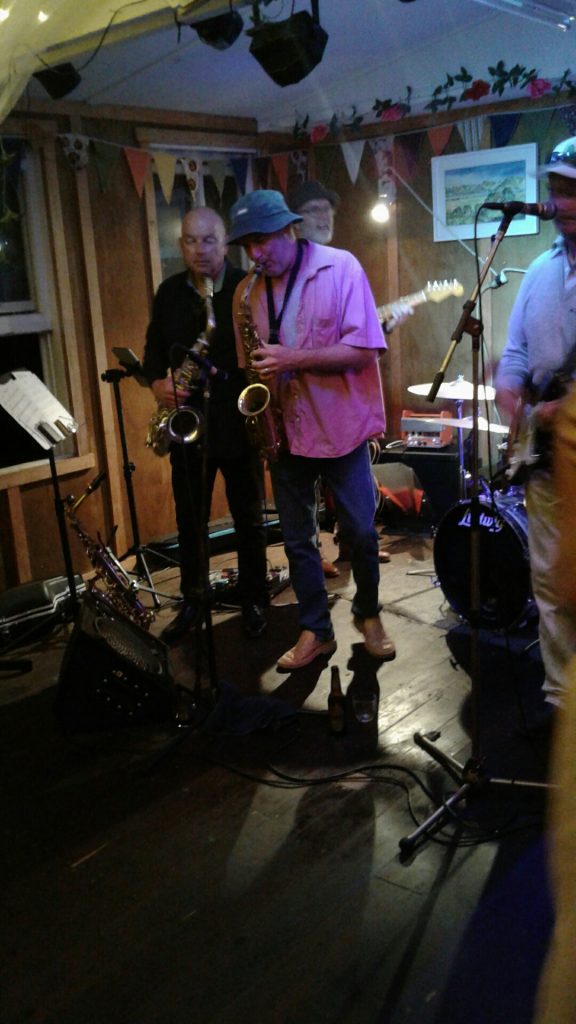
JT is bass player John Thomson, and the Agnostics are a confection of Maciek Hrybowicz on guitar, Bill Forrest on saxophone, and Freddie Limbert on drums, all accomplished musicians from Waikato.
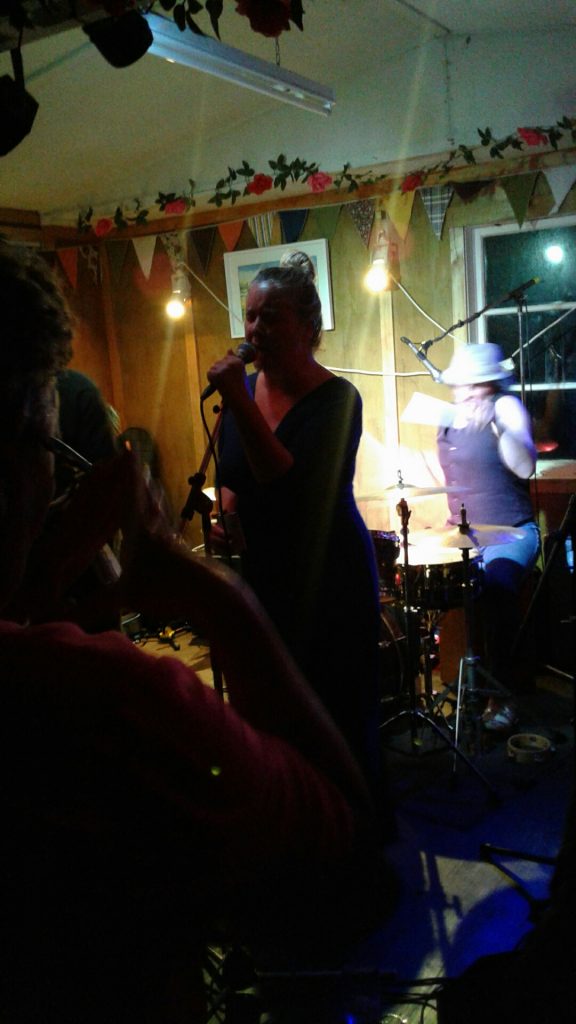
Holly Shepheard guested on vocals, and we were also treated to a set featuring Massey Ormsby as guest vocalist, with the addition of Rakino’s Tom Donaldson on saxophone.
The first set seduced the audience in gently with a set of blues originals by John, followed up by a second set in which Holly exercised her impressive pipes to the approval of the enraptured crowd.
Holly exercising her impressive pipes.
Guilty, as always…
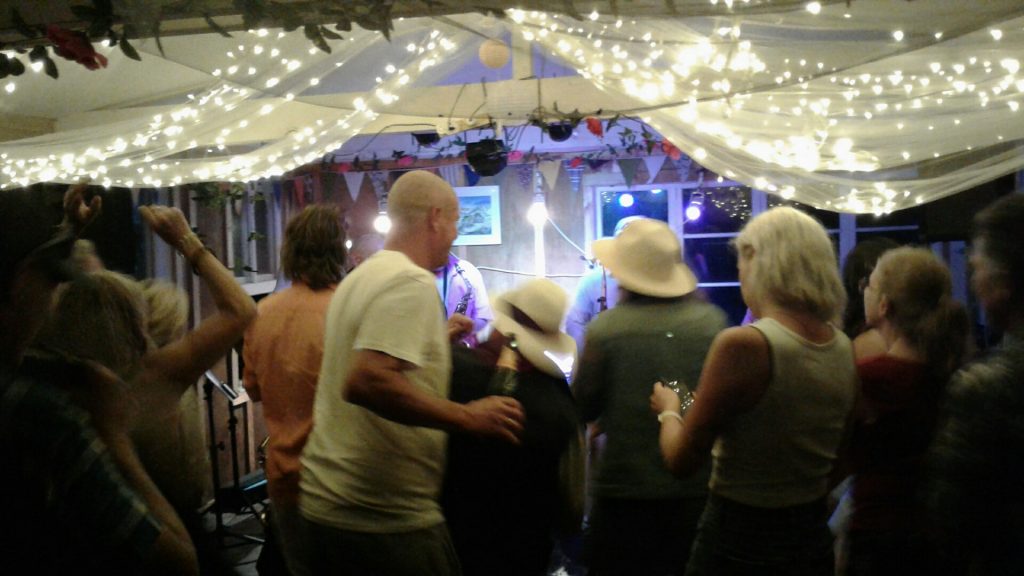
Rakino knows how to turn on a hooley, so it wasn’t long till the carefully placed chairs were thrust back against the walls and the the hedonism started in earnest, led in large part by Mr. Garth M. Broadhead who knows how to cut a mean rug. He spun and dipped his dancing partners with aplomb, and kept the admiring audience in thrall.
Mr Garth M. Broadhead rug-cutting.
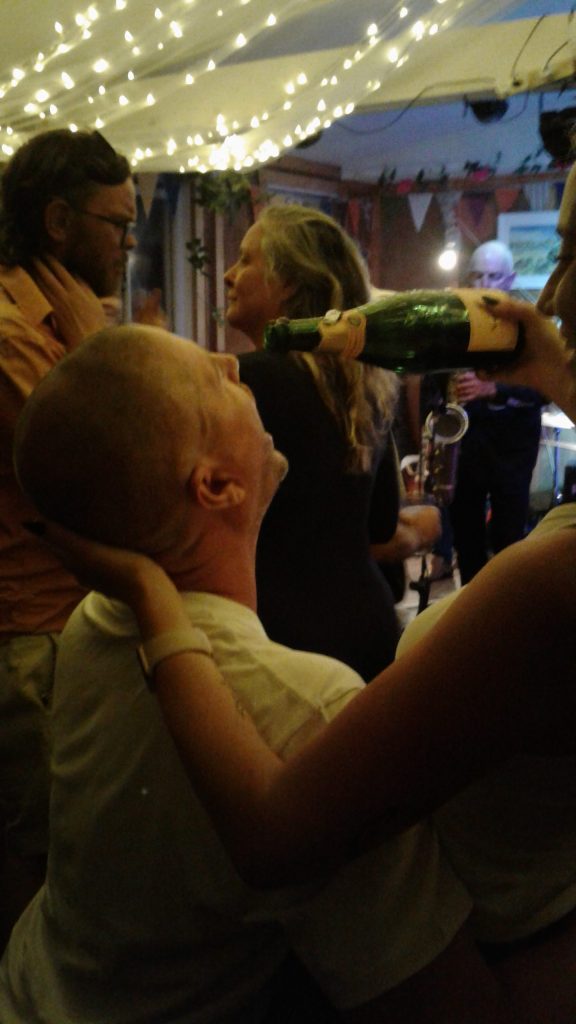
The rest of us ponied and chicken-scratched, and Billie the Dog participated in some horizontal dance moves later in the evening. Even the committed outdoor loungers and boozers were enticed inside for a bacchanalian blues boogie.
Bacchanalian Blues Boogie.
My abiding memory of the third set was of the band with Massey at the helm doing a beaut version of ‘Wild West End’, making Dire Straits sound soulful and cool… again. 🙂
Tom on sax!Massey to the right on vocals!
Our much-loved Hall juts precariously and spectacularly above the tide, and as the last set was ending I glanced out the open window and to my discomfort spotted the sea churning in, the inundating waves of the very high tides of recent days. I noticed the sea was at wharf height and the waves had created visible puddles as we hefted the couches back indoors post-gig. The after parties continued for those with fortitude or limited sense of self preservation, and I had to crawl Hulk-wards at 3.30am because I’m a lightweight. Blues and sybaritism were the winners on the day.
It started off as a whim to get Anthonie Tonnon to perform on Rakino, and grew from there into a weekend of events and activities…
Proceedings kick off on Friday Jan 8 at 5pm with an art exhibition opening Upstairs at the Rakino Art Gallery. There will be a range of works to peruse and purchase, paintings, prints, woodwork, and jewellery, made by Rakino locals and Rakino friends. Join us for a celebratory glass of wine and nibbles. As always with island gatherings, feel welcome to BYO!
10am till 12pm Saturday morning starts with a Rakino Nursery open morning with John MacKenzie on hand to advise and take orders for the coming winter’s tree planting. The baby trees are looking lush with lots of new growth. They’ll look even better planted in your backyard, and our burgeoning island wildlife will appreciate the gesture! Please walk down to the nursery via the track from the AT land on South Pacific Rd. https://www.rakino.org.nz/event/rakino-plant-nursery-open-morning/
1pm till 4pmRewa Grimsdale will be holding a flax weaving workshop at 21 Woody Bay Rd. (Josh, Holly, & Billie’s house). Participants will have the opportunity to learn to prepare flax for weaving, and make a flax flower and loose woven kete. https://www.rakino.org.nz/event/flax-weaving-workshop-with-rewa-grimsdale/ I’m keen on this one; harekeke is a material there’s no shortage of on Rakino!
From 3pm till 5pm contemporary jeweller Mia Straka will be holding a talisman making jewellery workshop at 21 Woody Bay Rd. You can get a feel for her work here: http://www.miastraka.com/ Mia’s work is sculptural and thoughtful, and this workshop will probably suit ten year olds and up.. https://www.rakino.org.nz/event/mia-straka-jewellery-class/
8pm – Anthonie Tonnon begins his performance at the Rakino Community Hall. I really can’t emphasise how lucky we are to have him perform on Rakino. I can only urge you to purchase tickets here: https://www.rakino.org.nz/anthonie-tonnon/ because this will be a really unique experience. You can learn more about Anthonie here: https://www.anthonietonnon.com/
Anthonie Tonnon
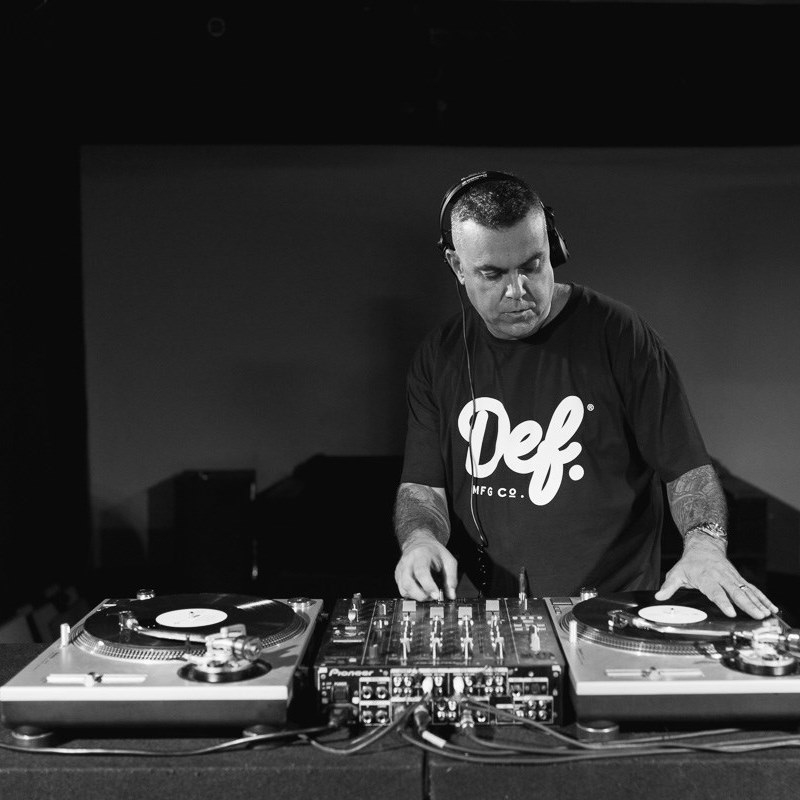
Sunday the 10th starts at a leisurely 12 pm with a flurry of activities. DJ Hudge, Bobby Brazuka, and Friends will kick things off down at Sandy Bay with Beach Beats. Koha and pizza deals available courtesy of Alf’s Woody Bay Pizzeria. https://www.rakino.org.nz/event/sunday-wind-down-with-extra-cheese/
Drag the teens out of bed for these inspirational and informative chats down at Sandy Bay. Bribe them with beats and pizza!
Day
Date
Depart Stanley Bay
Depart Downtown
Depart Rakino
Arrive Downtown
Arrive Stanley Bay
Fri
Jan 8/21
10.40am
11am
11.55am
12.40pm
1pm
Jan 8/21
6.50pm
7.45pm
8.30pm
8.50pm
Sat
Jan 9/21
10.40am
11am
11.55am
12.40pm
1pm
Jan 9/21
3.15pm
3.35pm
4.30pm
5.15pm
5.35pm
Sun
Jan 10/21
10.40am
11am
11.55am
12.40pm
1pm
Jan 10/21
3.15pm
3.35pm
4.30pm
5.15pm
5.35pm
Belaire’s timetable for the weekend of the 8th/9th/10th
Sadly the event ‘Walks, Talks, and Snorks’ has had to be postponed due to America’s Cup racing. As soon as the Hauraki Gulf is no longer a four-lane highway, the event will be re-instated.It will follow the same format, however, so read on…
Saturday, January 16 and we have more treats in store! Walks, Talks, and Snorks is an eco fiesta on Rakino. We are very lucky to have a visit from scientists and enviromentalists Tim Haggitt, Tim Lovegrove, and Kerry Lukies, thanks to the efforts of Elisabeth Easther. This is a fantastic opportunity to learn more about our birdlife, our marine environment, and our little blue penguins. Those with good swimming skills and their own gear have the opportunity to participate in a guided snorkelling experience with Tim Haggitt in Sandy Bay. For more details and links, visit https://www.rakino.org.nz/event/walks-talks-and-snorks/
RRA Meeting, October 25th 2020 10am… a beautiful sunny day with the best part of it wasted on a 1hour 45 minute meeting that could easily have been wrapped up in an hour.
Presided over by Chairman Clews.
Apologies – Steve McCrone, Kevin Hester.
Past minutes – a brief overview
Thanks to Tom and Chris for sorting the picnic tables at Sandy Bay.
Nothing has happened about the memorial seat for Rob Everall.
The financial report was presented, not much activity. There has been a $25k grant from Foundation North which contributed to the baseline marine survey around Rakino Island..
The background to the marine survey and proposed reserve was outlined.
The usual qualms and misinformation were addressed, yet again.
Chairman Clews said that no decisions would be made without a mandate from the islanders, and Elisabeth correctly observed that any marine reserve is enormously difficult to achieve, and there are literally thousands of recreational fishers that will oppose any such move.
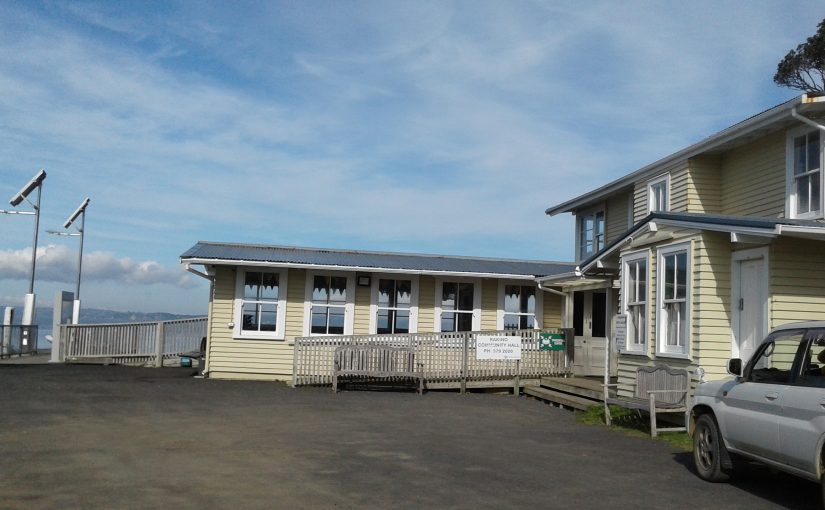
As usual, there has been no progress made on the Rakino Community Hall. We would expect no less. It appears the Auckland City Council would prefer to have the ratepayers of Rakino take over control and maintenance of the Hall.
Bev presented the Fire Report.
The firelords went off for service; two came back, one did not, as it was claimed to be no longer viable. There was a long discussion about dry fire-fighting, and the unrealistic suggestion with regard to volunteer fire-fighting education.
At this stage:
*permit only status for fires.
*20 permits issued to date.
*please get a permit that lasts over several weeks so you can have a fire when the conditions are right.
*Have water and tools on hand in the unfortunate event that the fire gets out of hand.
*Notify the community via social media if you are having a permitted fire.
*The fire signs are to be updated.
Josh said the fire pump is broken.
There was a reminder from Chairman Clews that the Fire Officers position is voluntary, and the position must be respected. He threatened to ring the police if he got wind of any miscreant behaviour. He then went on to say that all voluntary positions must be respected, and are therefore not open to any robust criticism. It’s not the achievement or lack of that matters; it’s the volunteering to be on a committee that is important. There was some railing against people going off and doing things willy-nilly without committee consultation.
Chairman Clews then held forth for some time on his opinion that the Fire Brigade wanted no responsibility for Rakino Island’s fire-fighting equipment because of that hoary old chestnut ‘Health and Safety’. Happily Matt Maling kindly pointed out in his professional capacity as a lawyer that you are exempt from prosecution under the Health and Safety Act if you are a volunteer.
Discussion then commenced with regard to the placement of the water tank on DoC land, and the complaint that ensued. The water tank has been relocated to Hawkins land, but not without a considerable amount of time-wasting and double handling. There was a plea for people to ask questions first before complaining to authorities.
Many people appear to be unaware that there was an intention to place a water tank and utility shed at the top and center of the island on the AT land, as well as being unaware there was an intention to place a heli-pad in that area, specifically and only for the emergency Westpac Helicopter to use.
This is despite last year’s minutes being published for all to read.
There will be a generator to power a siren in event of an emergency that can be heard all over the island.
General business.
Les announced that he had been bit by a dog 3 weeks ago. He has also been bailed up by dogs and knocked over by a dog. Chairman Clews suggested that Les would be better off complaining to dog control than the Rakino Ratepayers meeting, but did not threaten to call dog control about miscreant dogs himself. There is general agreement in the community that we would like more dog control, but alas this is not a view shared by dog owners.
A $1000 dollar donation will be made to the Westpac Helicopter Trust.
A secretary is needed for the committee.
A list of mooring holders was requested.
Jo brought up the perennial issue of cars and speed, with a plea for everyone to slow down because of free-ranging children and dogs, and Mark quite correctly observed that the laws of physics still apply on Rakino even if people believe other laws don’t apply, and it is concerning to see the number of children riding around on vehicles as ‘hood ornaments’.
Sarah Webb volunteered to be committee secretary.
Sheryl spoke about the new rules that apply around the inorganic collection; you must book in with the council, and you must keep the rubbish on your property.
Do not put it on the berms.
There is to be no illegal dumping, thank you.
>At this point I, the Anarchist Amanuensis, wish to make a couple of points about rubbish that were not discussed at the meeting, because I didn’t really notice until I went to place my recycling and household waste in the bins on Monday.
Firstly, not all plastics are recyclable. If you have a broken old plastic thing, chances are, it is not recyclable and should in all likelihood be put in the household waste bin.
If you take your empty bottles to the recycling bin in a plastic supermarket bag, put the bottles in the recycling, and the plastic bag in the household waste bin.
If you have used nappies or used feminine hygiene products to dispose of, for goodness sakes, scrape off the poo, wrap them up, put them in a bag, and then place them in the household waste bin. It is really unfair to subject Tom and the rubbish volunteers to gross things like dirty nappies.
We have the enormous privilege of a predator-free island, so either bury or compost your food scraps, because there are no rodents. Don’t put them in the bins if possible.
More possibility for recycling paper and cardboard would also be appreciated by keen recyclers.
Always remember; everything that comes onto the island eventually has to be removed…
Meeting closed 11.45 am
Many thanks to the provider of sausage rolls and the top notch chocolate brownies. You rock!
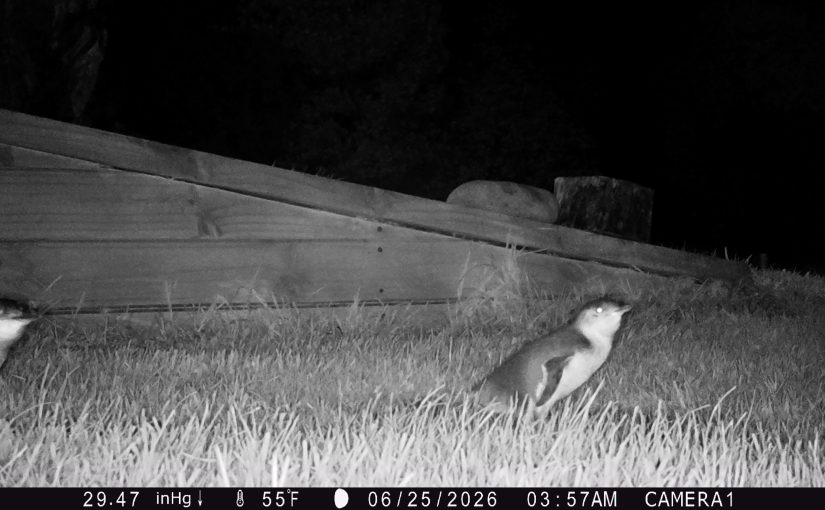
In late 2024 Waiheke Local Board generously funded us for signage, a presentation by Karen Saunders, and a trail camera, all in the aid of kororā awareness.
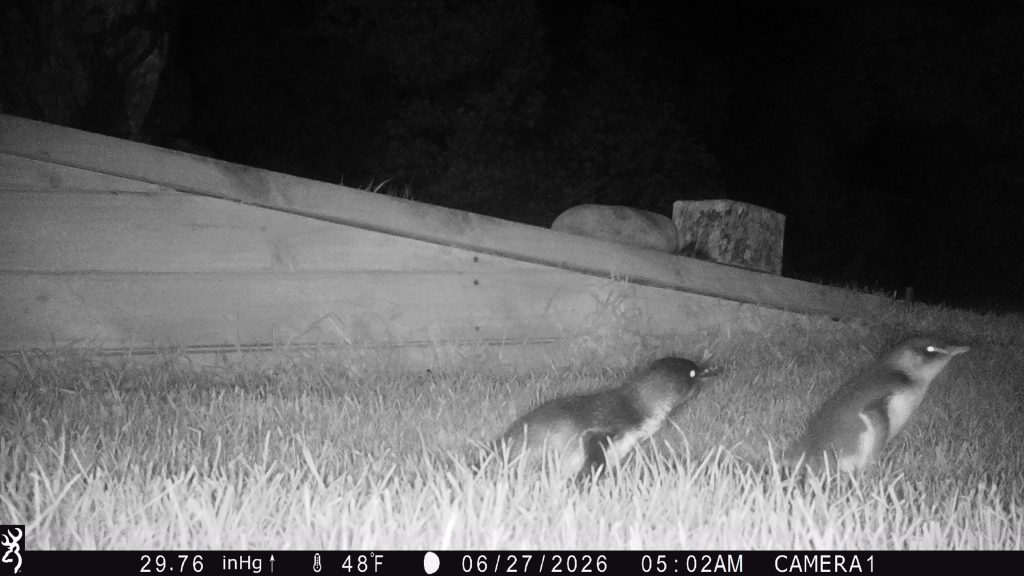
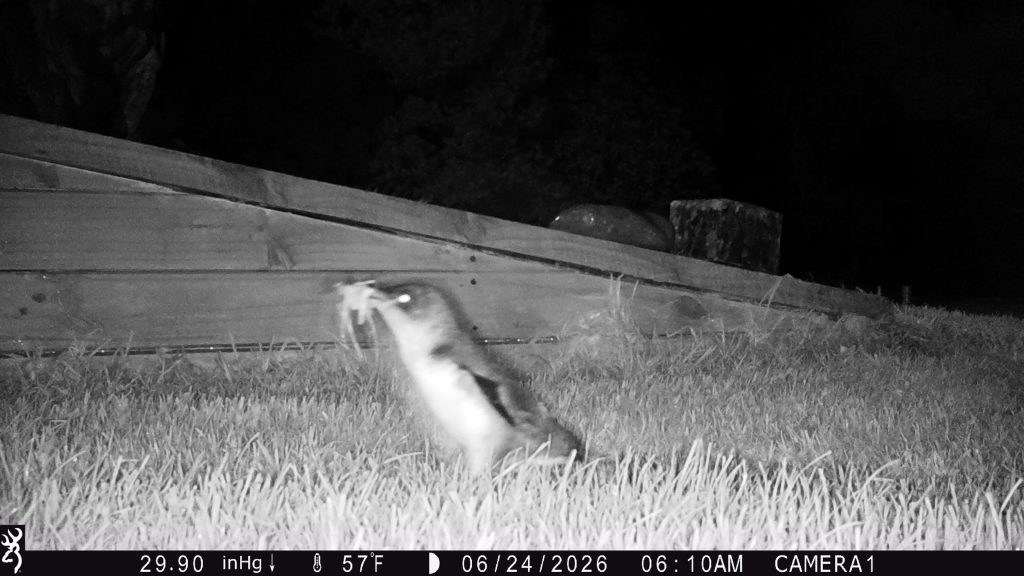
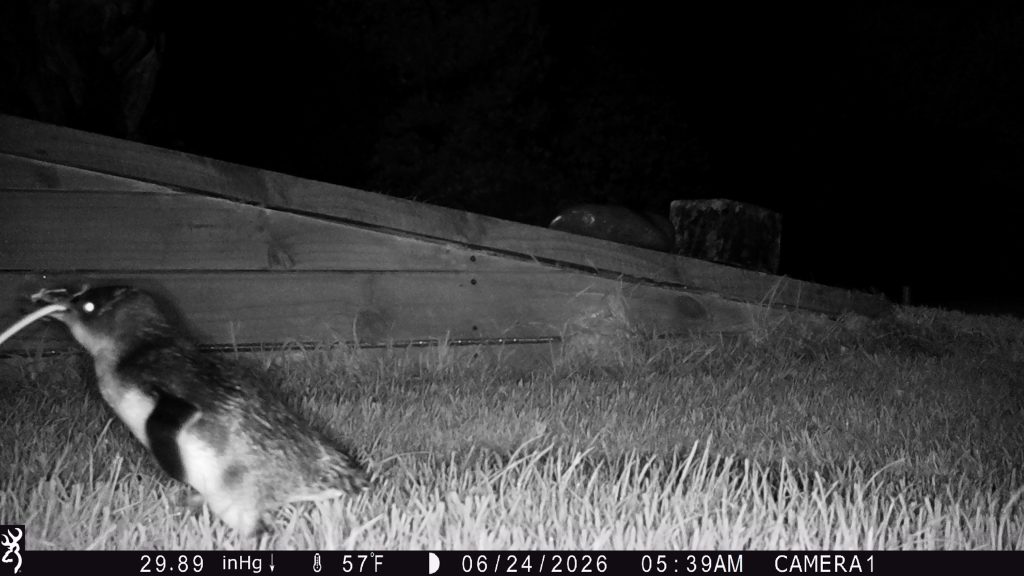
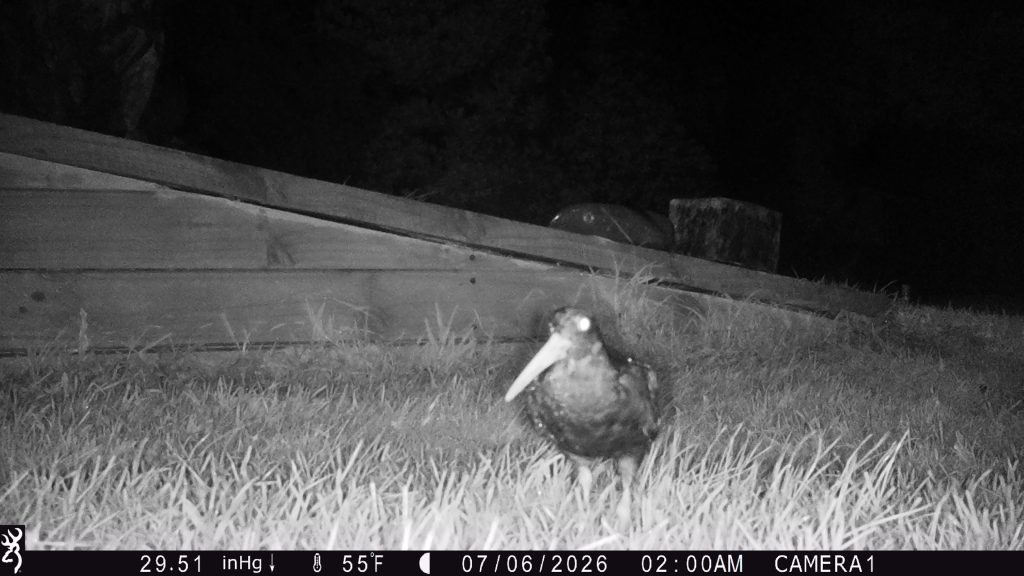
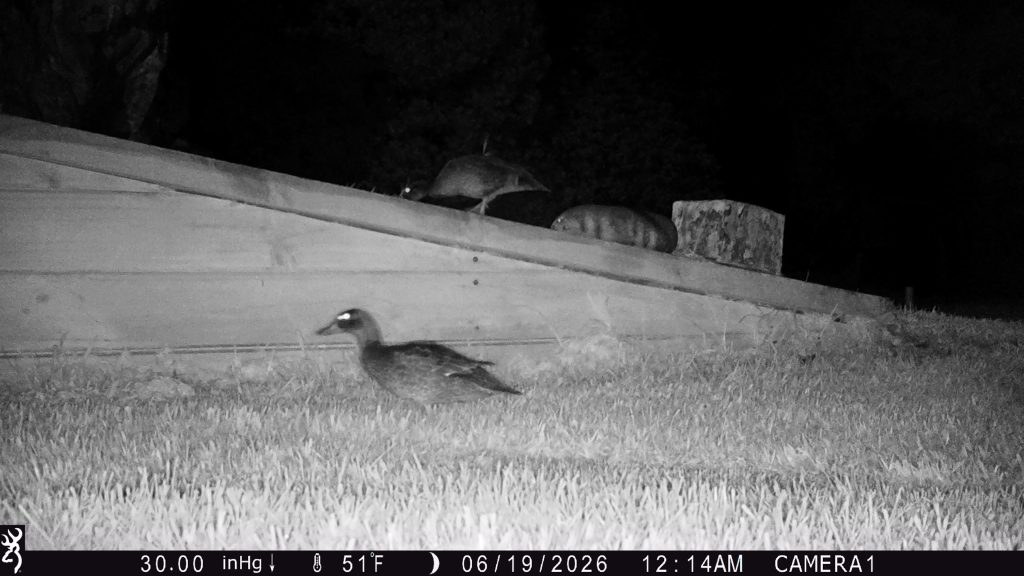
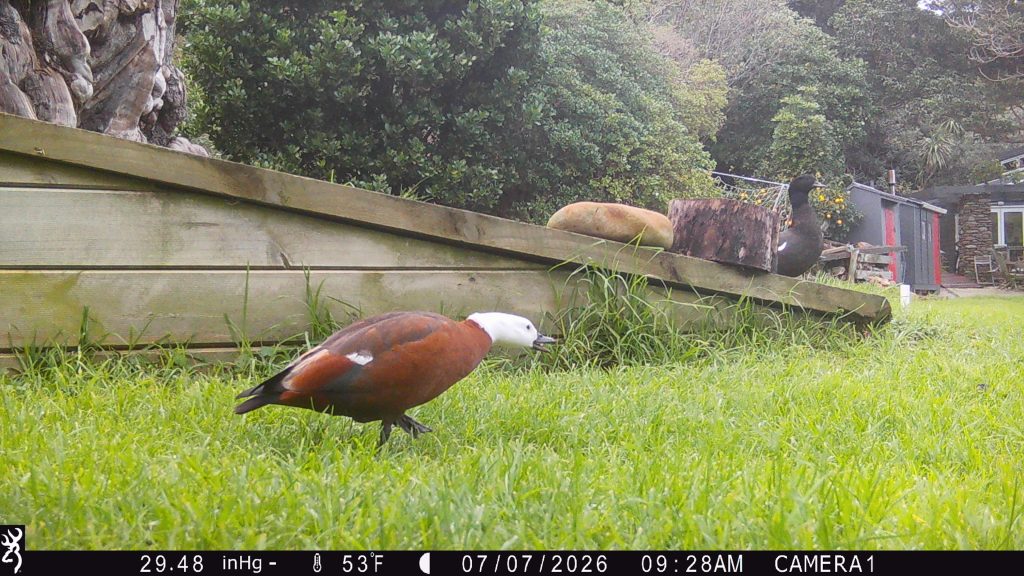
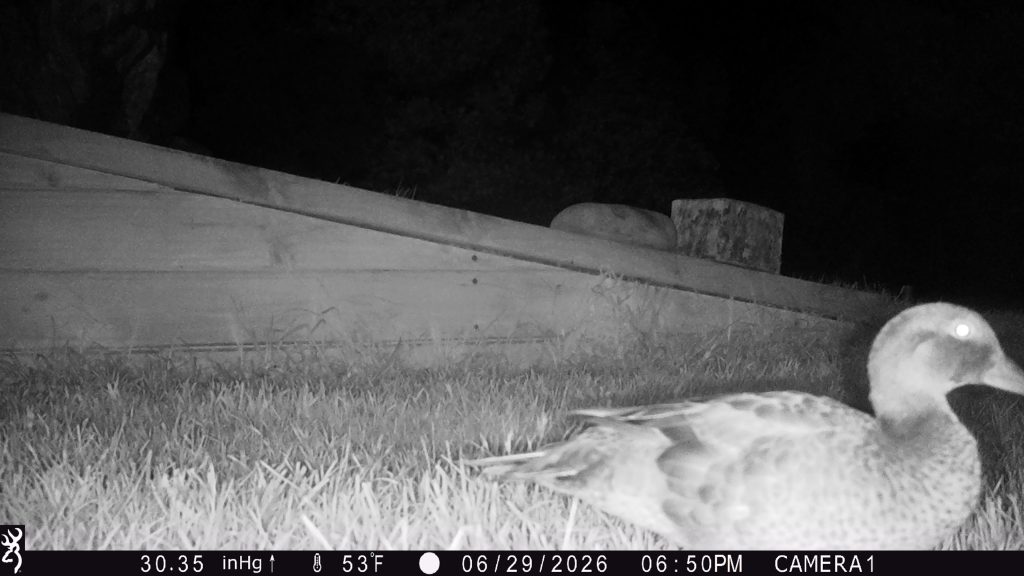
The trail cam was finally installed in June 2026 on private property at Home Bay. (Thank you Amanda Frecker!) We initially wanted to ascertain which direction the kororā were heading in to access their nesting spot, which we’ve managed to establish. The camera has captured little blue penguins heading back and forth from their nest area, but also a busy night when they were evidently lugging nesting material around early in the morning, which is pretty cool. The camera has also snapped pāteke and oyster-catchers out and around in the wee smalls, as well as pūtangitangi and everyone’s favourite bird, pūkeko. I’m really thrilled at the results.
Here a a few of my choice pics.. June 24th was evidently a busy early morning for a couple of kororā.
Two kororā heading out in search of nesting material. Kororā with a beakful of nesting material.Serious nesting material in the form of a big stick.Oystercatcher selfie at 2am.Two pāteke!!TwoPūtangitangi almost certainly making a loud honking sound.Pāteke close-up.
The following account by Kevin Wragge is a report on the perplexing behaviour of a small group of people who purport to represent the Rakino community, most especially with regard to Local Board, and council officials. It refers to a meeting we were all excluded from, despite it being a very rare opportunity to engage with our democratically elected representatives from the Waiheke Local Board. It is also important to note that permanent residents were excluded, bar one.
I was alerted to this meeting ahead of time by the Chair of the Local Board who wanted to ensure I had been invited as I had expressed strong interest in attending previously. Both of us believed it was a meet-up available for community members to attend, so after becoming concerned the community weren’t aware of the impending visit, I let you all know of the meet-up.
I was then publicly uninvited by an RRA spokesperson and accused of spreading ‘misinformation’. To his credit, Mr. Kevin Wragge attended and was not intimidated into leaving, despite attempts by RRA committee members to do exactly that. Mr, Wragge has made the report following for the rest of us to enjoy.
If there is one thing that makes me righteously angry about this wasted opportunity for us to meet our democratically elected representatives it is the knowledge that the meeting was held in our red-stickered Hall, the Hall we are told has cameras installed, to capture any ingress by miscreants.
In the last few years anyone trying to organise an event for the community has had to impose on the generosity of others in order to find suitable venues; the Freckers for a presentation on kororā, Dylan, and Garth and Kate for the Lez Ball, Holly for the septic tank workshop, Harriet for hosting market days, and Bert and Natalie for hosting gatherings at their house, most especially meet-ups with staff from the Waiheke Resources Trust.
The notion that the RRA committee thought a red-stickered hall was the best place to hold a meet-up with Local Board and council staff is extraordinary when they impose exclusion on the rest of us, to the extent of boarding up the stairs to the safely locked art rooms before giving us the opportunity to get personal possessions out. Who, if anyone, gave authority for that action?
I’d like to finish on a positive note, and in agreement with Kevin. We are all on the same page; we desperately need a neutral community space to gather in on occasion. The community hasn’t been given a complete picture of the complexities to date, and that needs to be remedied urgently. As part of my submission on the Waiheke Local Board plan I’ve asked if the Rakino community can be updated regularly on Hall progress, by the Chair. Anything will be an improvement on what we currently get. Kevin Wragge’s account of the meeting is below.
My meeting with the Board on Rakino with regard to the Hall with an end message to the Rakino Rate Payers Association and its committee.
I thought there may be some interest in my interaction with the Rakino Rate Payers Association (RRA) and the Waiheke Board when it visited Rakino on Friday the 17 th July 2026 at 10am.
Kylee Matthews the Board Chair had indicated in writing to a couple of Rakino parties who had expressed interest in attending a meeting with Local Board that a delegation would attend Rakino at the Boards initiative to assist in the decision-making process with regard to the future of the hall.
Kylee had previously stated that she believed the meeting would be open to the community, so the assumption was made that my attendance would be accepted, if not welcome.
I emailed the RRA and asked for the visit to be publicised in order to ensure rate payers could attend and learn at first hand why little or no progress had been made to have the hall rebuilt after many decades of talk and stagnation.
The Friends of Rakino Face Book page reveals the interactions that subsequently took place.
The RRA via its spokesperson Jude MacLachlan (JM) maintained the meeting was closed despite written correspondence to the contrary and insisted that no one from the community should attend.
As the Board’s visit had been signalled in advance I resolved to attend and travelled to Rakino on the Wednesday prior to ensure I could attend the 10am meeting. As has been said, Friday was not the best of days for participation and timing seemed to overlook that the Belaire ferry arrives at 11.20am on a Friday.
I went to the wharf in good time and greeted the Chair (CC) and Mr. Inglis (RI.)
Both were ashen and initially refused to acknowledge my presence.
In good time RI stated that it was essential that the meeting was positive and that was the objective of the day.
I agreed full-heartedly and suggested we also needed to establish the RRA’s entitlement to represent me and the community and asked him the number of paid-up Association members.
RI grimaced and with significant emotion and volume said he did not know.
I asked why he would not know and suggested that it could be concluded from the minutes of the last AGM wherein it was stated that $600 had been collected by way of subscriptions that the number would be in the vicinity of eight, including committee members.
RI howled that he did not know and then screeched, did you hear me, I don’t know.
CC smirked and commented that I had no idea, implying my assumption was wrong.
I responded that was the very point and RI should be ashamed of supporting this committee given his professional and business background.
CC then mentioned I had sent him over two hundred emails and one day he would take me to task.
I stated that I welcomed the day as it was my democratic entitlement to ask questions, demand answers, voice concerns and hold this entity to account.
CC also brought up a private matter in the public domain which I will not record for these purposes.
JM arrived and questioned my attendance and again stated to her entourage that this was a closed meeting. Natasha arrived by way of boat. I greeted her. I also acknowledged Stephen Wong when I caught his eye.
The water taxi arrived and I stepped forward to greet our visitors who unlike our committee are democratically elected.
I spoke to Chairperson Kylee Matthews to begin with.
I had previously emailed Kylee and mentioned the conflict with regard to the meeting, the Association, compliance with its Constitution and communication with the community.
Kylee acknowledged the confusion and stated that she would address the issue a little later.
I met Board member Mr. Eric Hillman and Mr. Mike Lee and mingled with support staff whose names I can’t recall, which is my failing entirely.
We entered the hall and took up seats as JM continued to question my attendance with those who would listen.
I immediately drew the meetings attention to the fact that the hall had been red stickered yet the meeting was taking place in a structure that was not available to the community.
That was acknowledged by Kylee, as was signage.
Introductions took place and JM queried who should chair the meeting given that it had been arranged by Council.
JM also stated that a tour of the Island had been arranged with vehicles at the ready.
JM passed the control of the meeting to CC who began speaking but was then assisted by someone suggesting that it might be appropriate for introductions.
JM took notes and explained that she had returned to the Association to help the Chair as a consequence of his health issue. She also mentioned that she had earlier resigned as a consequence of my emails imploring the Association to do as it should. These are described as bullying.
Kylee explained the confusion with regard to attendance which revolved around catering. JM asked with whom the correspondence was with and was dismissive of Kylee’s answer.
Nothing of significance occurred other than JM’s ongoing hostility toward me.
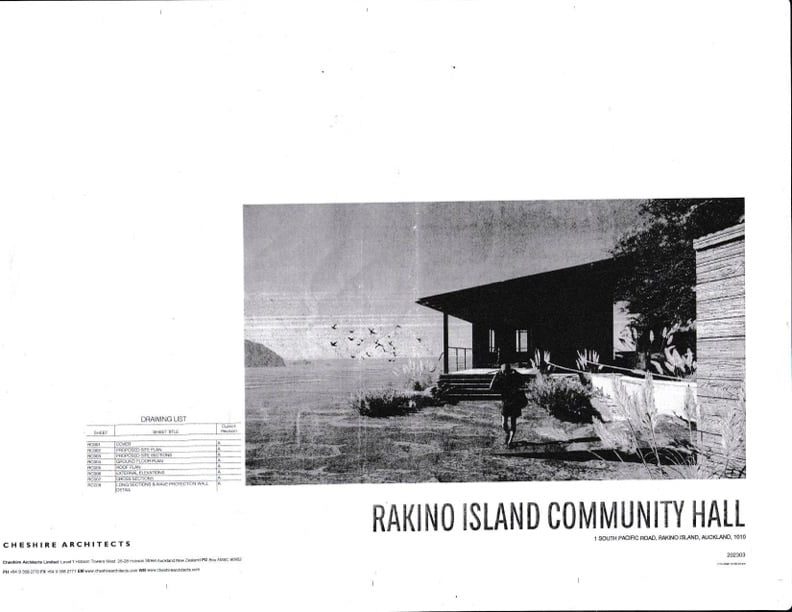
RI seemed to think it important that he refer to his house fire and architect Pip Cheshire who had been commissioned to undertake drawings for the new Hall build.
Mr. Lee mentioned the tremendous ecological change to the Island which was acknowledged by all and to which I commented that no one on the committee had participated in those plantings or indeed had shown little or no interest in the cause.
JM strongly objected and stated that she and a Mr. Lockhart had planted 400 trees and that I was once again wrong. I chose not to respond as I was of course referring to the planting of the Wallis Reserve, the West Bay track, securing funding for two ten-acre block owners and instigating the establishment of the nursery.
When I attempted to correct exaggerated, wrong, or erroneous comments, JM stated that it was not my right to speak. She sat alongside Mr. Hillman and when I did speak directed derogatory remarks to him in an undertone.
As this was an informal meeting Robert’s Rules of Order and procedural niceties seemed not to apply. I had noticed this bias at prior RRA meetings where speaking rights seemed to be selectively applied.
JM in particular seemed to be entitled to contribute at any stage and lamented how the community simply did not appreciate how much effort had been expended by the committee to resolve the hall impasse and mentioned that there was always the next hurdle to encounter such as the historic trust review and indigenous claims.
CC mentioned the Fire Shed and AT’s attitude to approval of the use of AT land where significant costs were sought.
He spoke with pride of the hundred per cent approval of those attending the presentation by architect Pip Cheshire and doubted that would ever happen at Waiheke.
When questioned, he stated that the fire shed had cost 50k although I do not believe that expenditure has been disclosed in annual accounts. The secretary should do so now.
He also mentioned fire equipment had been sold to him for one dollar within here.
I do not believe Association accounts depict the hall or the fire equipment as assets and that should be remedied immediately.
CC commented on a number of occasions that he understood my frustrations with the lack of progress and I took that as being sincere.
At this point Shane Hogg took the floor and some semblance of purpose began.
I am now in no doubt that Shane is on top of this project and all its complexities which have never been disclosed by the RRA who have explained delays as being attributable to Council finding yet another hurdle to prevent progress.
I will ask Shane to provide a summary of his presentation to ensure all are aware of the issues he is contending with but would summarize the situation as being multi-faceted which include not only the obvious funding constraints but issues with regard to ongoing reform and restructuring within Council.
These factors come to mind and are not exhaustive as I did not take notes. Indeed, this summary may not necessarily be accurate but simply draws attention to the complexities.
The building straddles complex public boundaries abutting the wharf with AT and Council negotiating distinct and conflicting legal and operational mandates over this foot print.
The hall consists of multiple parts (the hall, Kitchen/library and toilets) and is built on reclaimed land over two public land parcels.
Because the proposed facilities interface with transport infrastructure, AT to this time has exerted significant control over the land and its development and until now would not consent to the hall encroaching its land. Furthermore AT have refused to provide a terminus.
The rigid separation between AT and Council which has caused the developmental deadlock is being dismantled by way of the Local Government Amendment Act which seeks to dissolve AT’s independent authority.
The transition period is under way and once worked through will mean that land ownership and decision-making responsibilities will transfer to Auckland Council and the Waiheke Local Board.
I asked Shane if that meant everything is on hold until that happens and I think he agreed.
Shane spoke of inter-departmental participation which includes the Coastal Marine division as the hall sits on reclaimed land and is subject to severe tidal inundation and storm damage, Earthworks and sediment control, Structural Engineering and geo-technical input, Parks and Reserves, Heritage and Mana Whenua, Fire and Emergency, Hazardous materials, Vehicle manoeuvring, Health and Safety along with Civil defence, First Aid etc etc etc.
To remedy the crumbling bank would cost in excess of two million dollars which explains the set back that has been demanded.
This is as much as my little brain could take in and as such any negativity with my summary will fall on closed ears.
I then mentioned alternative sites which Shane was fully acquainted with and had considered in some depth.
The two alternative sites are road reserves with the right to occupy involved as construction is a non-complying activity. I believe that may change with the implementation of the Local Government Amendment Act.
JM seemed not to be aware of these complexities but did seek confirmation that the existing build would include a kitchen.
Mr. Lee was astonished with the inter-departmental mischievousness and questioned the veracity of many of the claims and requirements being sought and undertook to investigate further with material to be provided by Shane.
When I suggested that AT should provide a terminus and Council a hall on the other possible locations available RI claimed that was unacceptable as the community would lose its identity and soul or words to that effect.
I sincerely thanked Shane for his contribution and added that I had no recognition of all the issues that had been presented.
At one point a long-standing member of the community arrived and was offered seating.
I mentioned he was not a member of the Association to which JM responded he was welcome and was being invited to participate unlike myself.
I found that unnecessary and frankly nasty.
I spoke further with Shane and Mr. Lee outside and indeed apologized to Shane for my terse correspondence with him. I explained the disconnect between what the Association was saying and Waiheke Board minutes and was attempting to understand the process. He stated he understood my dilemma.
Mr. Lee and Board member Hillman invited me to come to the alternative sites and I decided to do exactly that.
I reluctantly agreed to participate in a few photo shots at the wharf and at the top of the Island.
Two groups formed around the fire house. One included Shane Hogg, Mr. Lee, Board Member Mr. Norm Robins and myself.
We discussed the site layout and its suitability as an emergency gathering point as opposed to the wharf which had limited access. I also suggested that although probably unnecessary the road could be re-routed to accommodate any structure.
The other group was entertained by the Rakino committee with CC starting the generator and sounding the siren.
Mr. Robins asked me what happens now to which I replied we don’t know and then adopted the Lance Corporal Jack Jones impersonation of “Don’t Panic” “Don’t Panic”.
The gathering wound up and my former detractor RI said with a smile, “You did well”.
I choked.
Mr. Lee stated that we need to get you on this committee to which I responded, not with this lot.
Shane had earlier provided me with a final draft of the build which is attached.
I suggest everyone carefully look beyond the pretty presentation at what is being offered for some millions of dollars. Notice a block wall which will not only obstruct views but will also make access to the ferry even more problematic.
Everyone is entitled to their own opinion on the Hall rebuild but a consensus must be reached. I hold the view that the current site has too many restrictions and limitations to erect a structure that meets the Island needs and that value for money will not be achieved.
I believe AT or what ever that ends up as should construct a transport terminus and a hall is built elsewhere for a fraction of the money and which would be more fit for purpose.
At the end of the day, I don’t care what happens as long as something happens.
Now to the point of all of this.
The RRA and the committee overlooks one very important fact.
Everyone is actually on the same page.
Everyone wants the hall saga resolved.
It’s not a them and us situation.
It’s not a psychological division between an “in group” being the Association and its limited members and “the others” as happened to me yet again at this gathering.
The animosity is shameful and must end.
I believe this committee should resign on mass and let someone else have a go.
The community composting initiative got off to a great start the Matariki Weekend.
“Thank you to the Rakino Island community for using the new compost system over the long weekend. Your support means a lot.
This new system is going help us reduce the amount of waste going off island and will in time help our efforts to become more sustainable in doing our bit for the Auckland Council Waste Minimisation Initiative.
Our intended goal is to create compost for a community vegetable garden for the island so everyone can benefit from this in the near future.” says Lyndsey Williamson.
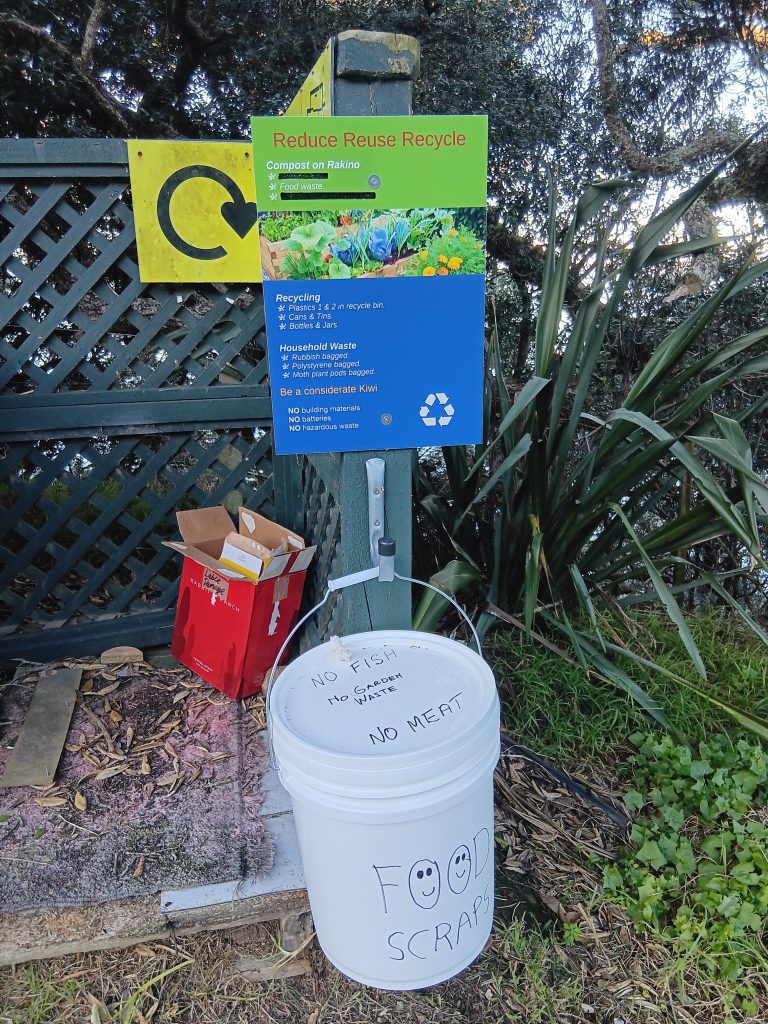
There are pails at each of the bin stations around the island.
We don’t mind where the vege scraps go, providing they don’t go into the household waste or the recycling! If you need to take some for your chooks or your own compost, that’s absolutely fine. If you want a small bench-top canteen with a handle to contain your scraps until you deliver them to the nearest compost pail, just contact Lyndsey. We have about twenty of them available, thanks to Auckland Council.
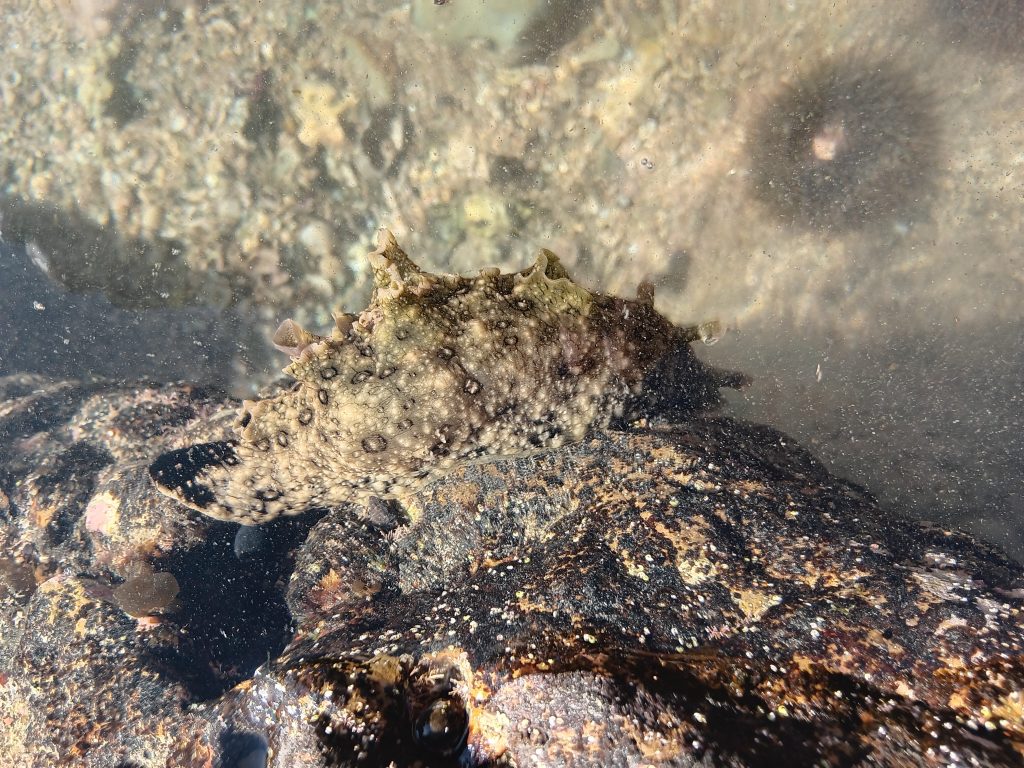
A few images taken from a recent wintery snorkel undertaken with Elisabeth, made so much more bearable wearing a hood, generously supplied by Natalie. The underwater camera purchased with a grant from Waiheke Local Board continues to prove itself invaluable for collecting images of the rocky reef.
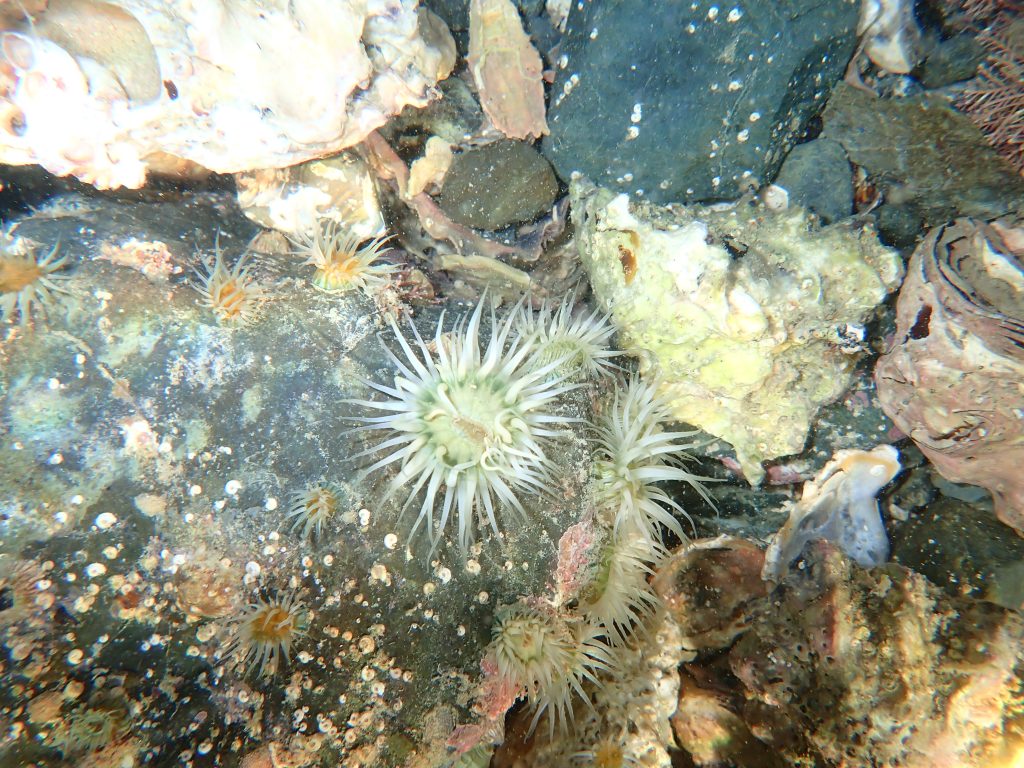
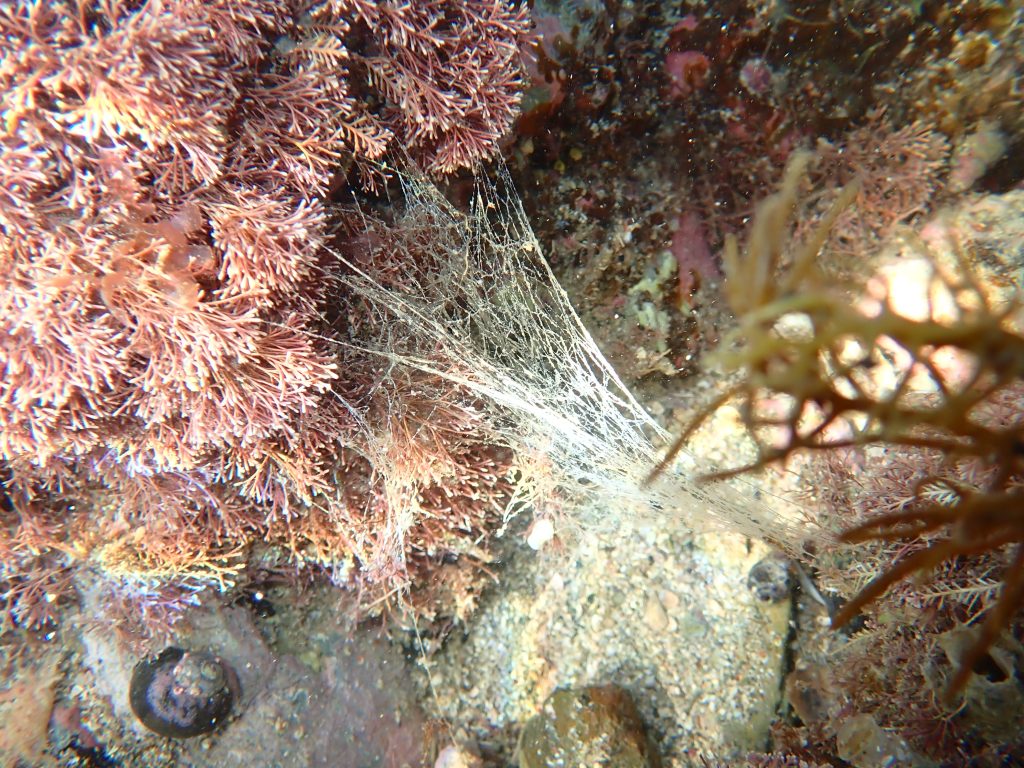
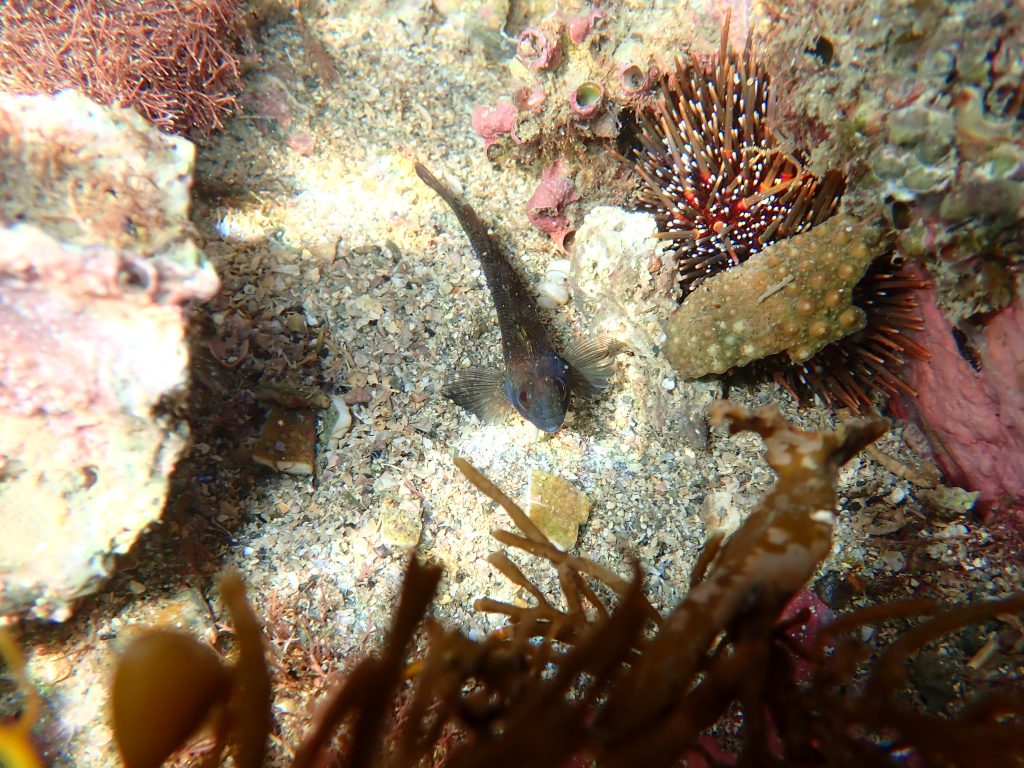
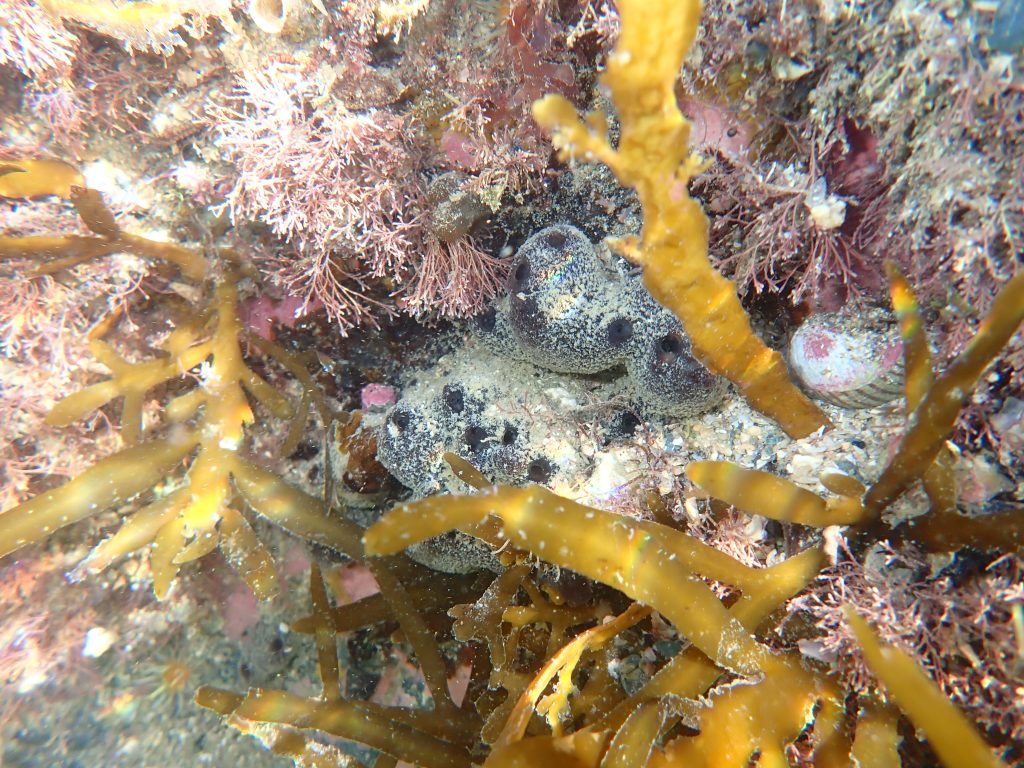
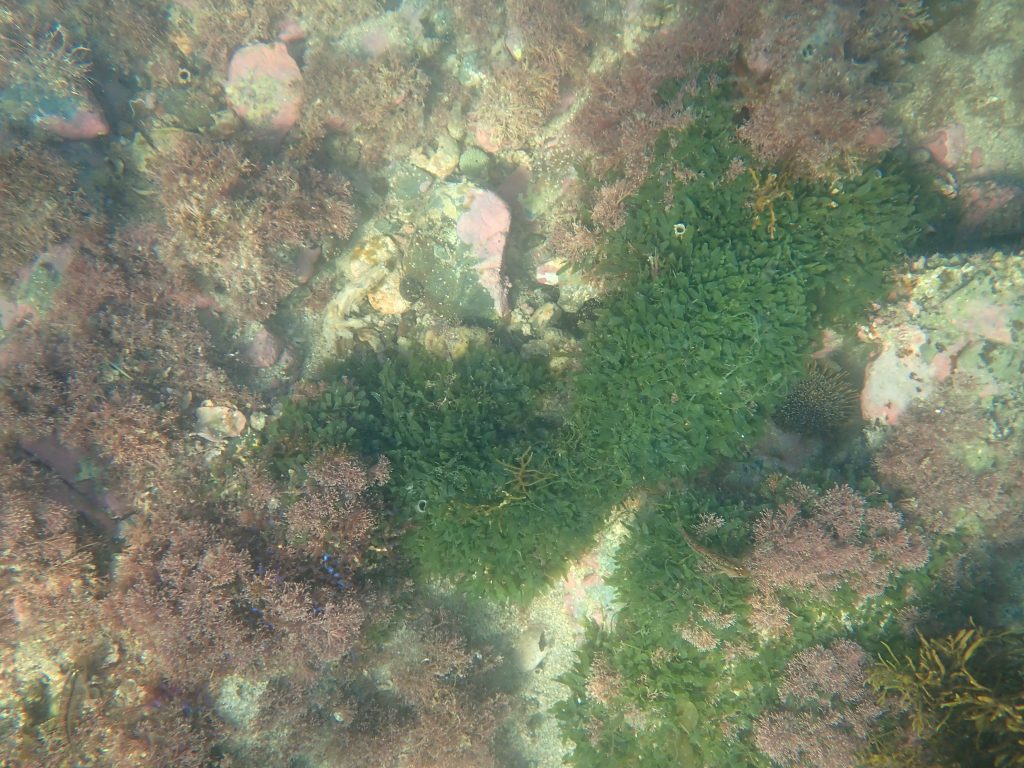
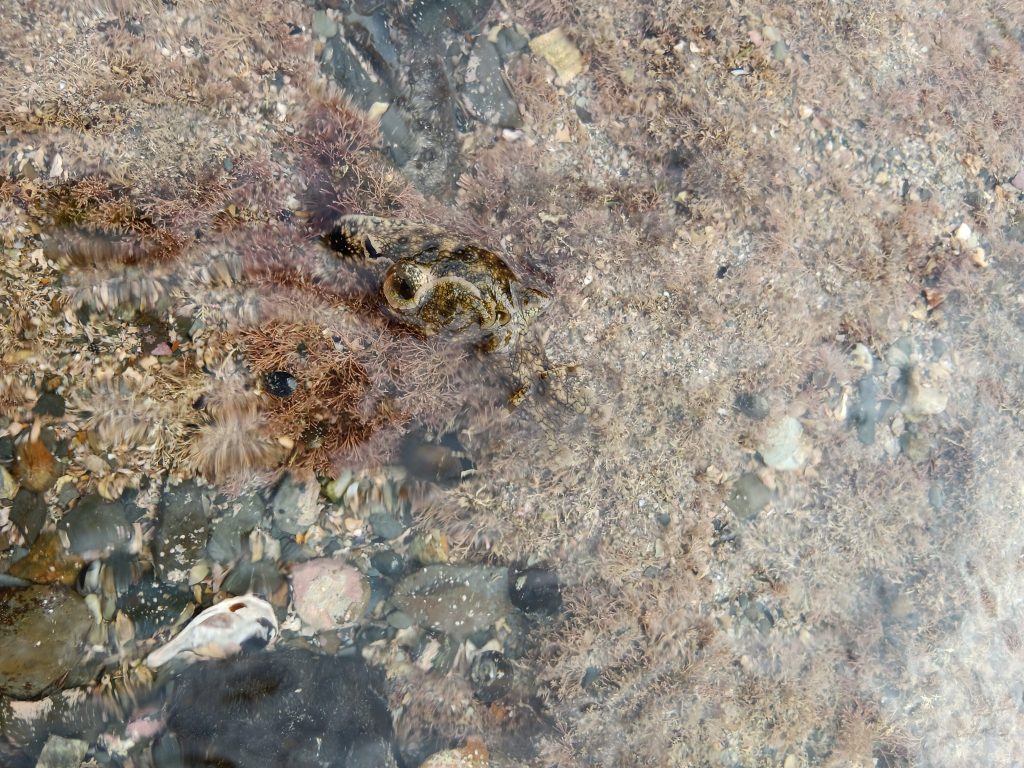
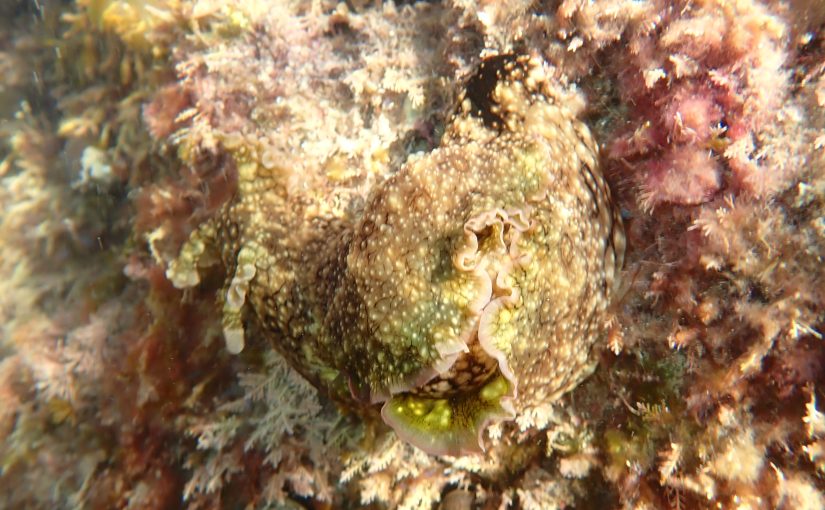
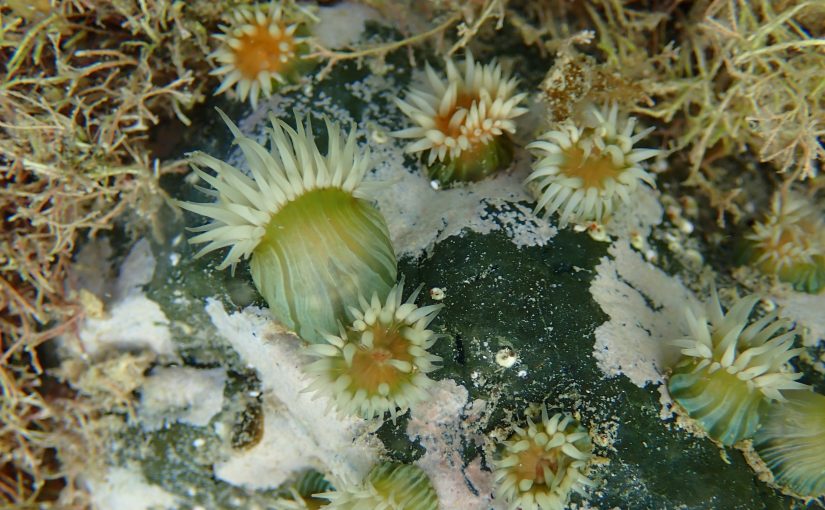
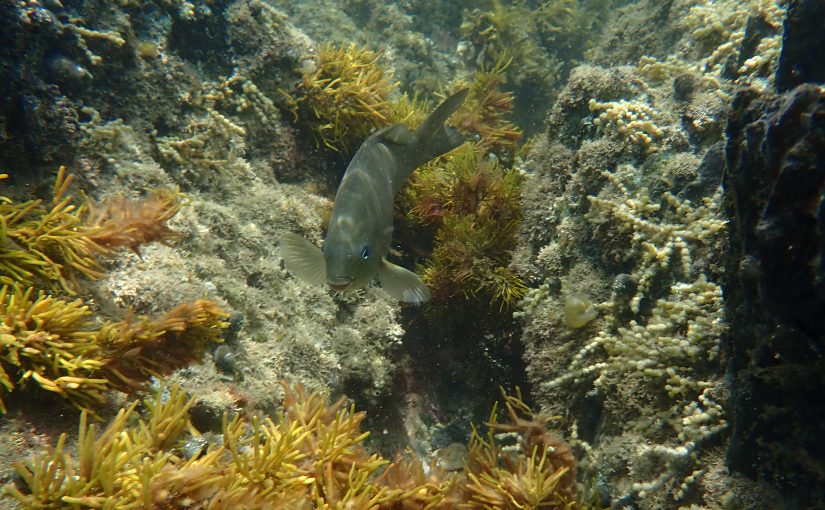
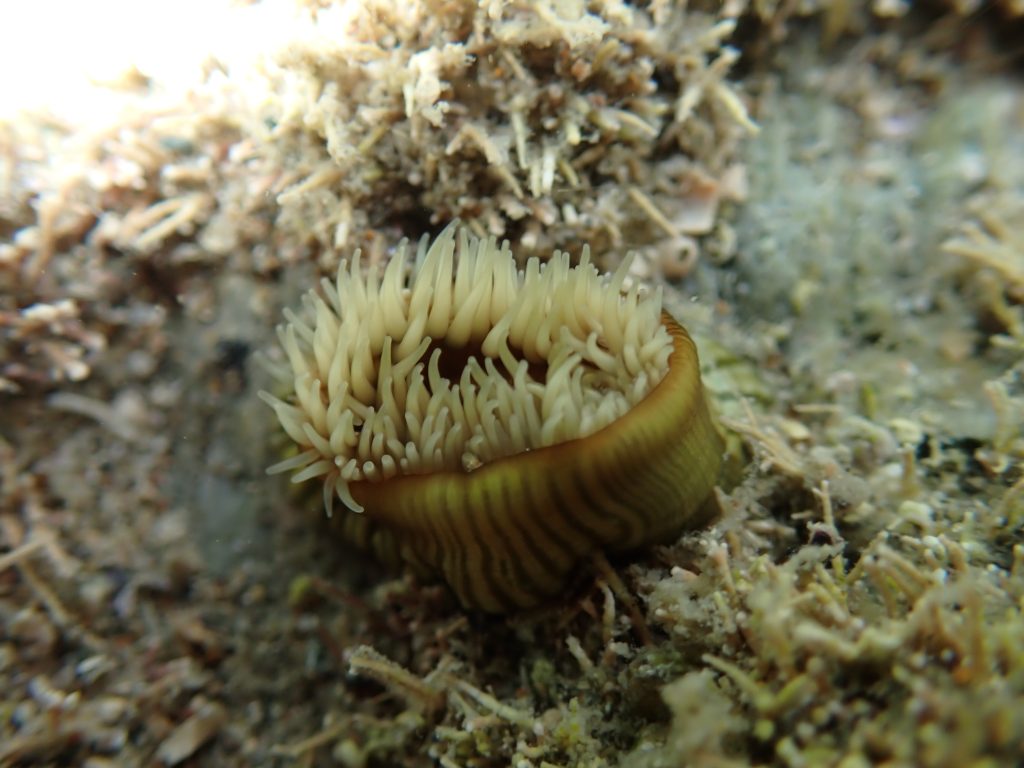
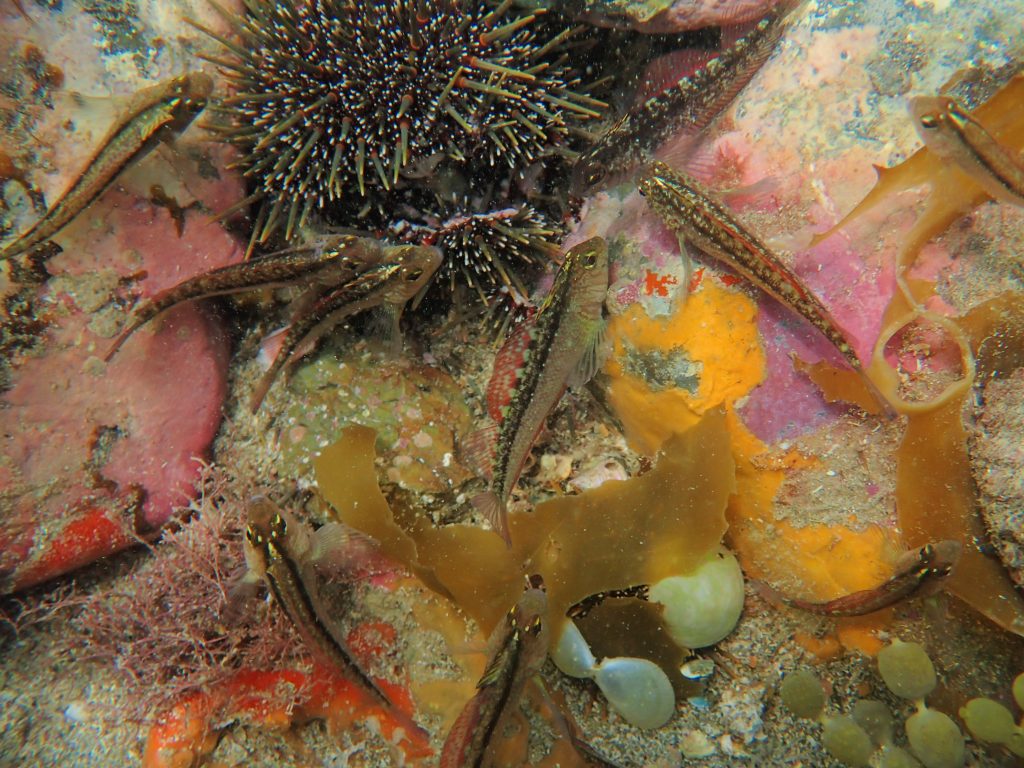
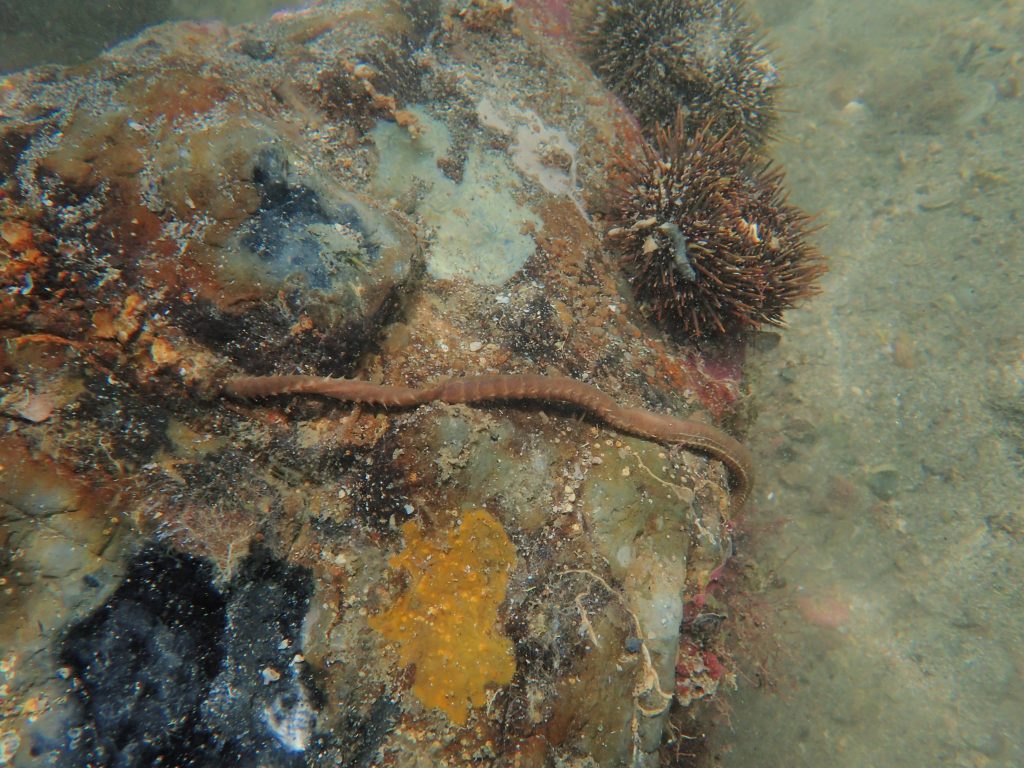
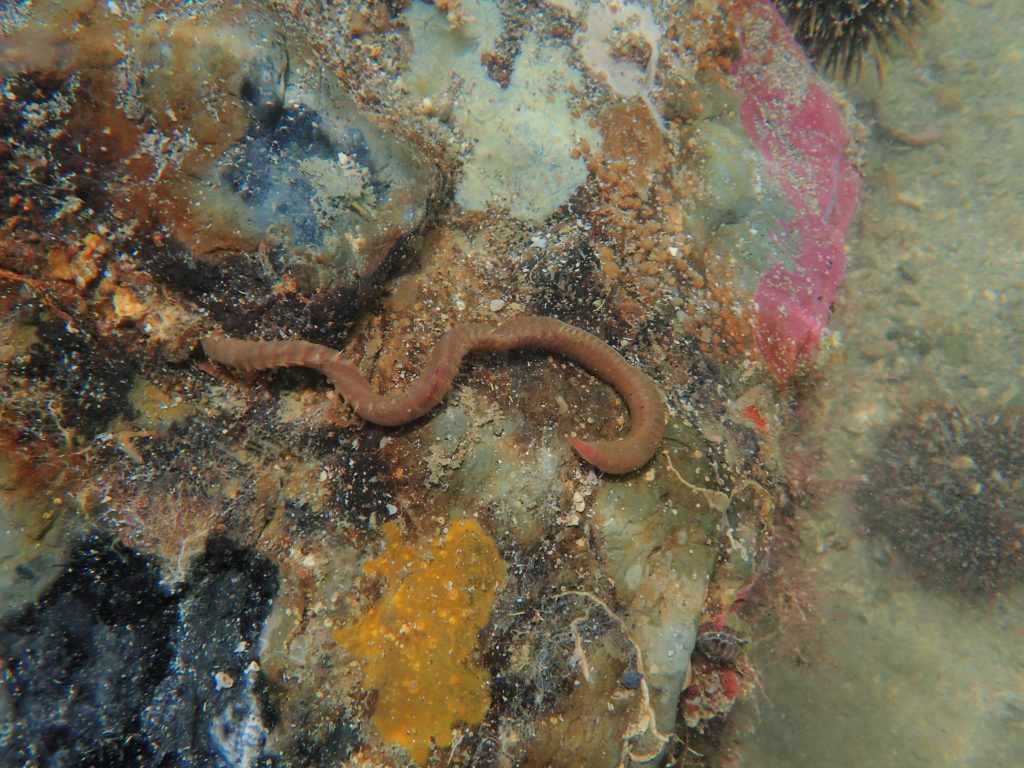
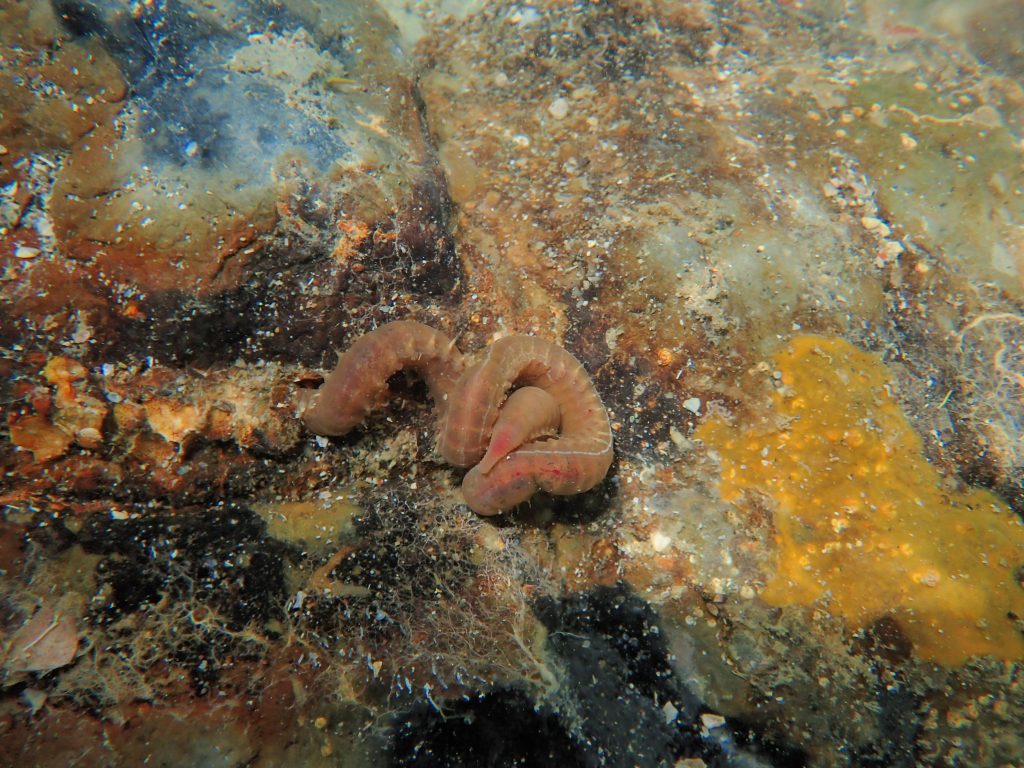
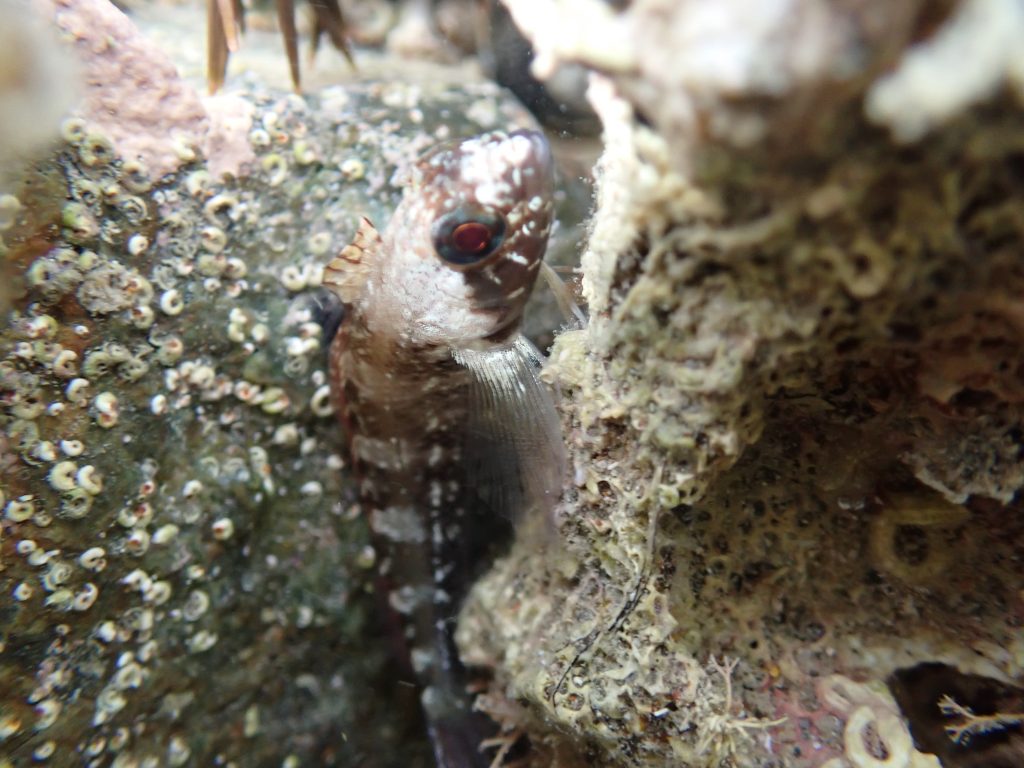
Plentiful white-striped sea anemones in the rock pool.Close up..Mucus web made by polychaete worms.Triplefin eyeing me up.One of the many sponge varieties seen in MGB.My favourite! White speckled sea hare.Caulerpa. Bugger!!Snap gang! Water was a bit murky.
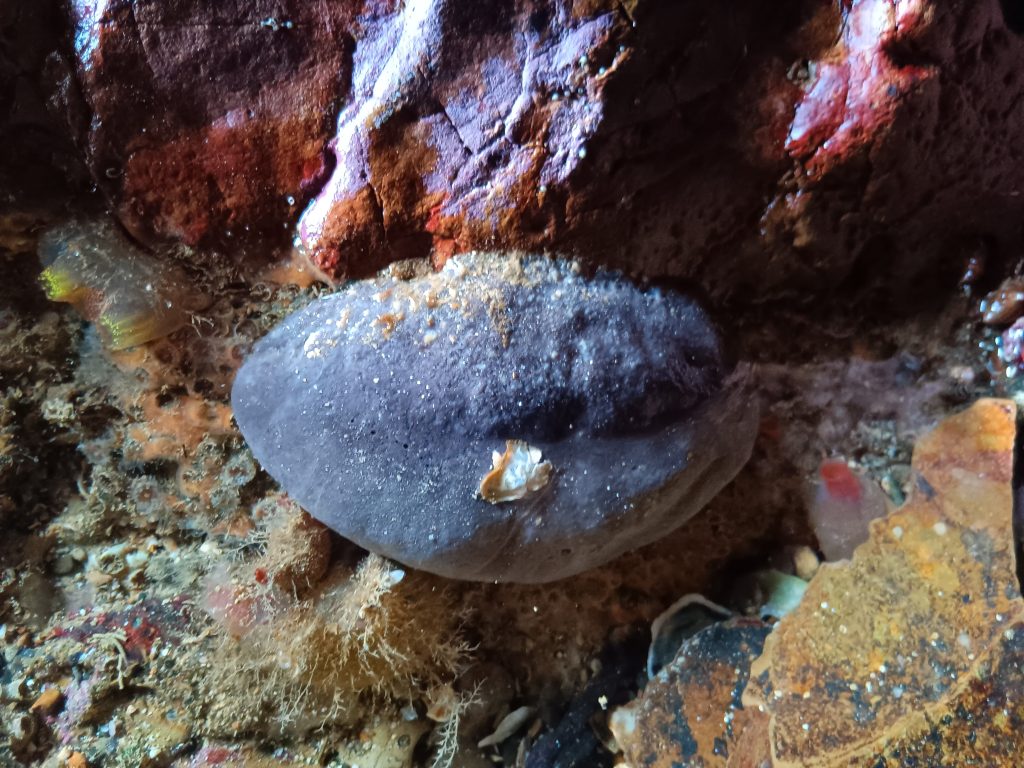
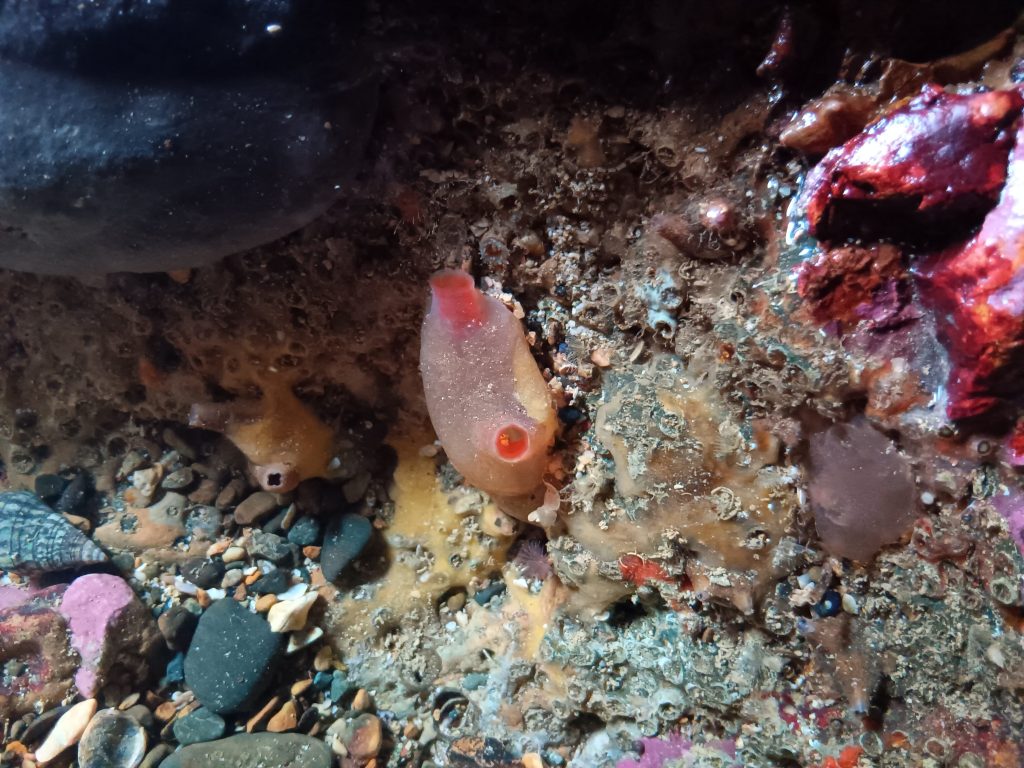
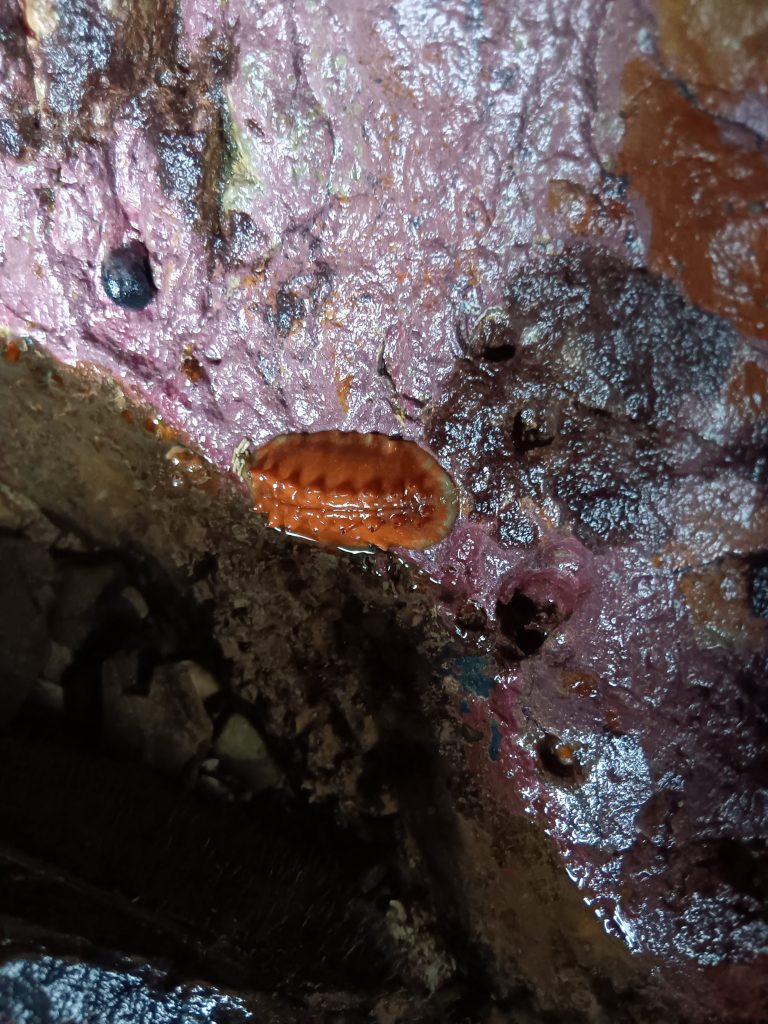
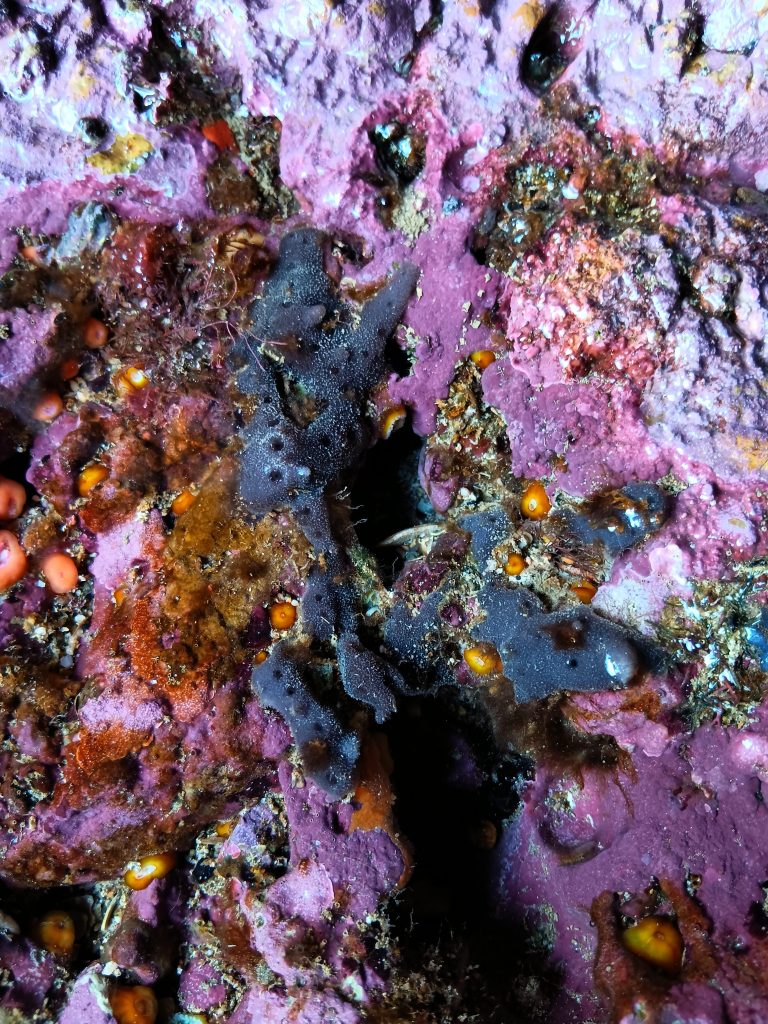
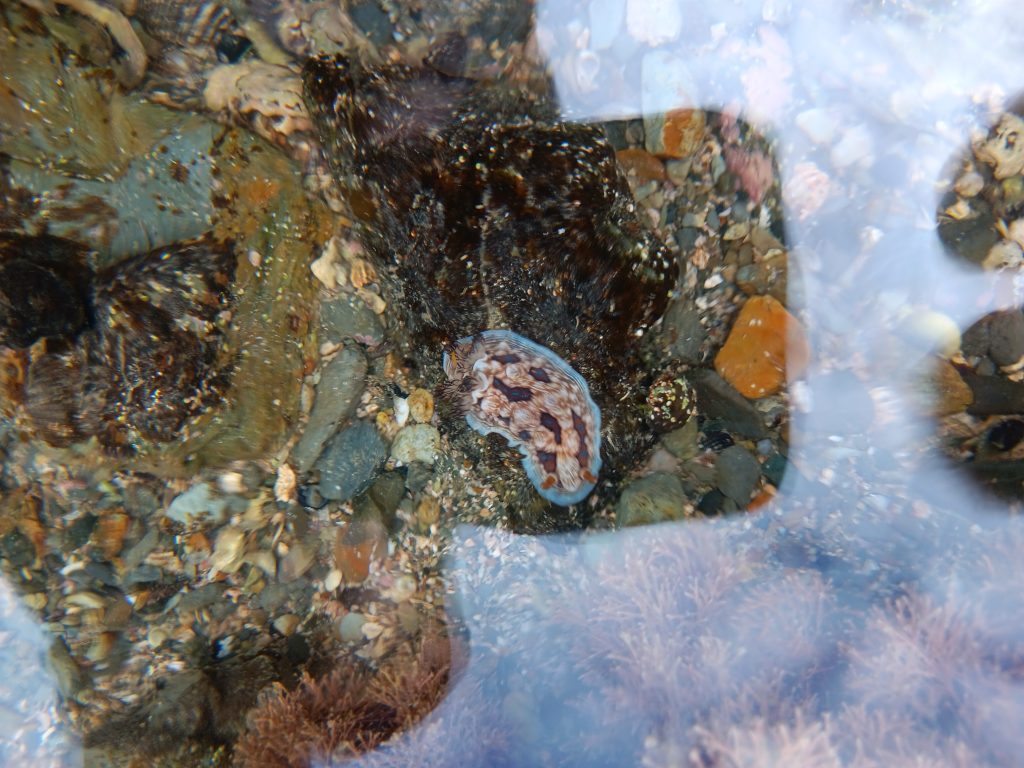
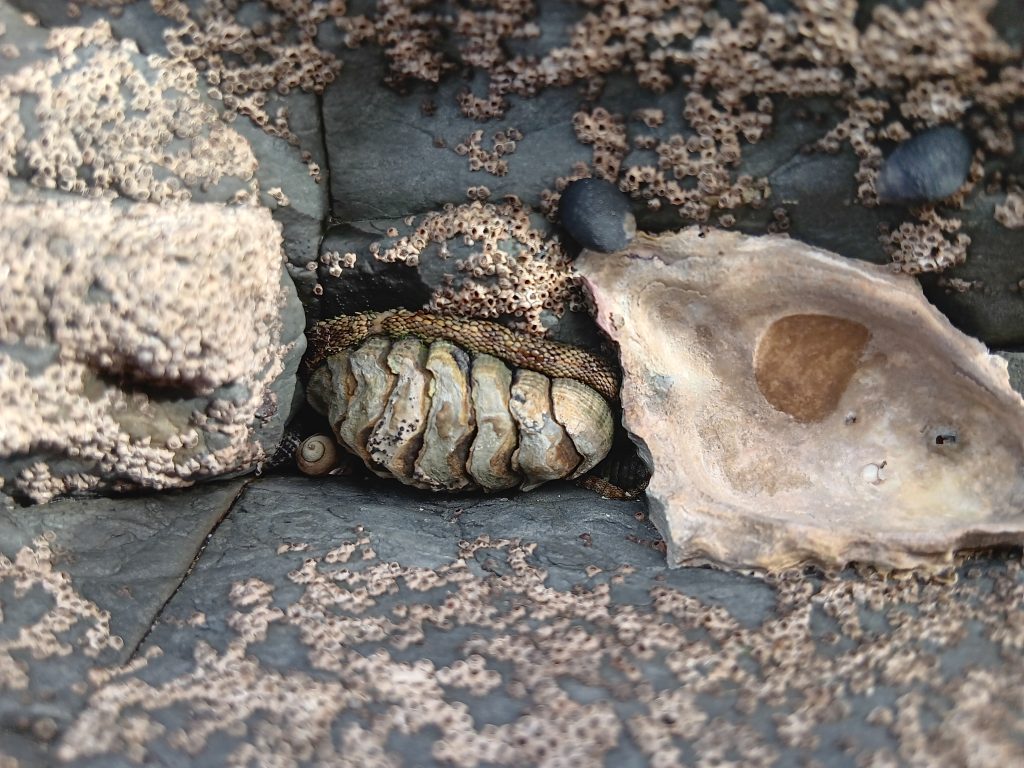
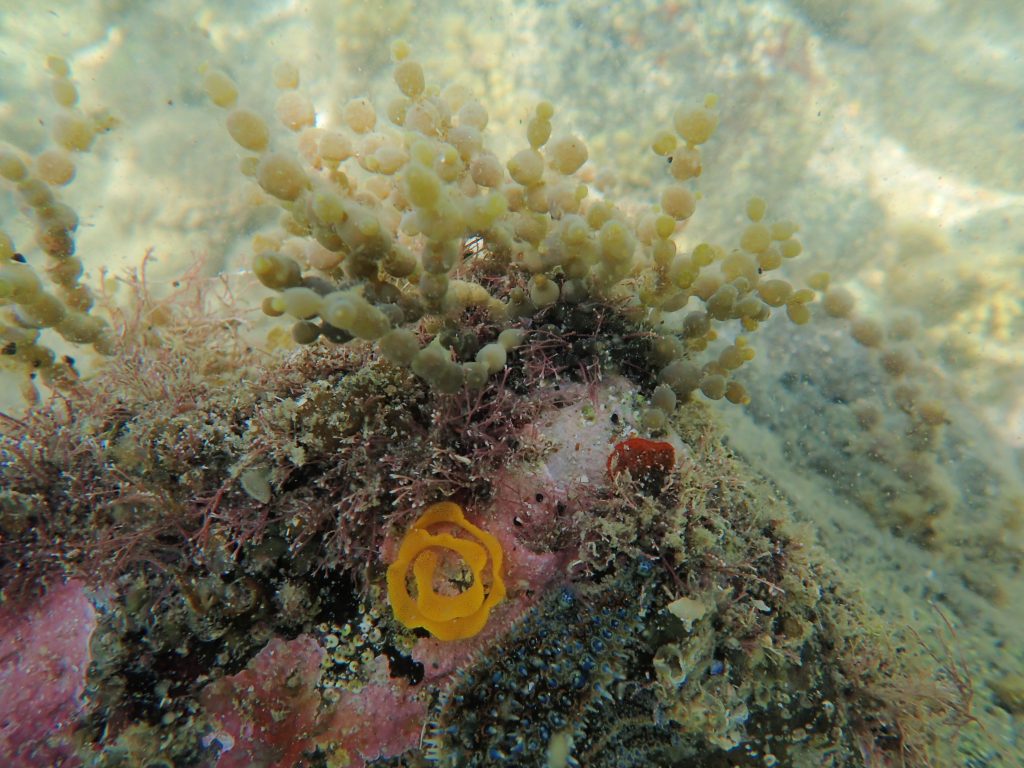
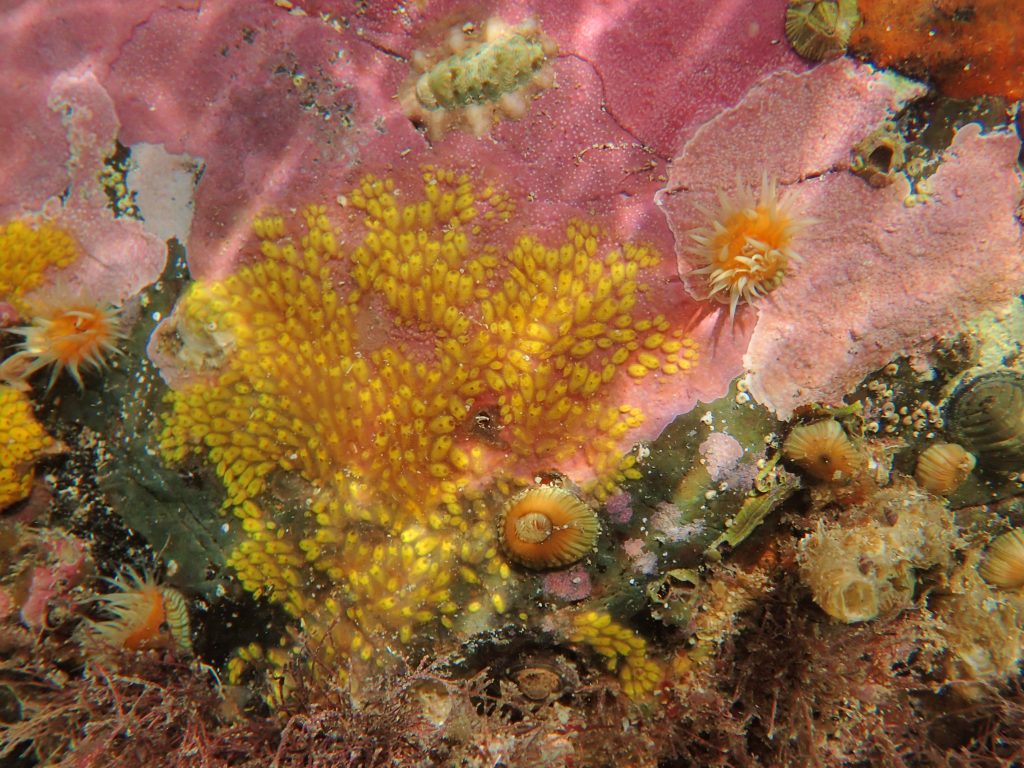
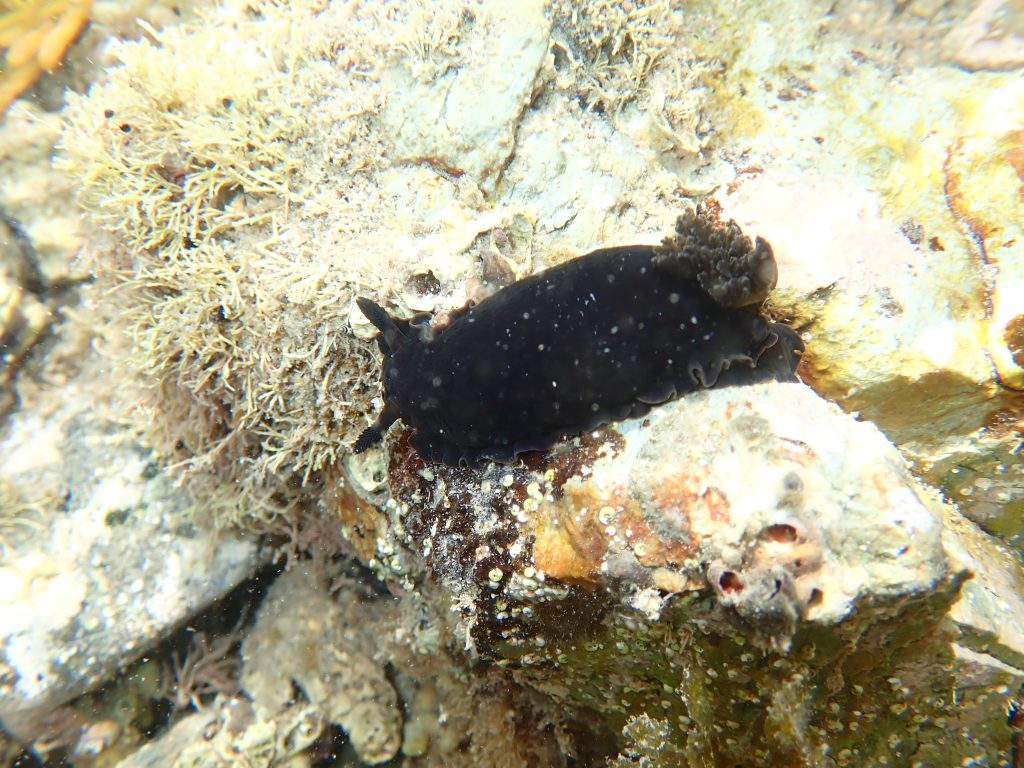
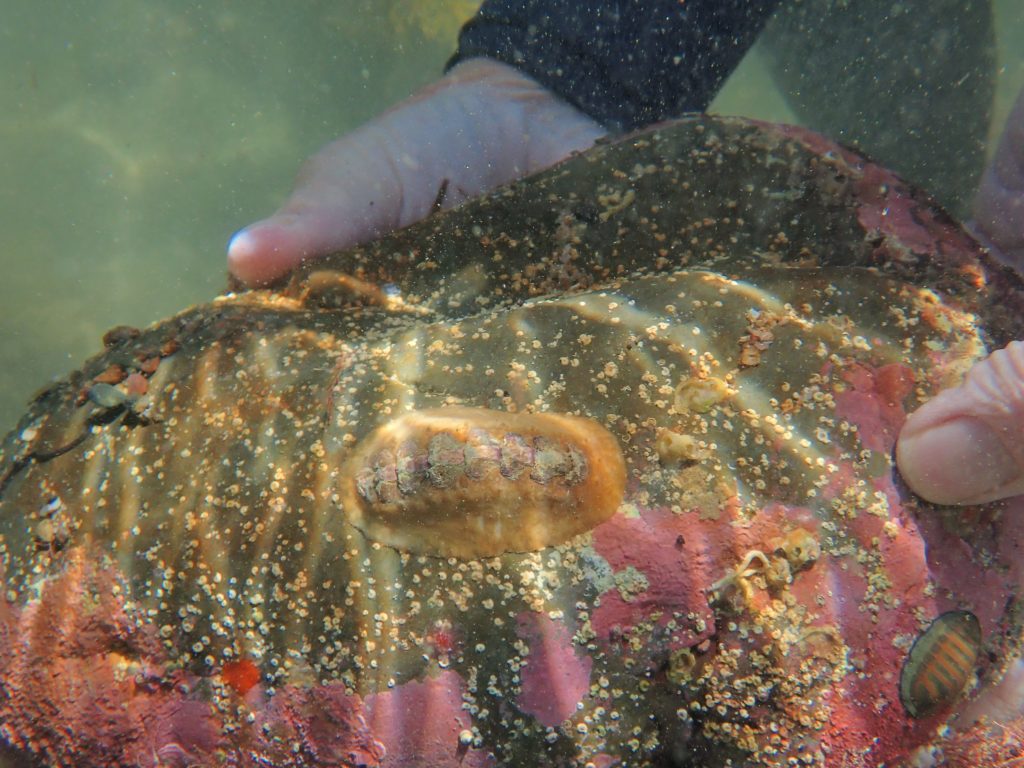
Sponge, with orange tipped sea squirts on either side.Orange tipped sea squirts.A butterfly chiton.Underbelly of a grey side-gilled sea slug. Highly toxic to dogs.Sponge in amongst the jewel anemones.A gem doris! Such a cool rock pool find!A grand-daddy of a snakeskin chitonA well camouflaged white speckled sea hare.
It was a busy Easter Weekend; so busy I’ve only just found time to upload photos and document it!
Ecofest snorks!
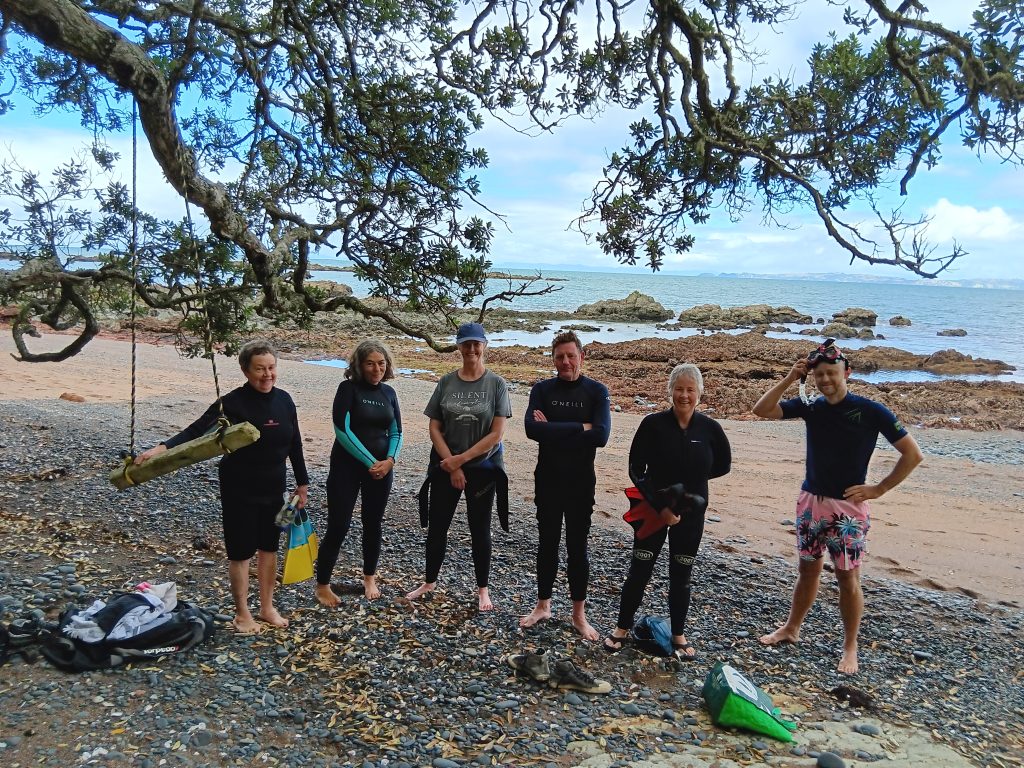
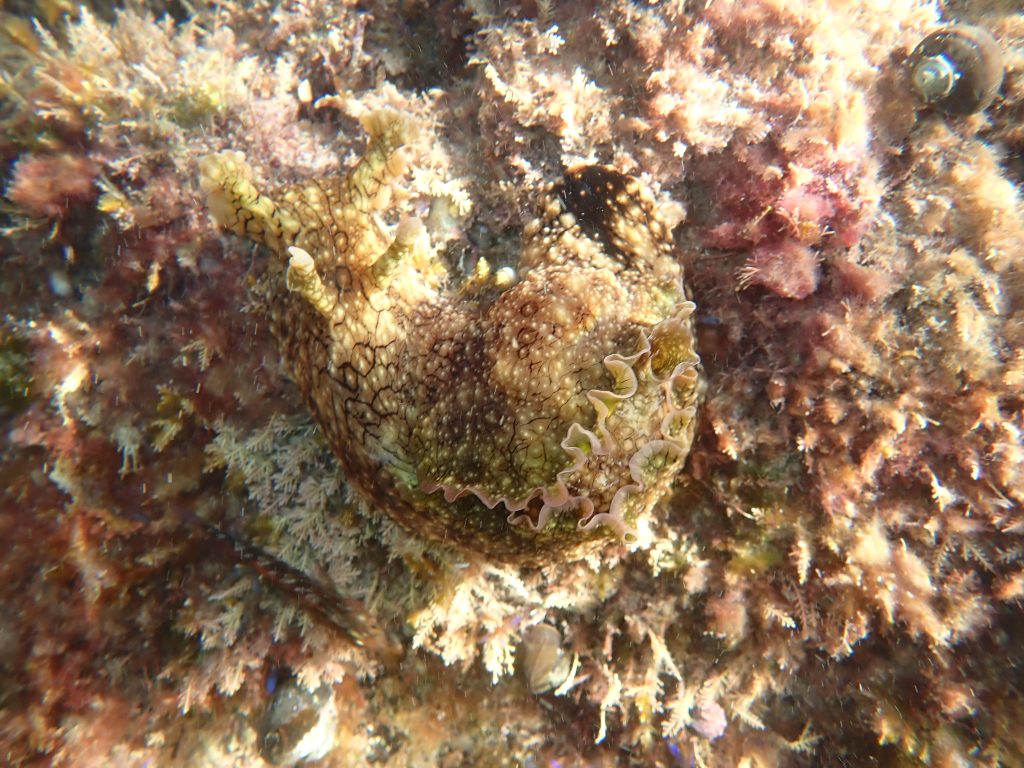
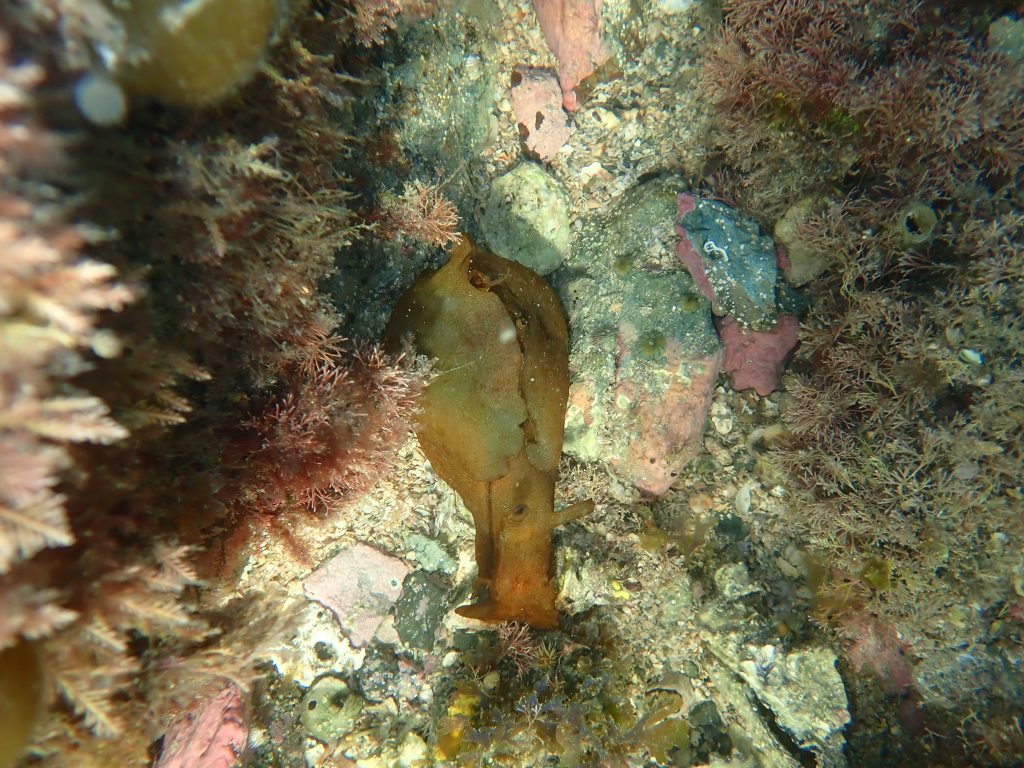
There was always going to be snorkeling, so putting an Ecofest overlay on it was no hardship. Friends from Auckland Debs and Andrew were anchored in Woody Bay so we press-ganged them into a snorkel, along with Sharon, and Sam. The water did not have the best clarity, but it was good to get in a late season snork. Sam impressed with no wetsuit… I didn’t manage to get any good photos from the event due to poor water clarity. I did manage to get some good shots a month later in early May however; it seemed to be the season for seahares, and there was a particularly handsome white speckled seahare perambulating around in the hiwihiwi grotto…
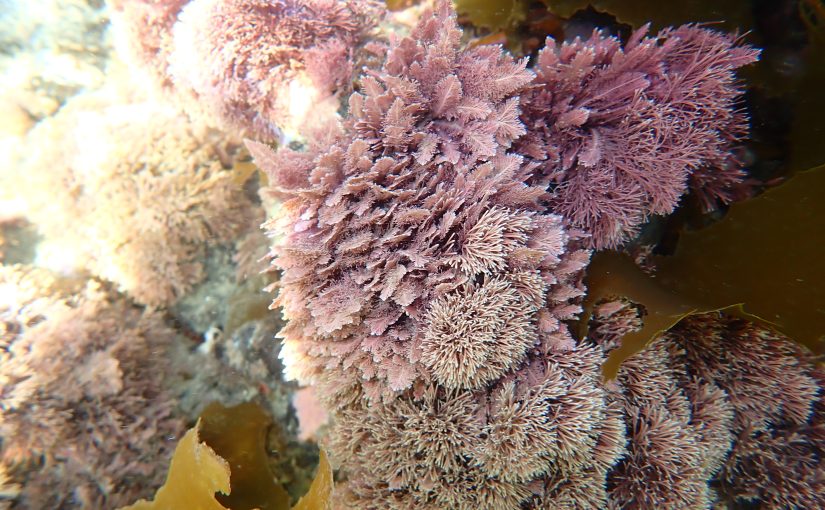
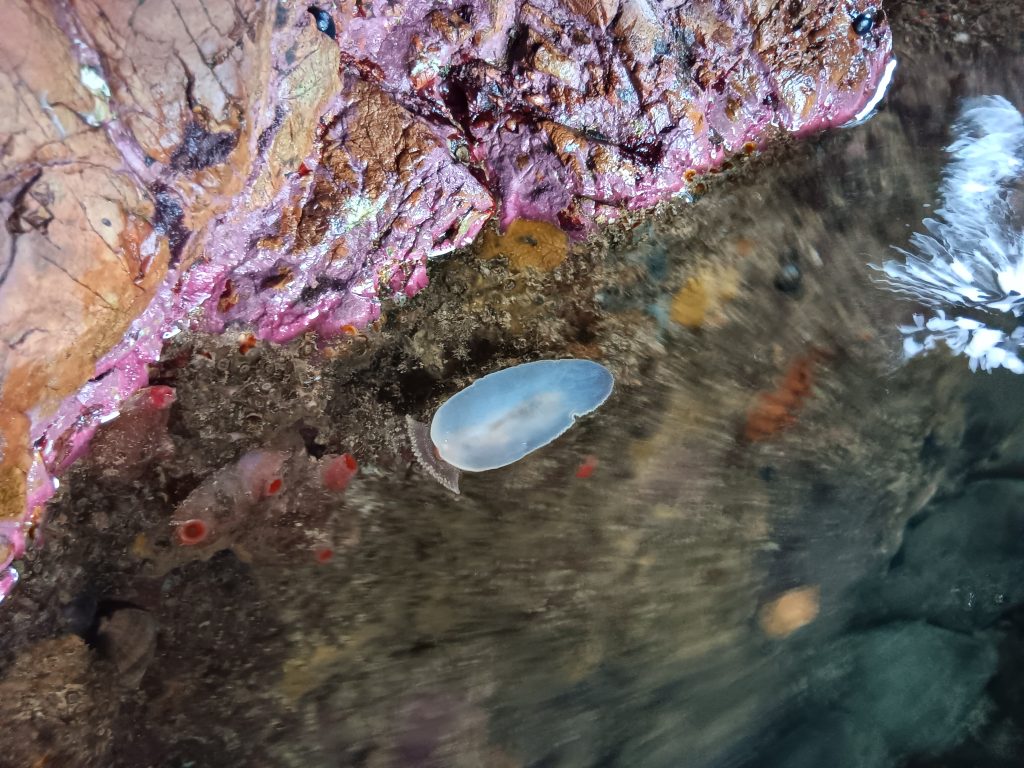
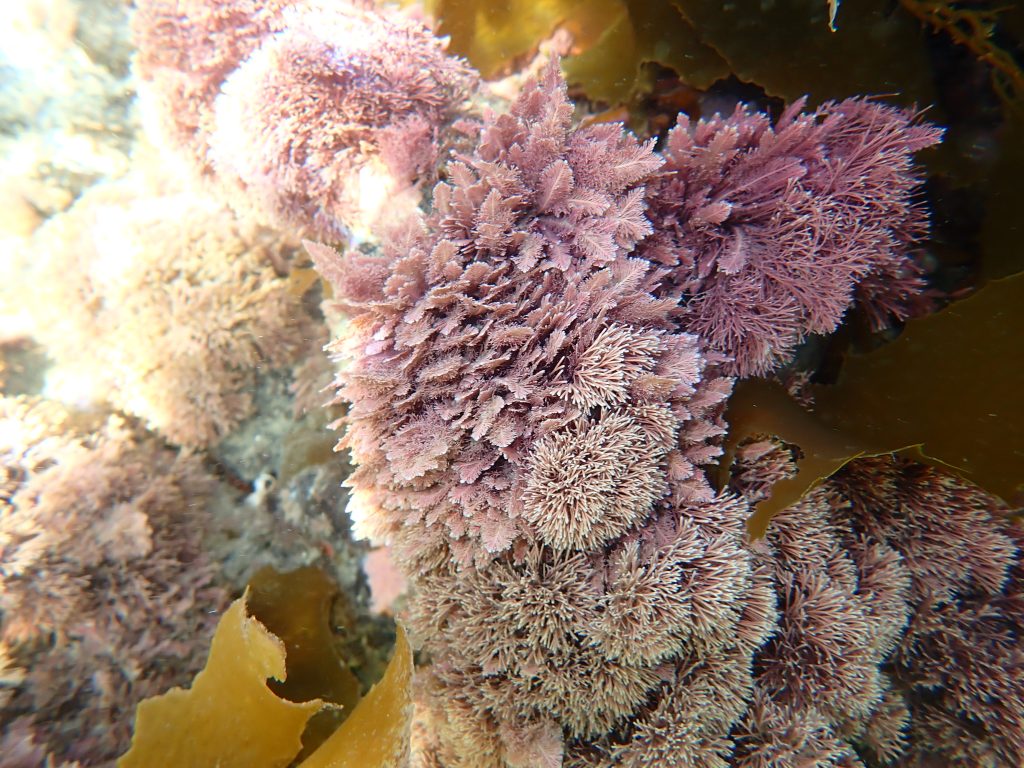
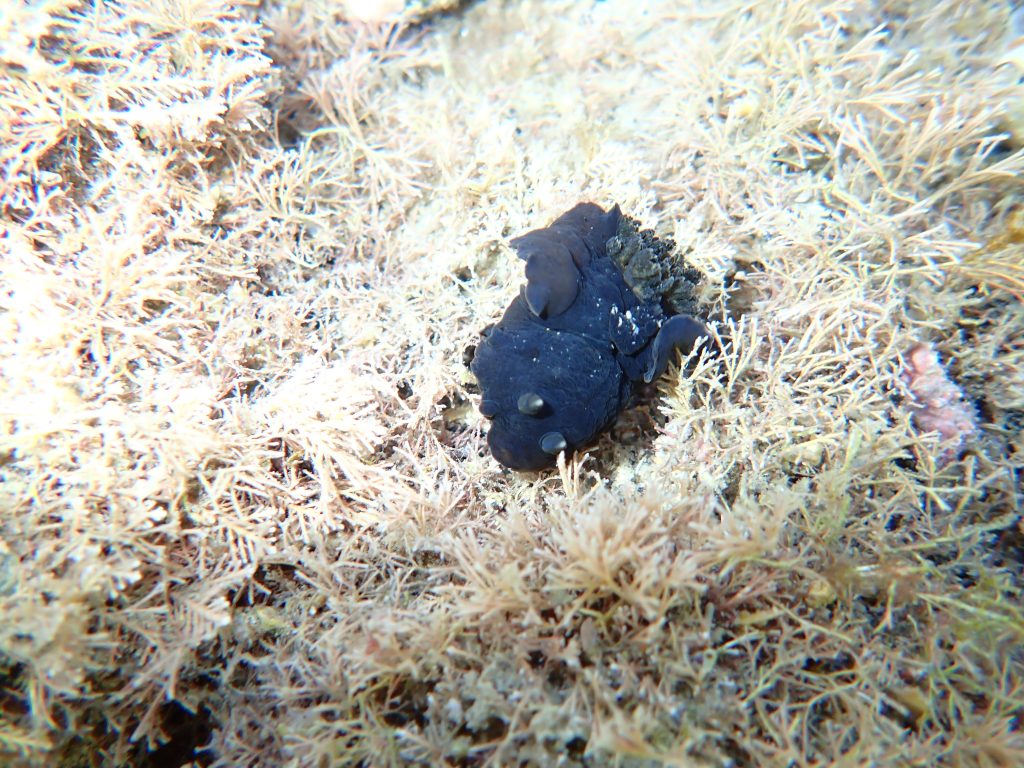
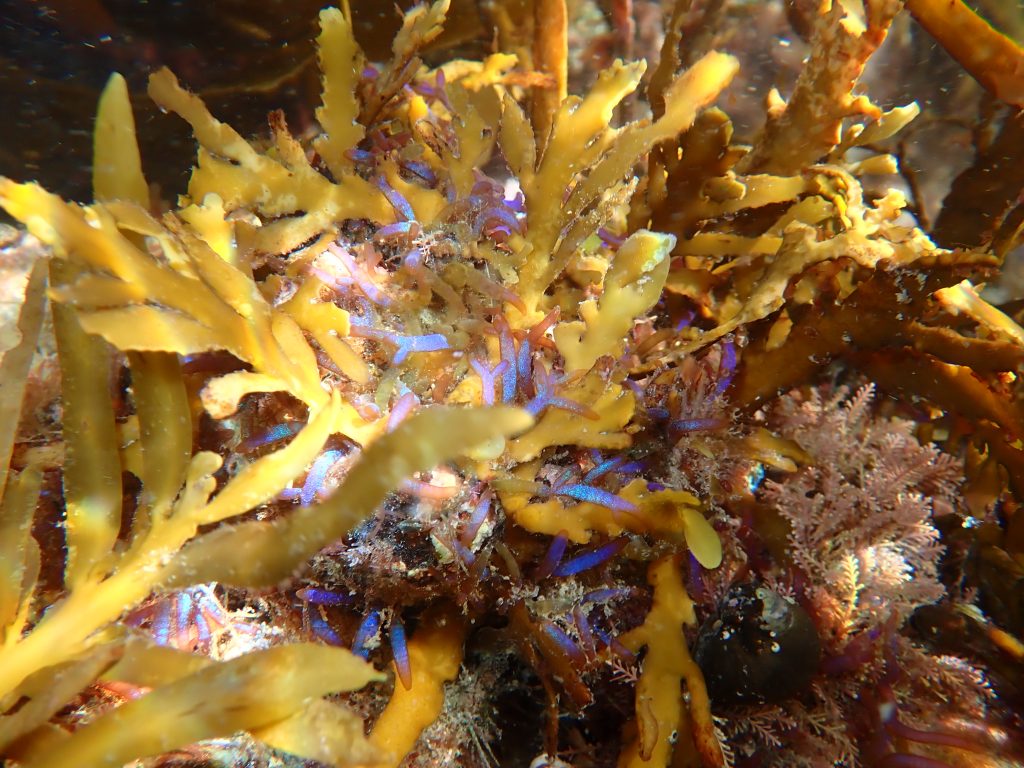
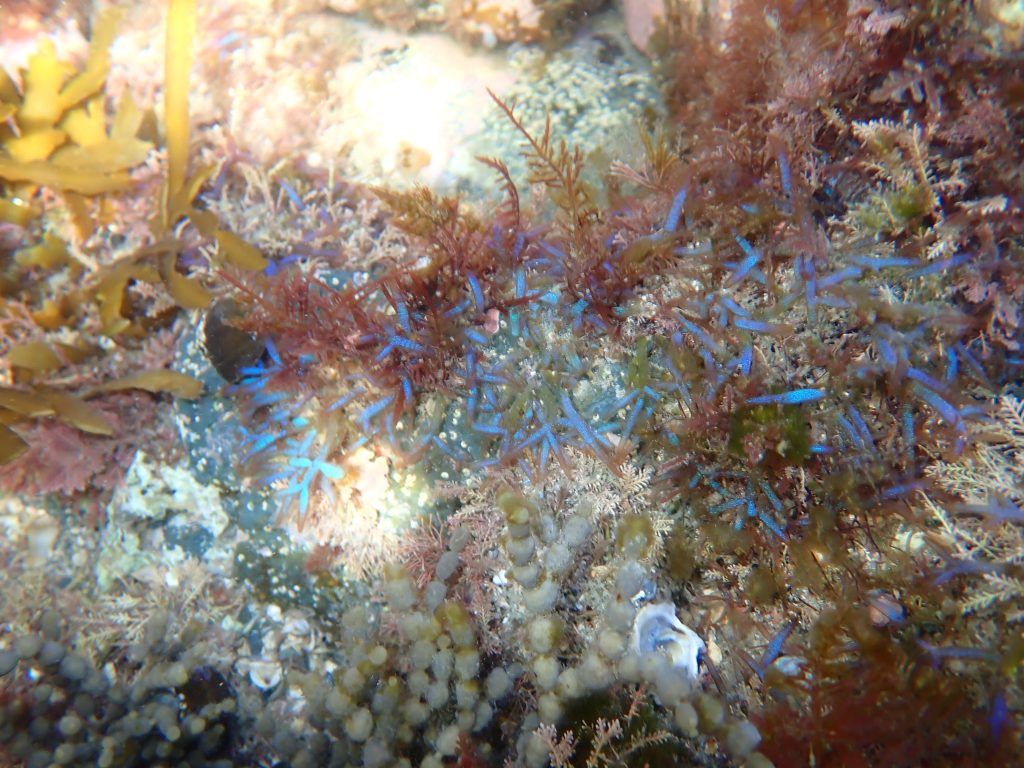
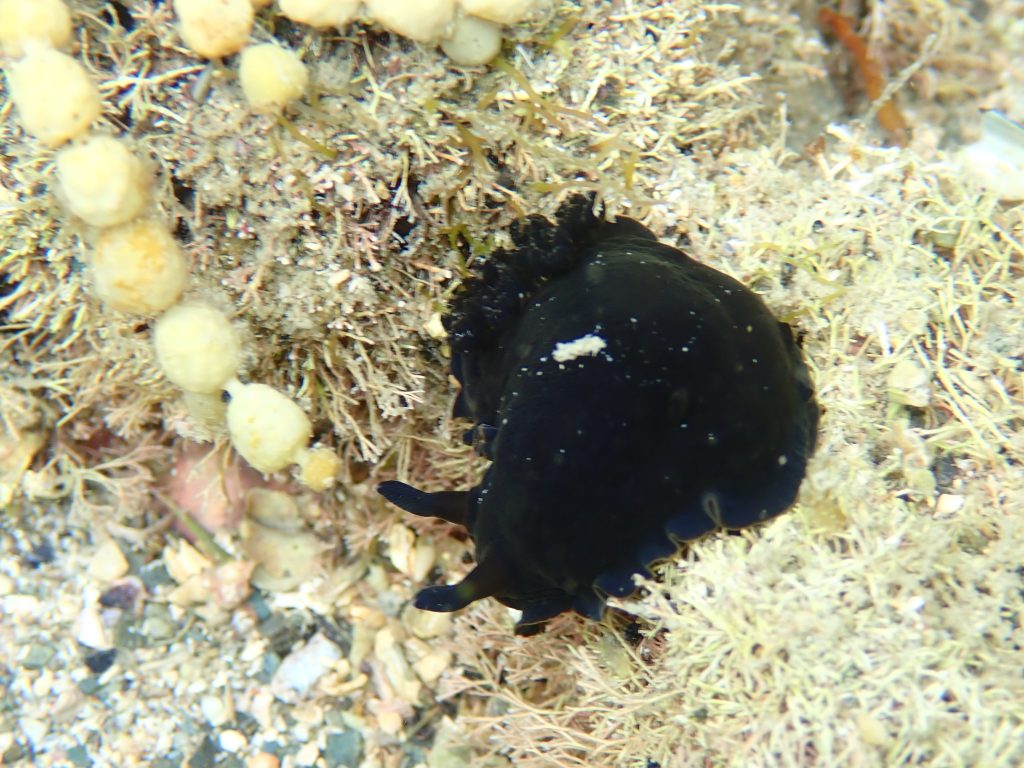
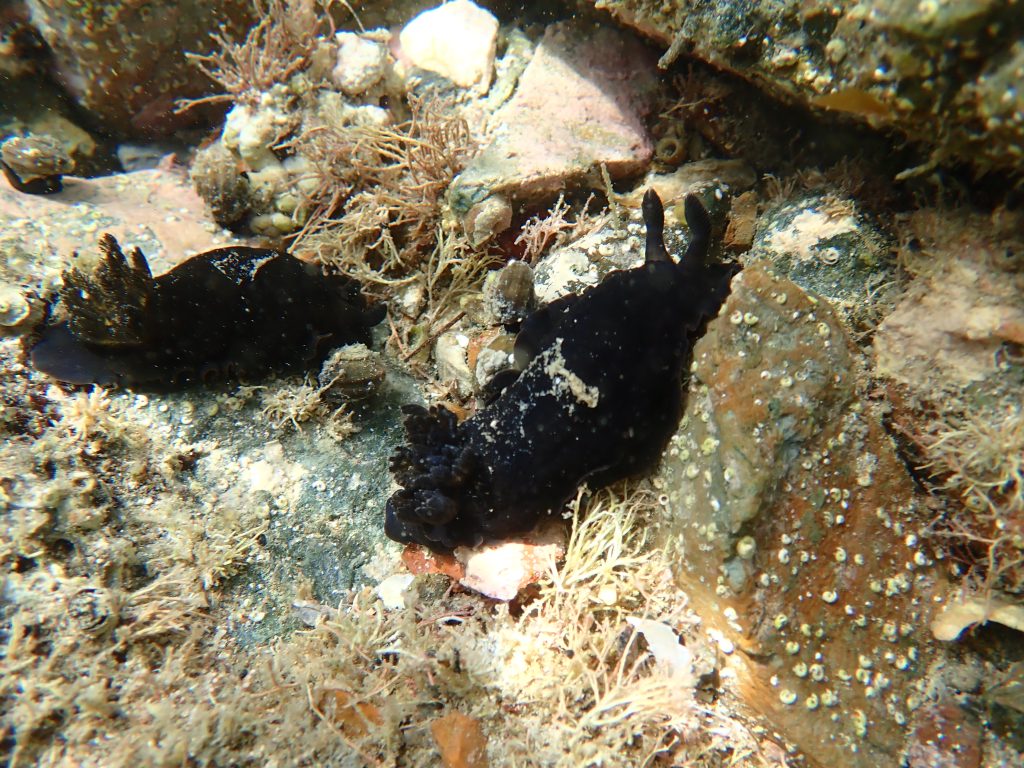
White speckled seahare, a very handsome beastie.Walking seahare, MGBRed seaweed at MGBA handsomeBlack dorid, unkindly referred to as a ‘sea slug’Champia laingii. An iridescent coloured seaweed.
We also had a fantastically successful Easter market day sheltering behind the fire shed, which was a great venue. I comprehensively failed to get any photos, but can report that heaps of Rakino-ites turned up, and plenty of money was raised for Westpac Rescue Helicopter Trust, and marine conservation. Many thanks to Natalie who organised the event.
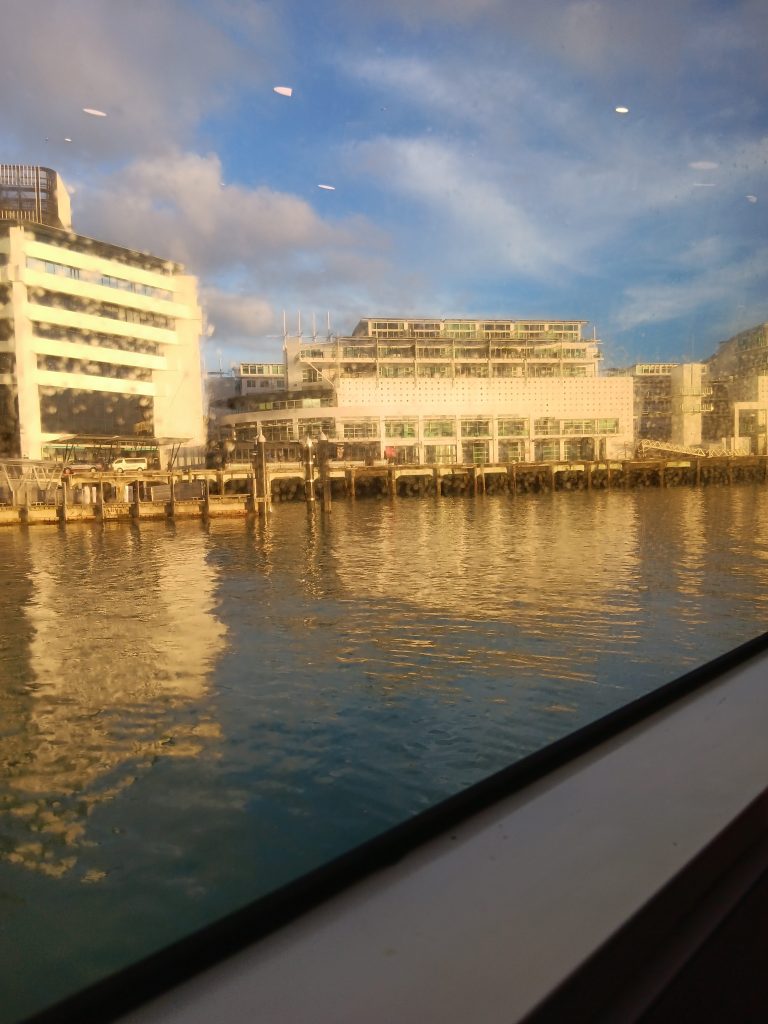
The Auckland Waterfront looking positively Venetian in the early morning.
The first day of the HGIN hui got off to a leisurely start, Auckland luxuriating in the warmth of late May sun, and a splendid day for a ferry ride to Waiheke Island to meet up with other gulf island representatives for our third Hui at Waiheke Resources Trust. It was a smaller group this meet-up but great to catch up again with Audrey from Kawau, Kristin from WRT, and finally meet Zoe in real life.
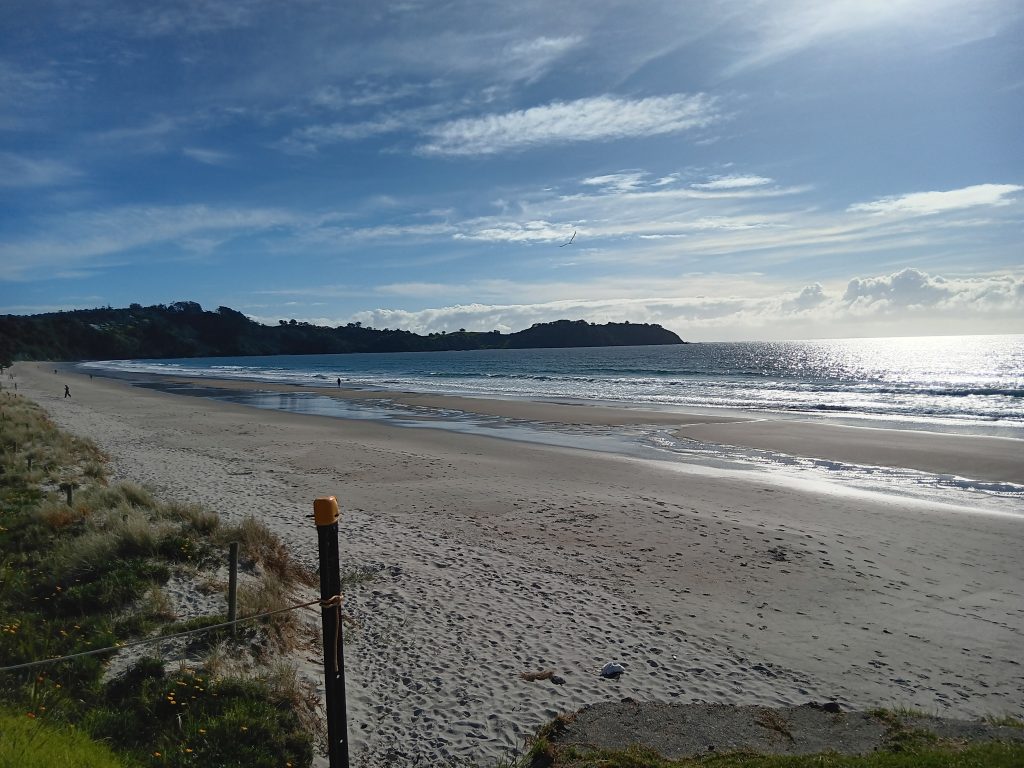
Our first activity was in the company of the wonderful Huhana Davis. Her workshop ‘Sacred Spaces in Public Places’ took us on a mini tour of Waiheke, from the beachfront at Matiatia to the silver sand of Onetangi and special places in between. I found it extremely thought-provoking, and it reinforced how strongly I feel about preservation of ‘culture’ on our islands, and the necessity to figuratively maintain a pou in the sand with regard to how our communities respect each other, and our environment. Visiting the three carved pou behind the Waiheke Library also inspired the thought that we could literally create a pou.
Huhana sharing her knowledge of her tīpuna with us at Matiatia.Onetangi Beach. To my shame, this was my first visit ever to a spectacular beach.
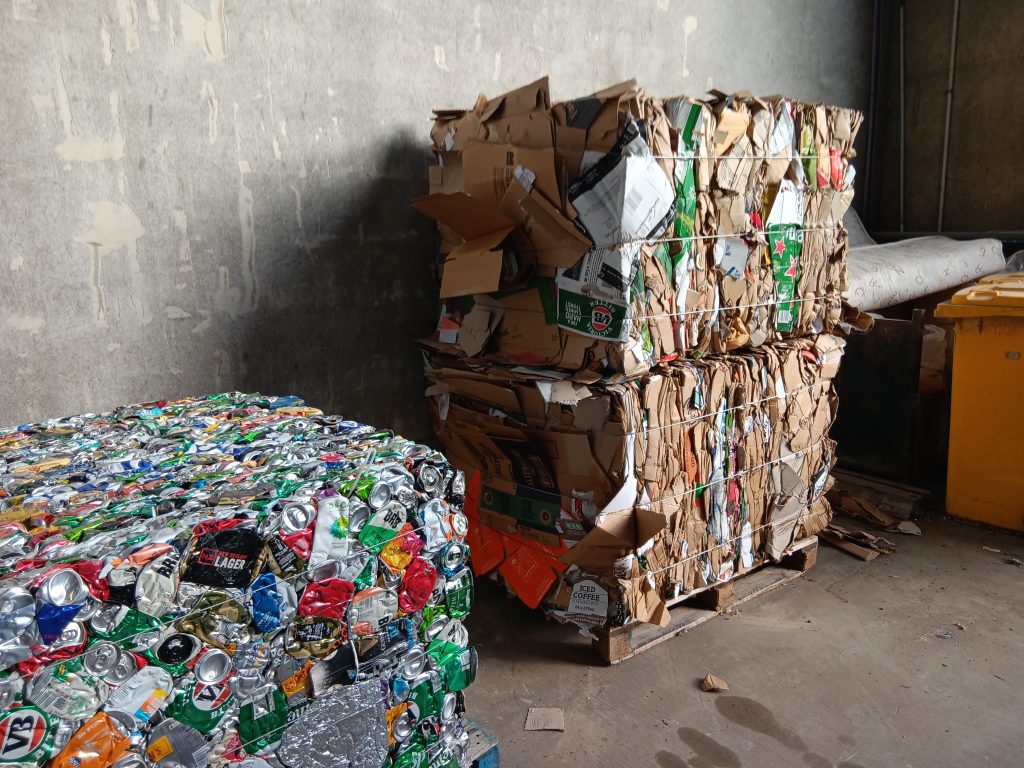
The second visit of the day was out to the Island Waste Collective to catch up with Keith Enoka. Keith’s team are responsible for reducing the waste which is transported off Waiheke. They reduce, repurpose, and recycle in an enviable fashion. Keith is ever-inventive, and the premises have grown impressively since my first visit in 2024. There are lessons to be learned with regard to waste reduction on Rakino, and the intention is to enact those lessons this year, with a community composting trial set to get underway. We also ran into Denisa, for a timely chat about moth plant eradication.
Crushed cubes of aluminium cans and cardboard at the Island Waste Collective.
This was followed up by a debrief back at the Waiheke Resources Trust before we headed out for dinner. I had to get back to Auckland in order to organise myself for the next day, a trip to Rakino! The ferry was running a tad late, but I entertained myself listening to the kororā coming ashore at Matiatia. I could see their eyes gleaming in the dark as they swam ashore before heading up the beach into the rocks, braying like mad donkeys.
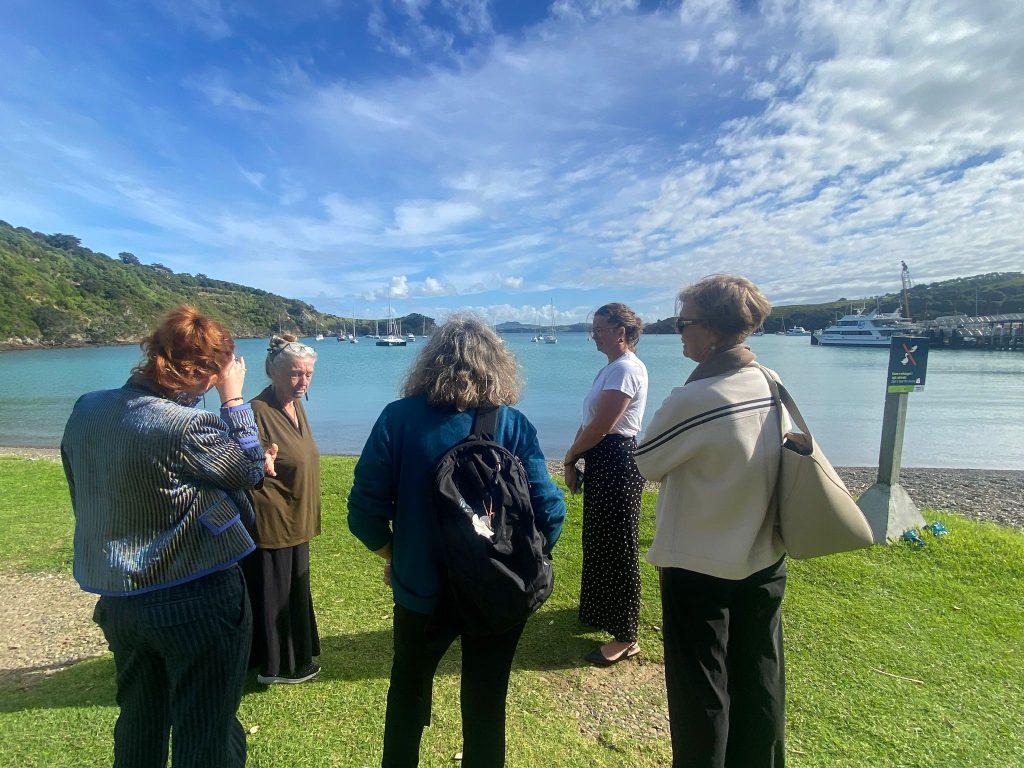
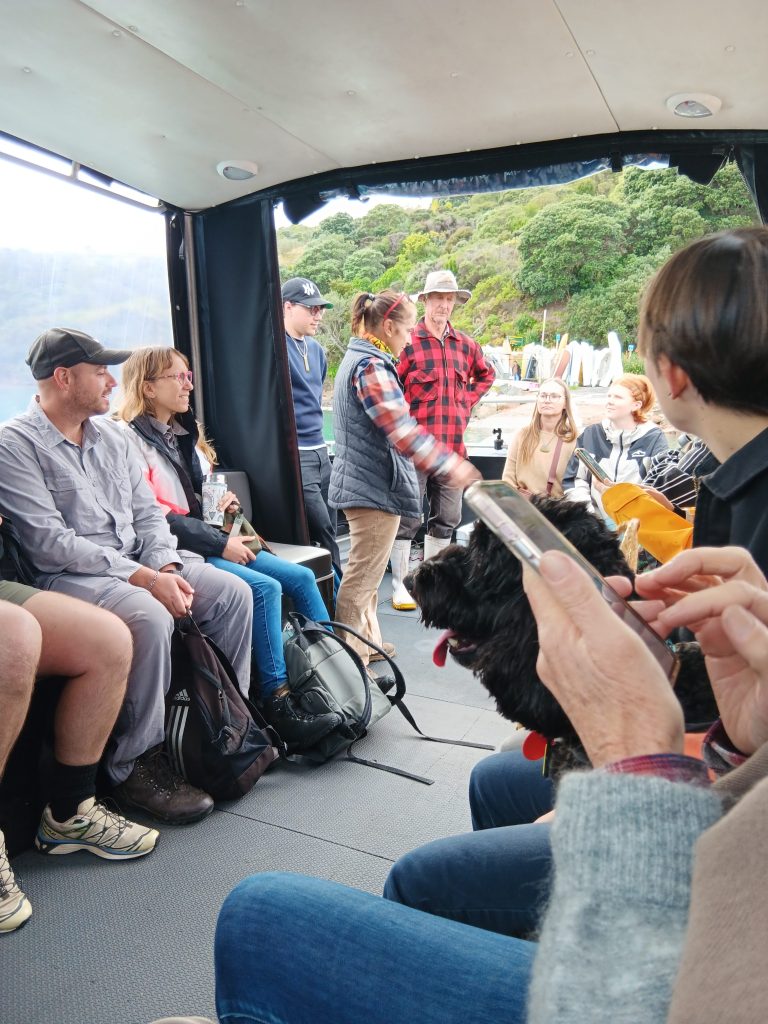
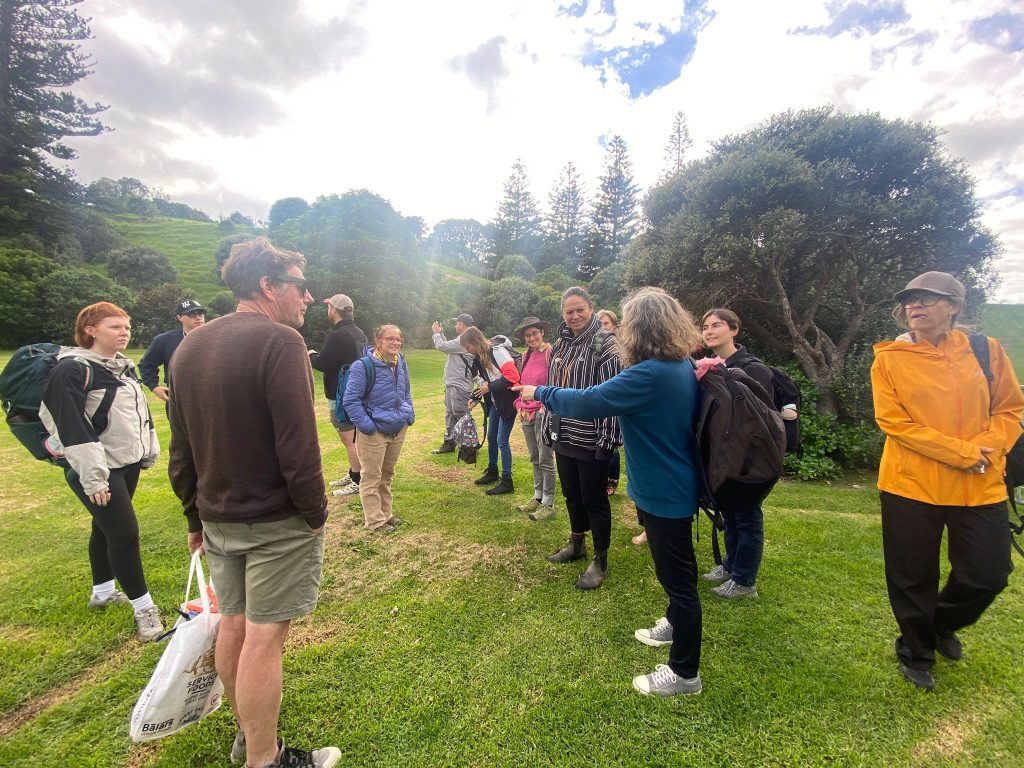
Day two began very early, lugging my pack in the dark up to the bus stop to head into town for an early ferry trip, in order to be at Matiatia on time for the water taxi ride to Rakino Island. This is the first time the Hui has taken a trip off Waiheke to visit another island, and Rakino was chosen for the inaugural visit. We had a full boat of 15, so the pressure was on… Most of the team had never visited our island, and the group was made up of people from a number of nationalities, all involved in environmental restoration, and waste reduction, as well as Kylee Matthews, chair of Waiheke Local Board, and Nicola Strawbridge, waste reduction advisor from Auckland Council.
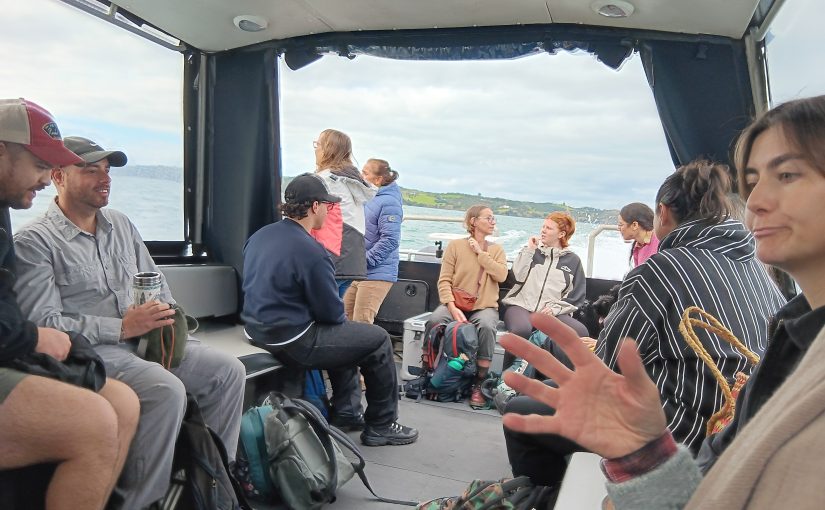
On the sea shuttle, about to head to Rakino!Upon arrival, I hold forth as everyone looks on, bemused.
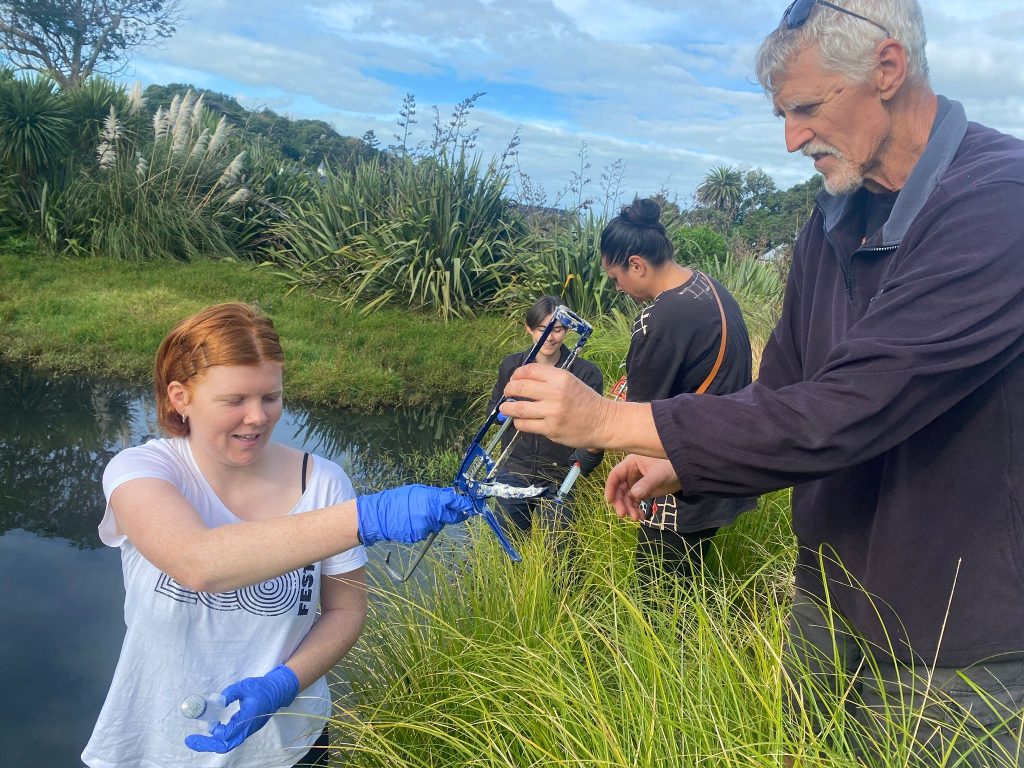
We were met at the wharf by Bert and Simon, armed with 6 scrounged caulking guns, ready for the first activity of the day, eDNA water sampling at Home Bay. Marta presided over this. It involved taking samples from two stream sites and forcing a litre of water through filters in order to collect DNA information on all the critters that reside in the stream. The caulking guns are a necessity as it gets progressively harder to force the water through the 5 micron filters as the ‘information’ builds up and collects. Water clarity is imperative as too much murkiness clogs the delicate filters. This is pretty exciting, and we can’t wait to find out what lives in this stream. The process is not inexpensive, and the data will be valuable. Many thanks to Laura for giving Bert last minute permission to conduct the testing at Home Bay.
Zoe and Bert eDNA water sampling.
While everyone else was getting their hands dirty, I was chatting with Nicola, Kristin, and Kylee about island issues; predominantly getting food out of household waste and cardboard out of the recycling with a view to supporting Lyndsey’s composting initiative, but also dealing with the interminable moth plant problem which gets worse every year. Some good ideas were tossed around, and some commitments were made.
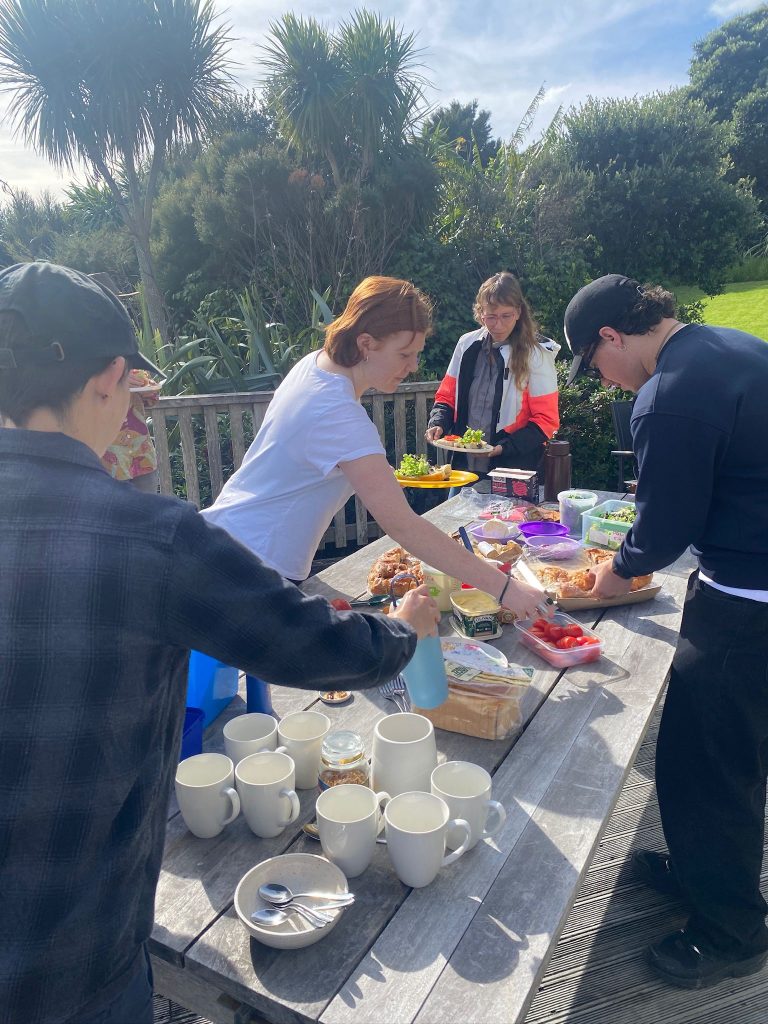
We headed up to Bert’s for a slap up picnic lunch, organised by the fabulous Kathy from Kai Conscious at the Waiheke Sustainability Center. Kai Conscious divert tonnes of food from going to landfill every year and redistribute it, or convert it into delicious shared Friday lunches. Bert’s impressive planting endeavour was much admired.
A shared feast!
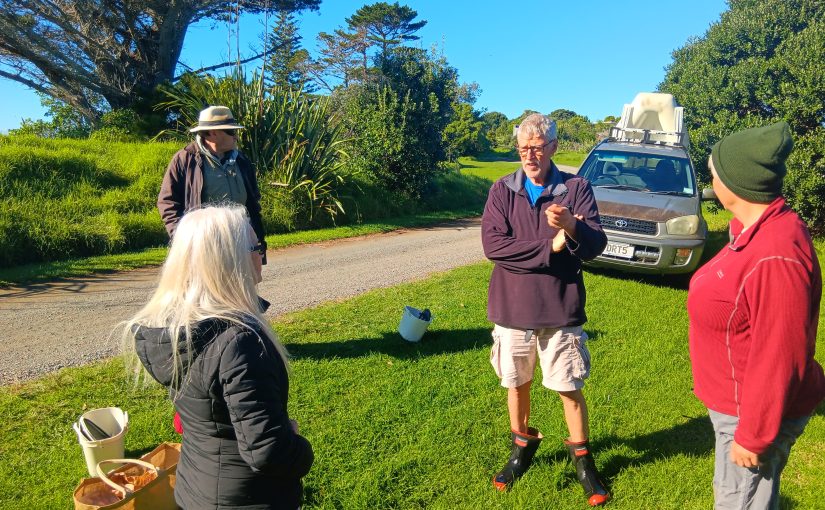
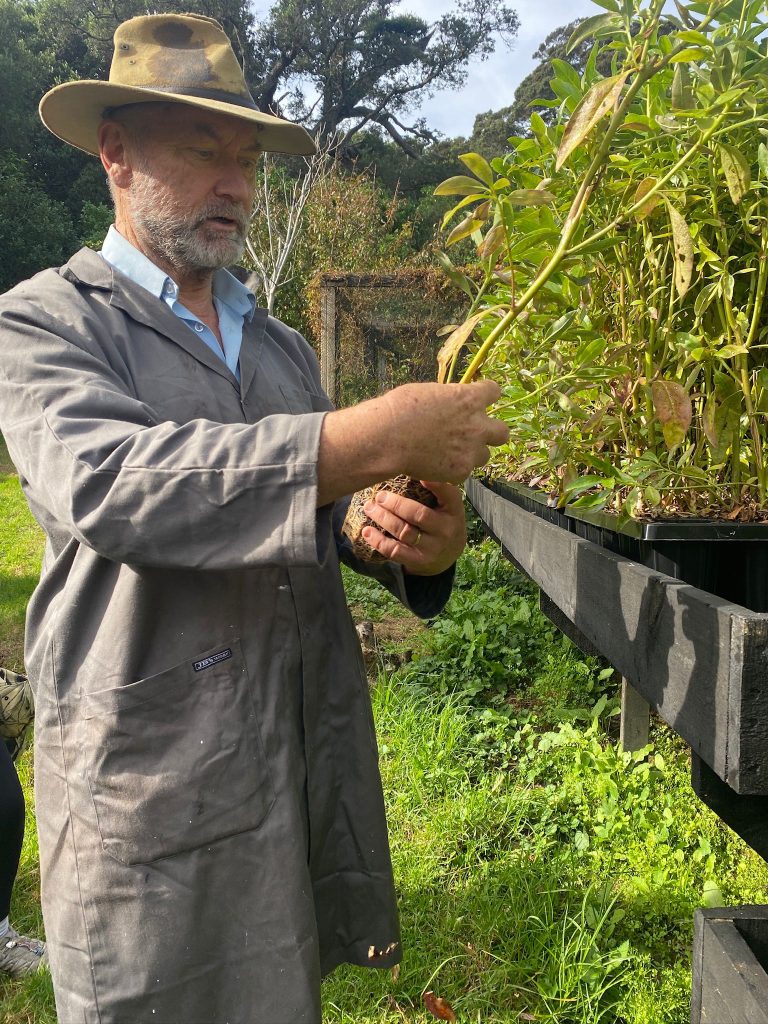
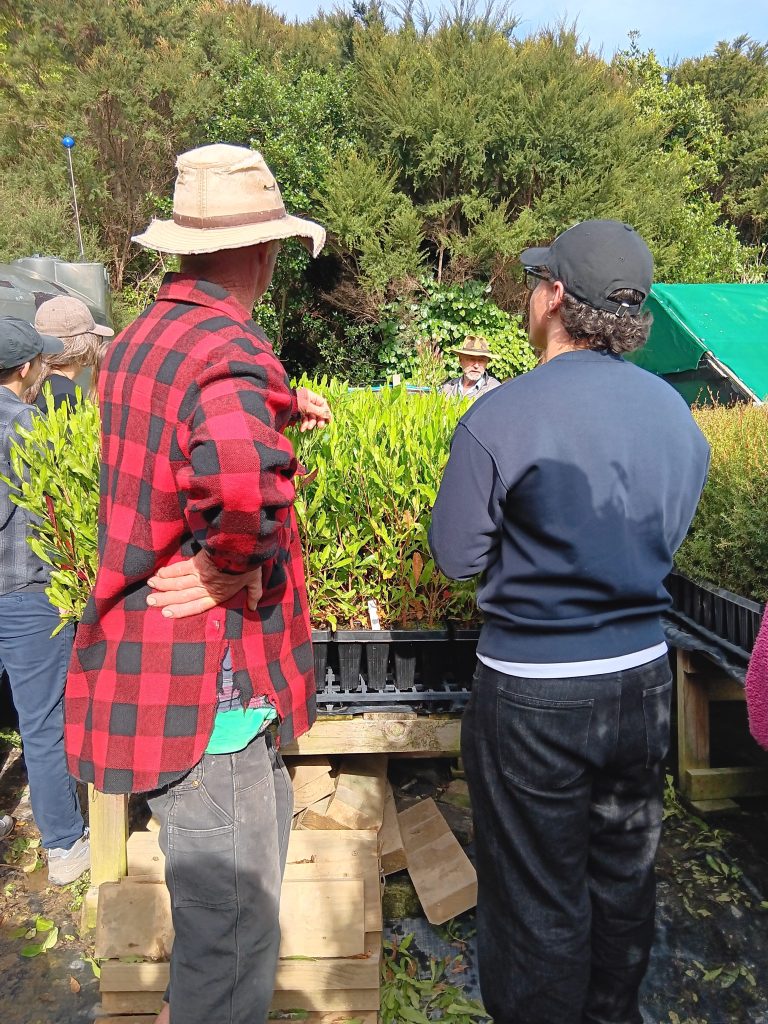
Following lunch, we marched up the hill in order to meet up with John down at the nursery. I took an inadvertent shortcut on my backside while more circumspect visitors chose a dignified entrance. John took us through the nursery, talking us through his process for ramped up tree production in order to meet the needs of larger block owners who want to do a regeneration planting on their land.
John demonstrating a fine root ball.
In recent times John has refined his growing process in order to get maximum use out off the spacial limitations of the nursery. The nursery has all its water needs met thanks to a local board grant for water tanks, and volunteers Bert and Kevin assist with the watering, which is a time-consuming job. The trees are all looking healthy, and some will be heading out for community planting this King’s Birthday Weekend.
The advantage of buying trees grown on the island is that the seeds are eco-sourced as much as possible from the geographical area of the gulf islands, but most importantly they are guaranteed pest-free. The risk of plague skinks and argentine ants is always top of mind when bringing vegetation to Rakino, and all plants must be well soaked in advance of transportation.
Rob, Ariki and much akeake.
Judi turned up with impeccable timing to offer a lift to any folk who really couldn’t face another uphill trek, and we all headed back down to the wharf to farewell our visitors. The sea looked a bit choppy, so I hope the trip back to Waiheke wasn’t too lumpy. I hope everyone enjoyed the day visit, and it’s clear there is tangible value in forging stronger connections between our islands. It was also excellent to have representatives from council visit Rakino. Many thanks to Zoe and WRT for organising the Hui and to Waiheke Local Board for supporting it. I’m already looking forward to next years meet-up.
Not dramatically, not like a crashing wave or a siren, but quietly, like a fog: soft at first, then everywhere. It shows up on my phone, in headlines, on social media: policies rolled back. Protections stripped. Science defunded. Expertise ridiculed. Species disappearing. A political climate that feels more handheld flamethrower than democratic process. And beneath all of that, the quiet exhaustion of living through cascading crises without a pause button.
It’s especially loud now, at the turn of the year, a time when we’re told to make plans, set goals, and imagine better futures. But imagining can feel dangerous when the world feels fragile. The idea of resolve can seem almost laughable.
Despair is seductive because it offers a strangely rational refuge: If everything is collapsing, then nothing is required of you anymore. And there’s relief — brief, dangerous — in imagining the story is already over.
But despair isn’t neutral. It doesn’t just describe reality. It shapes it. Despair hands momentum to the forces counting on our fatigue. To the industries that benefit when we withdraw. To leaders who flourish when we believe we are powerless. It masquerades as honesty. Underneath it is permission — not to feel, but to quit.
Why We Stay in the Work
There have been days — fieldwork days, policy days, loss-of-another-species days — when I thought: Maybe the wild world will outlive us. Maybe the most we can do is bear witness to the ending. But then I think of future generations forced to inherit a planet stripped of its complexity and wildness, and bearing witness feels too much like quiet betrayal.
And then something interrupts. A headline — quiet, almost buried — about wolves returning or a coastal ecosystem recovering faster than expected. A student’s email saying they never realized nature was part of their story too, even from a city block surrounded by concrete. A grainy livestream of coral spawning — imperfect, but undeniable evidence that life is still trying. A community cleanup that began with six hesitant strangers and somehow became a recurring ritual people now protect on their calendars. A message from someone I’ll never meet saying they felt less alone because I didn’t give up.
And then, perhaps most powerful, I sit in a folding chair at a community meeting. The room isn’t glamorous. There’s no dramatic soundtrack. People are tired. Some are angry. Some are afraid. No one knows everything. But they showed up anyway. And in that small, imperfect room, I remember: Despair isolates. Community builds momentum.
We Are Not at the End — We Are at the Fork
This is a threshold moment. The kind future generations will study — not because we were certain, but because the uncertainty cornered us into choosing who we were willing to be.
History is full of inflection points when the future could have veered toward collapse or reinvention. And in those moments, there were always people who refused to leave the page blank: people who showed up tired. People who acted without guarantees. People who believed — not because the outcome was certain, but because living without trying felt unbearable.
That’s us now. Not the first generation to fight for wildlife, rivers, forests, or ocean. Not the last. But the generation with the least time to hesitate.
So what do we do when despair feels stronger than resolve? We don’t banish it. We don’t pretend we’re immune. We learn to feel it — and then move anyway.
Here’s how we keep going — not perfectly, but sustainably.
1. Shrink the Horizon.
Not everything needs to be solved at planetary scale. When the global feels unbearable, go local. This isn’t evasion, it’s strategic retreat. When we successfully restore one stream, one prairie, one forest patch, one shoreline, we break the logic of despair that says our efforts are futile. We create our own momentum. Small work is not small if it moves the world forward.
2. Build Belonging, Not Just Awareness.
Loneliness is one of despair’s most reliable accomplices. Hope doesn’t thrive alone. Find your people — the conservationists, scientists, artists, kids, elders, divers, farmers, fishers, hikers, hunters, dreamers, pragmatists — anyone who still believes a living planet is worth fighting for.
Community transforms despair from a boulder into a load shared. Show up to talks. Host a nature walk. Make space for questions, grief, curiosity, laughter, failure, and trying again. Movements don’t survive because they are correct. They survive because they are connected.
3. Let Awe Recalibrate You.
Get on your belly at the edge of a tidepool and watch barnacles open, each one waiting for the right moment to feed as the tide breathes in. Watch ants rebuild a colony after rain. Follow animal tracks in the snow. Stand beside a river and notice its pull. Watch a storm build over a lake and feel how water holds mood and memory. Plant native grasses and discover how soil — quiet, unglamorous soil — becomes an ecosystem. Grab a map and trace the flight paths of migrating birds overhead. Watch a livestream of a loud, chaotic romp of giant river otters in the Amazon and feel how wildness doesn’t apologize for taking up space.
Awe doesn’t erase the grief, but it reminds us why grief exists in the first place: because we love something worth protecting.
4. Act Anyway.
Even when discouraged. Even when unsure. Even when afraid. Action is not the opposite of despair — it is the antidote that makes despair bearable.
Write. Vote. Volunteer. Donate. Protest. Teach. Repair. Create. Speak up in rooms where silence is easy. Hope grows where footsteps repeat.
5. Rest. Seriously.
Burnout doesn’t make you a martyr. It makes you absent. Rest isn’t quitting; it’s recharging the part of you that refuses to give up.
Even ecosystems rest: Seasons shift, fires reset forests, tides withdraw, storms spend themselves. Your rest is part of the rhythm, not a deviation from it. Rest doesn’t pause the movement. It preserves the mover.
The Persistence of Possibility
Here’s a truth: Despair is honest.
Hope is honest, too. The difference is that hope participates. Hope has calluses. Hope stumbles and keeps going. Hope is the quiet refusal to surrender the future. The living world is not gone. And neither are we. This story isn’t finished. We are still writing it… species by species, action by action, community by community.
So as we step into 2026, maybe the resolution isn’t flashy or tidy. Maybe it’s this: Show up. For the wild. For each other. For the future. Some days that will mean attending hearings. Some days that will mean protecting your rest. Some days it will simply mean refusing to say “It’s too late” even when despair feels convincing.
Hope isn’t something we wait for. It’s a discipline we practice.
And as we cross into this new year — with uncertainty in one hand and possibility in the other — we make a quiet, stubborn promise: We will not hand the living world over to despair. Not this year. Not while we are here. Not while there’s still something left to protect.
Republish this article for free! Read our reprint policy.
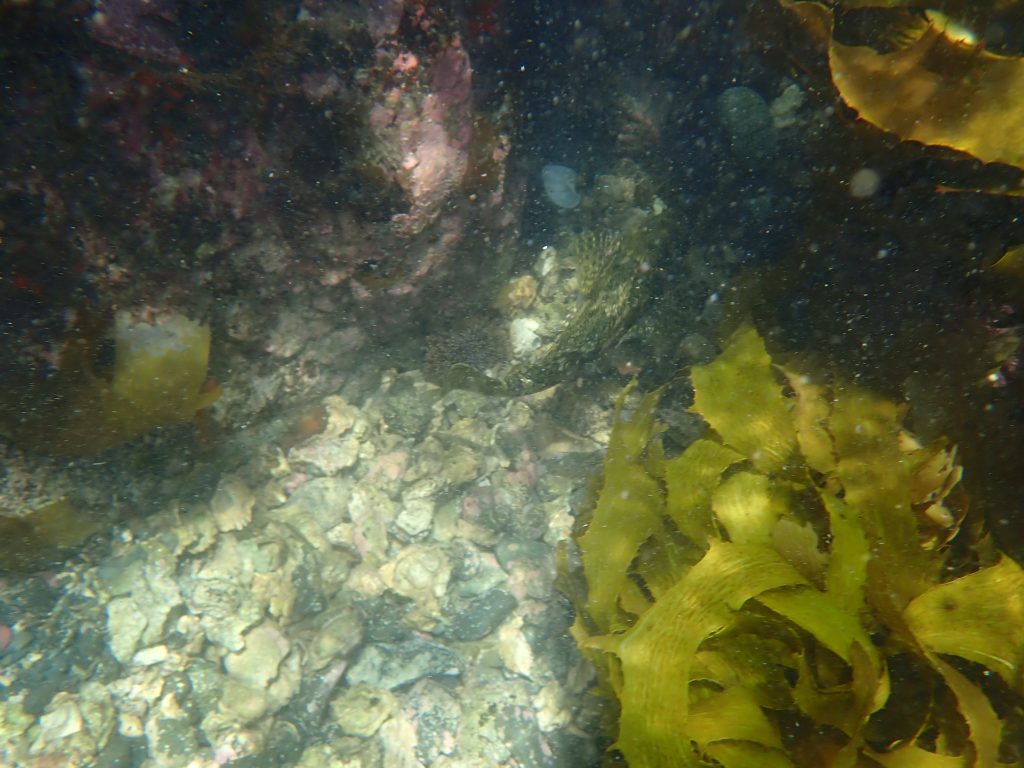
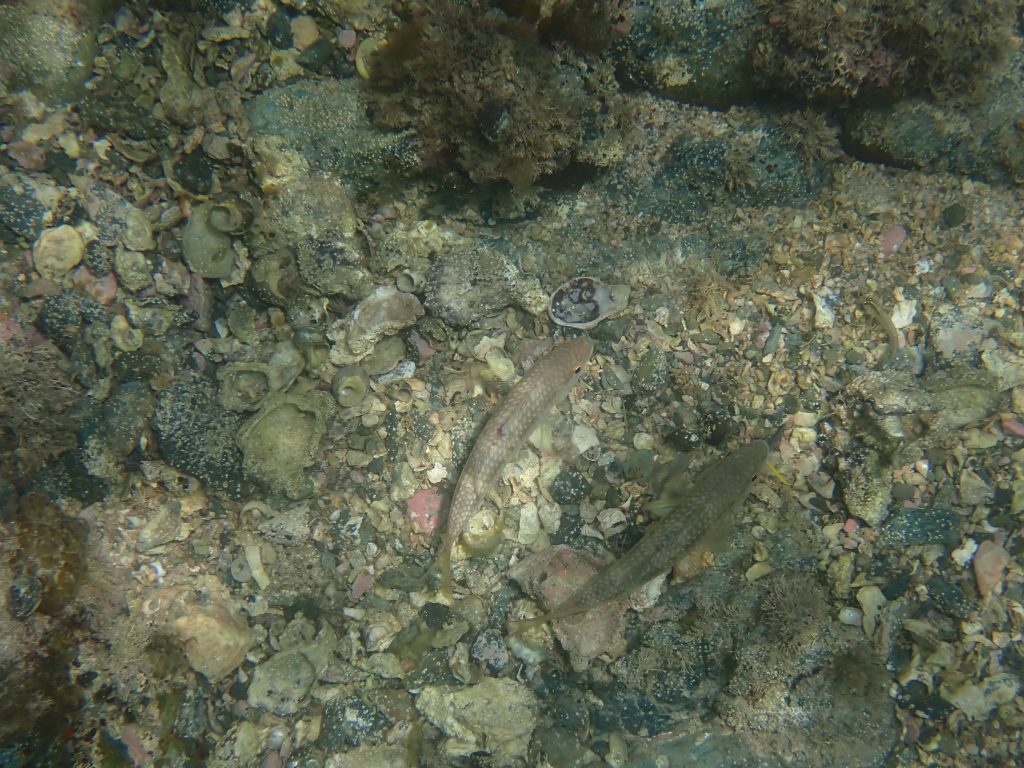
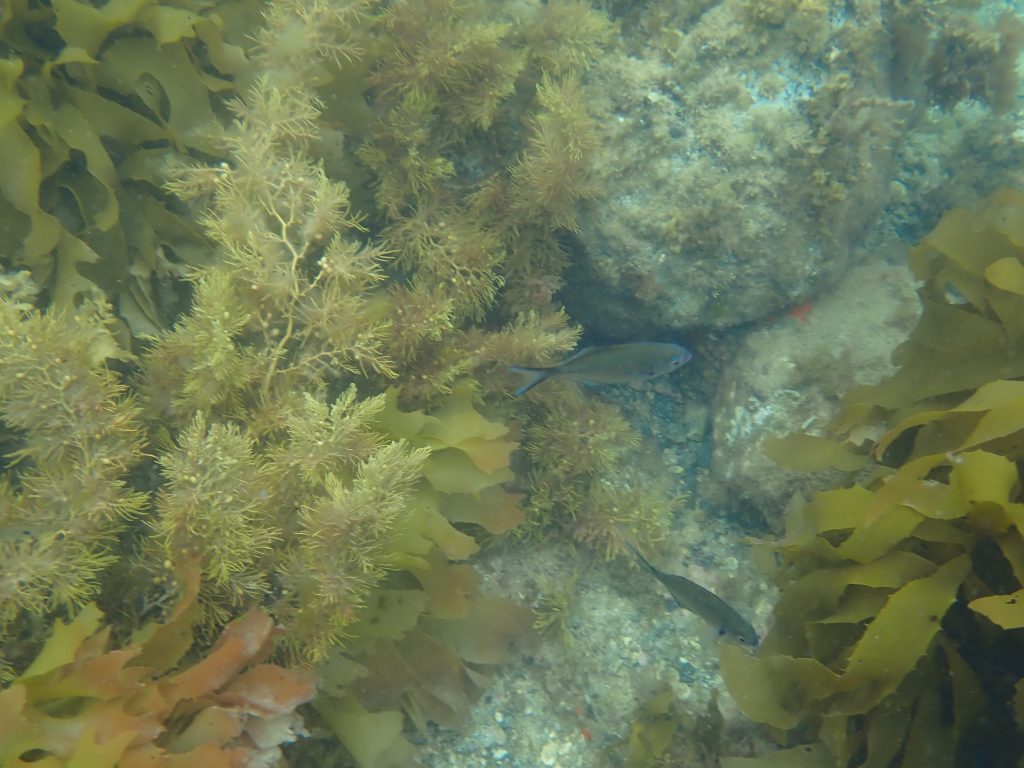
Four more days of recent snorkeling on Rakino Island.. Other critters seen but not photographed, (or not photographed well!) an eagle ray, and a leatherjacket. I’m determined to get a better image of the hiwihiwi next time.
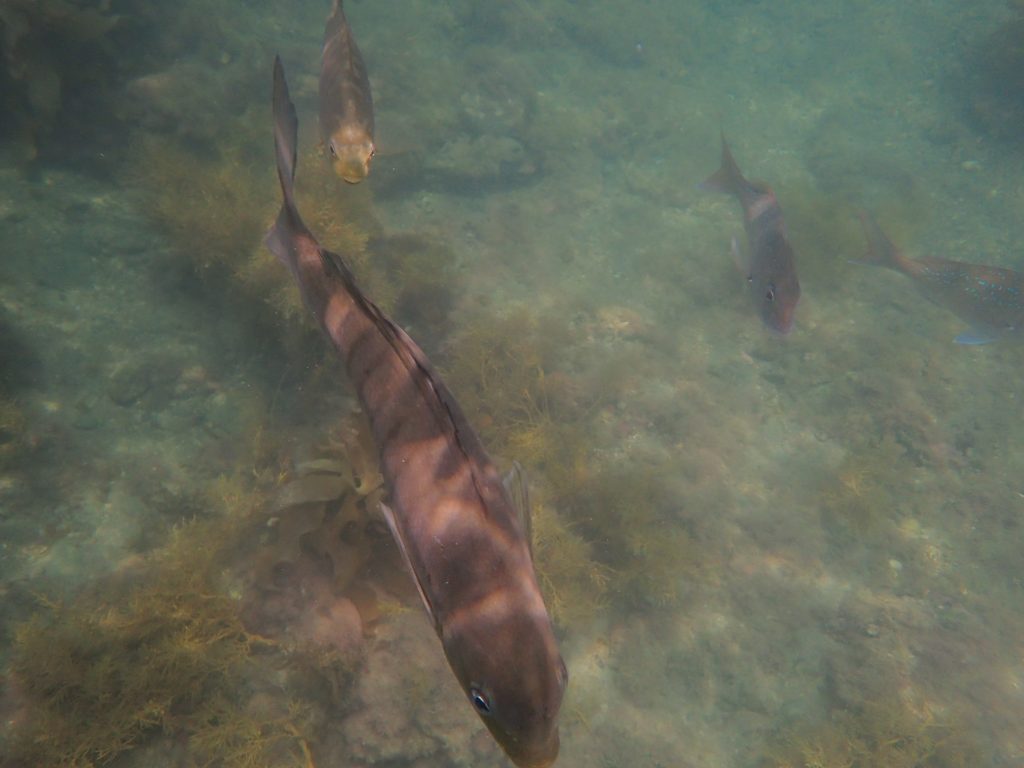
You won’t see much in the way of pictures of snapper here, not because there aren’t juvenile snapper in the rocky reef zone, but because they aren’t an indicator of reef health. We’re more interested in the diversity of other species, and I’m especially interested in the uncharismatic little guys; the chiton, limpets, and dorids. What we’ve seen over the last few weeks of snorkeling is that the reef area isn’t too horrible; the steady decline of the Hauraki Gulf has been relentlessly documented for a long time and now maybe it’s time to start to try and tell a more positive story.
The addition of the High Protection Area at the Noises potentially marks a turning point for the eastern Rakino reef and coastal areas. The worst case scenario would be to see a line of recreational fishers sitting in their boats just off the edge of the HPA between Rakino and The Noises.
I’m hopeful that we’ll see even more diversity in the next few years instead, and maybe one day an extension of the HPA over to the Rakino coastline. Regardless, we’ll continue to document the changes.
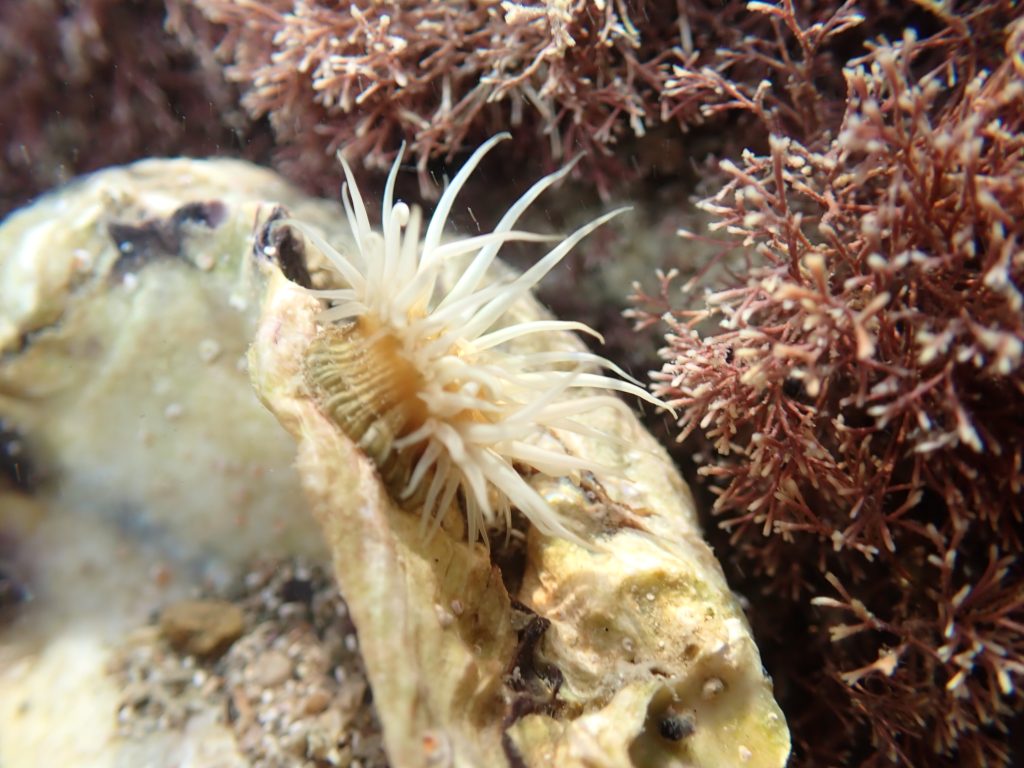
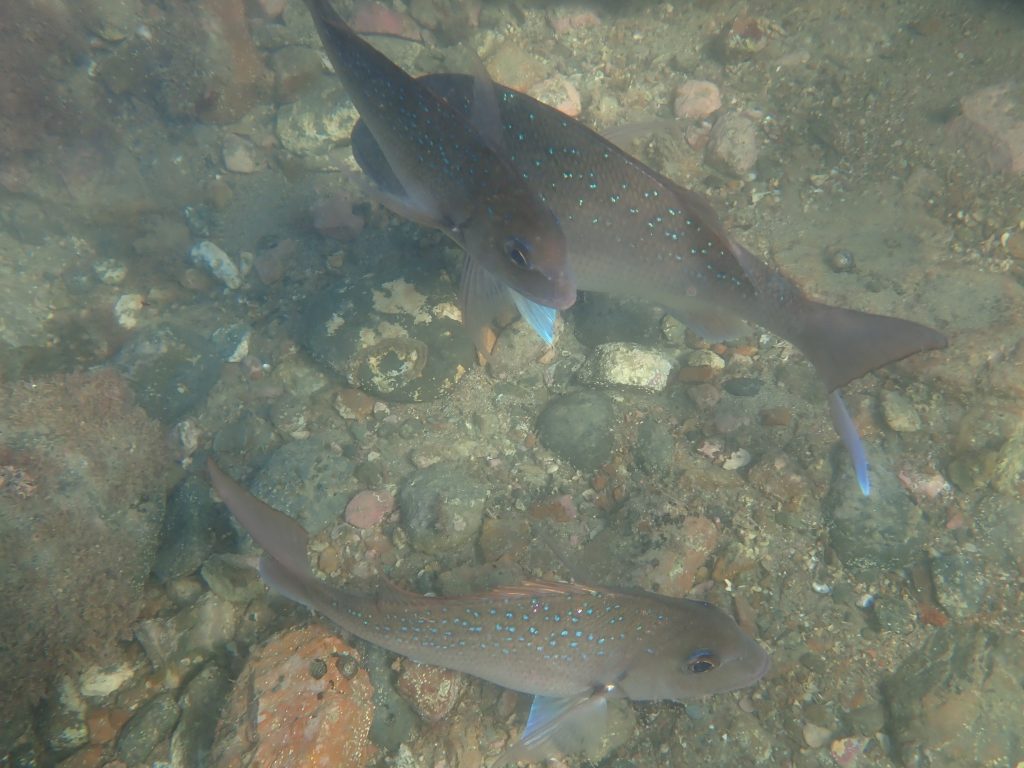
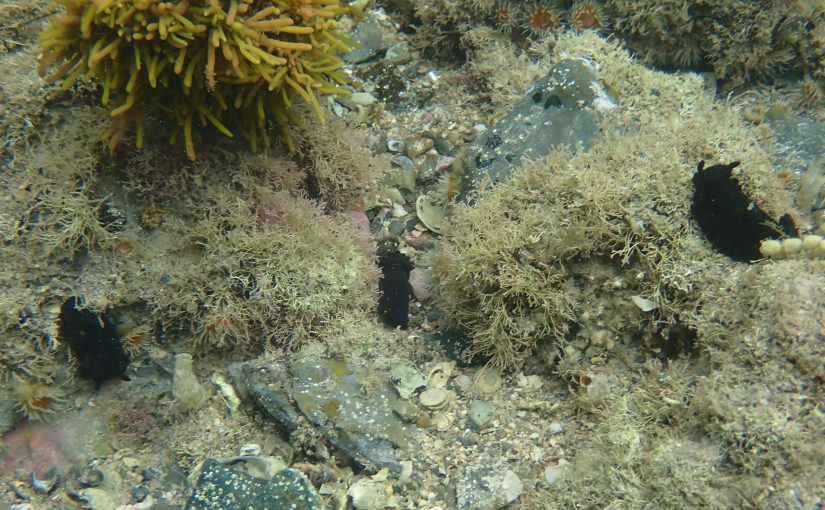
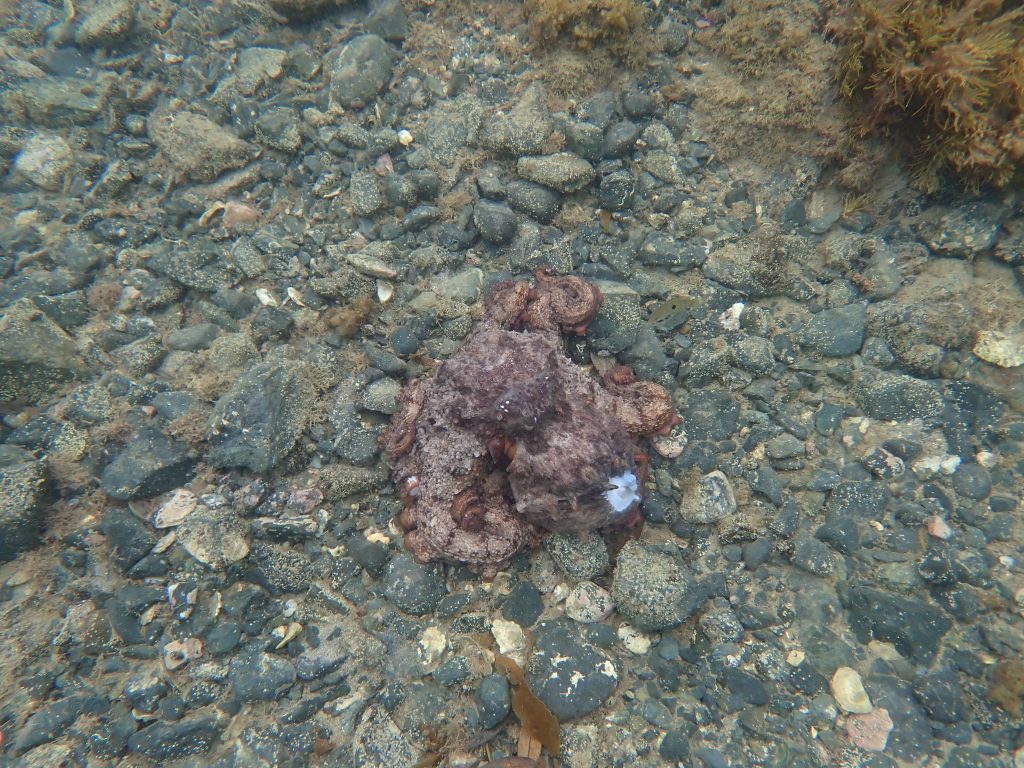
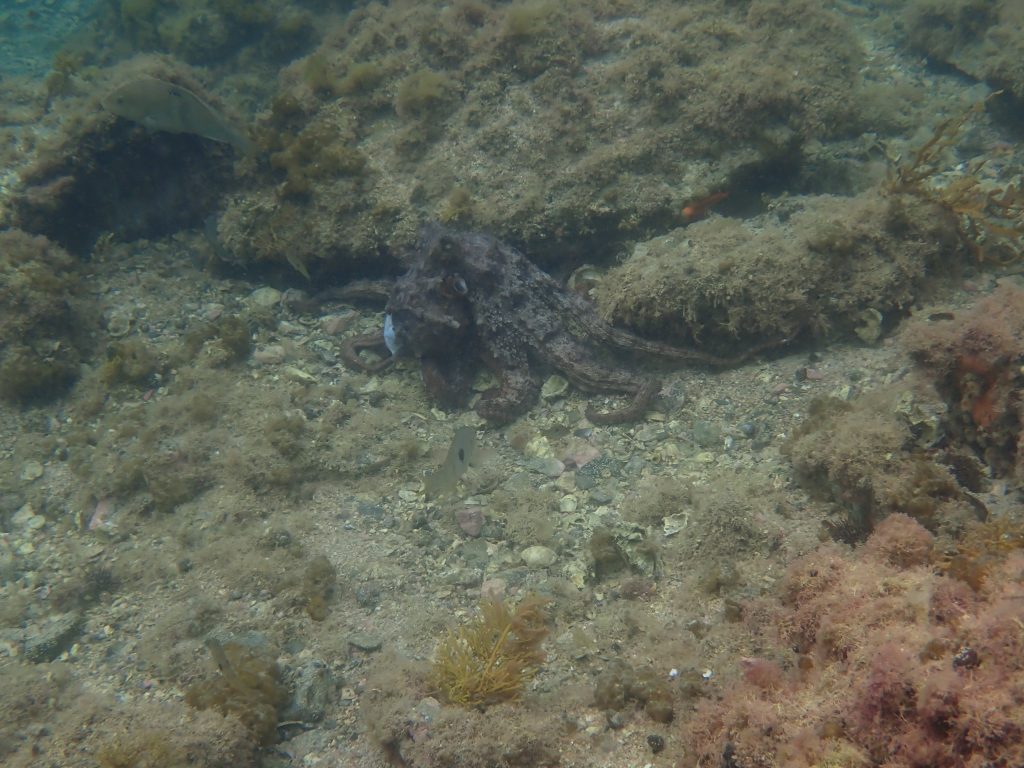
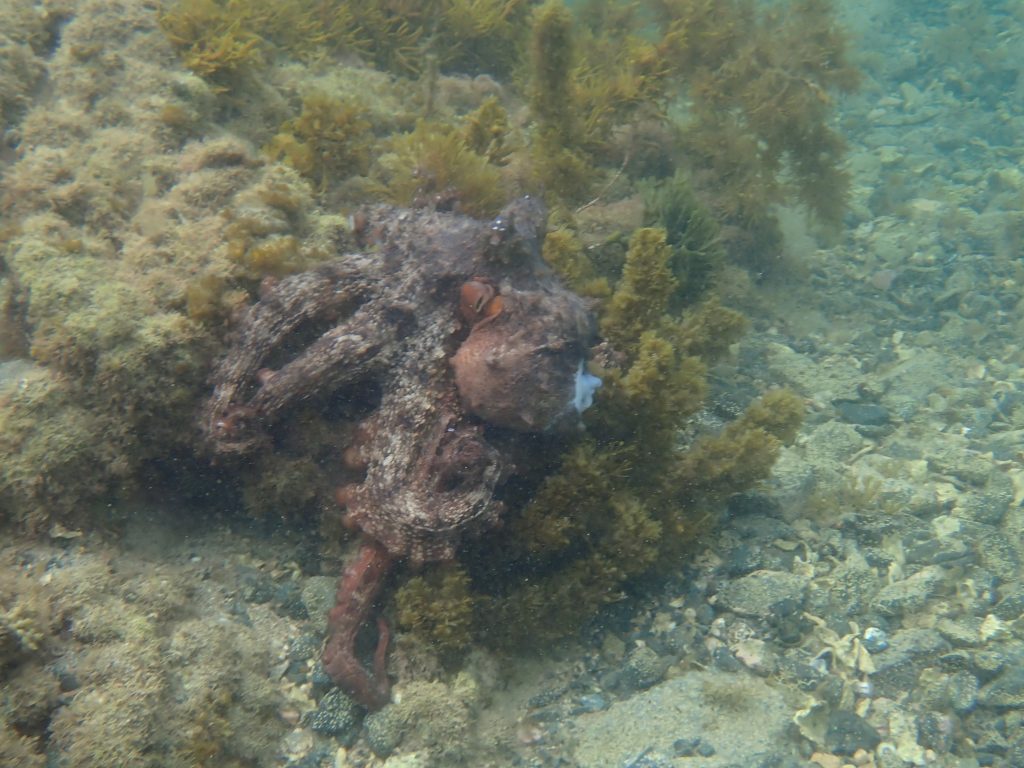
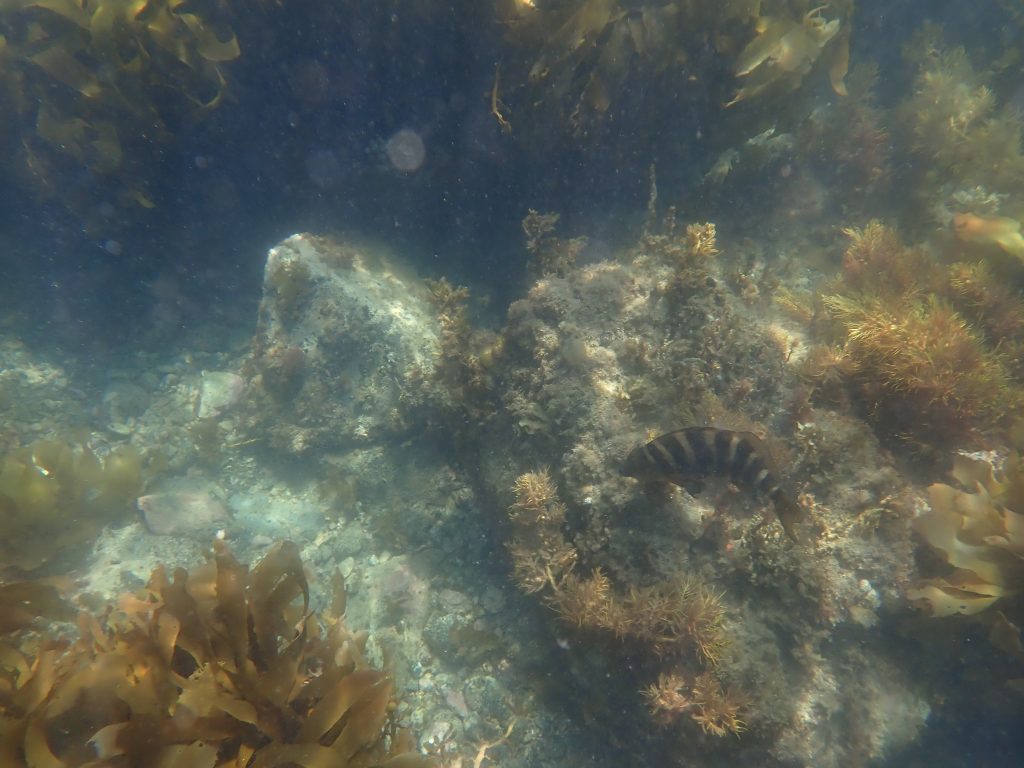
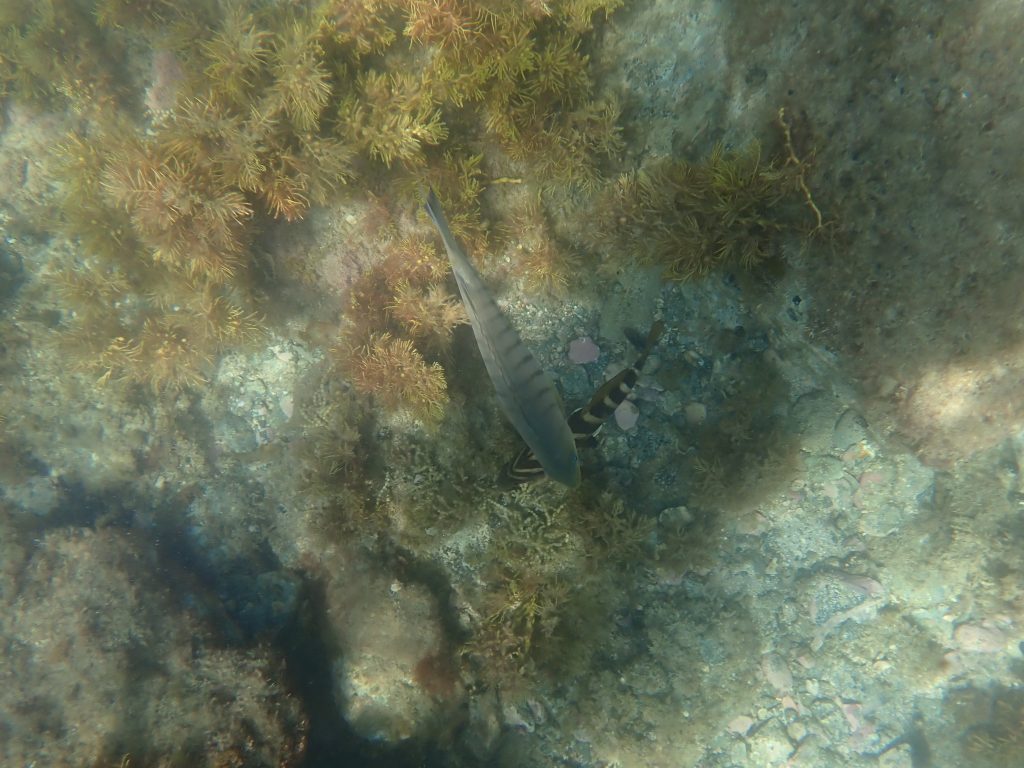
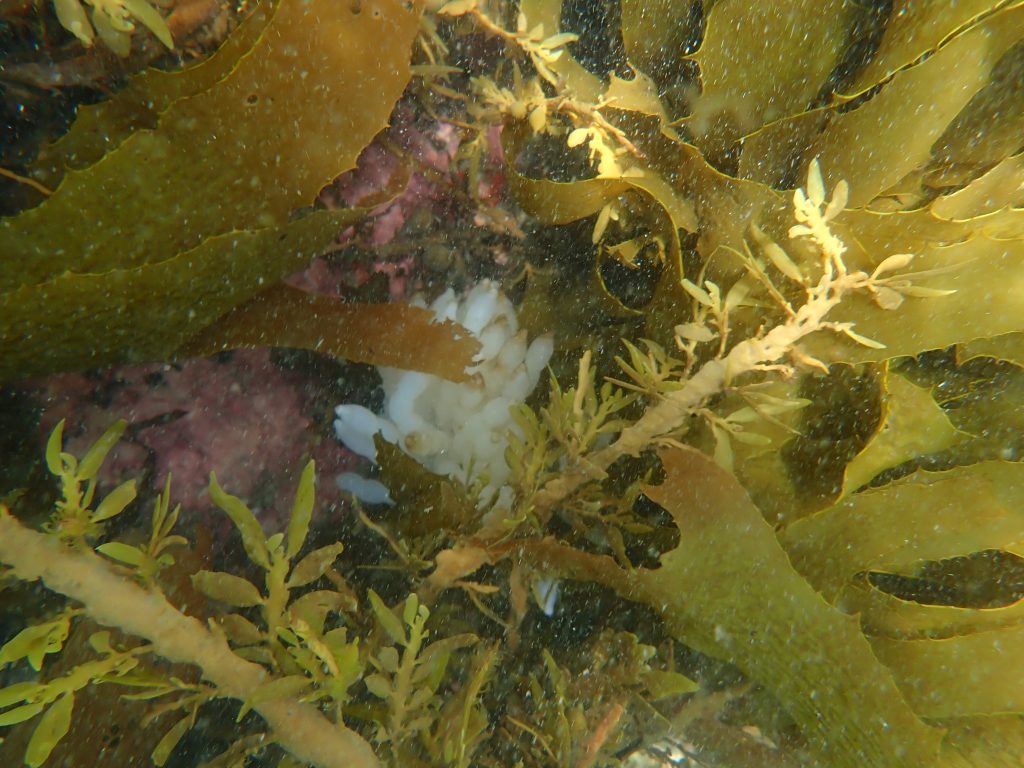
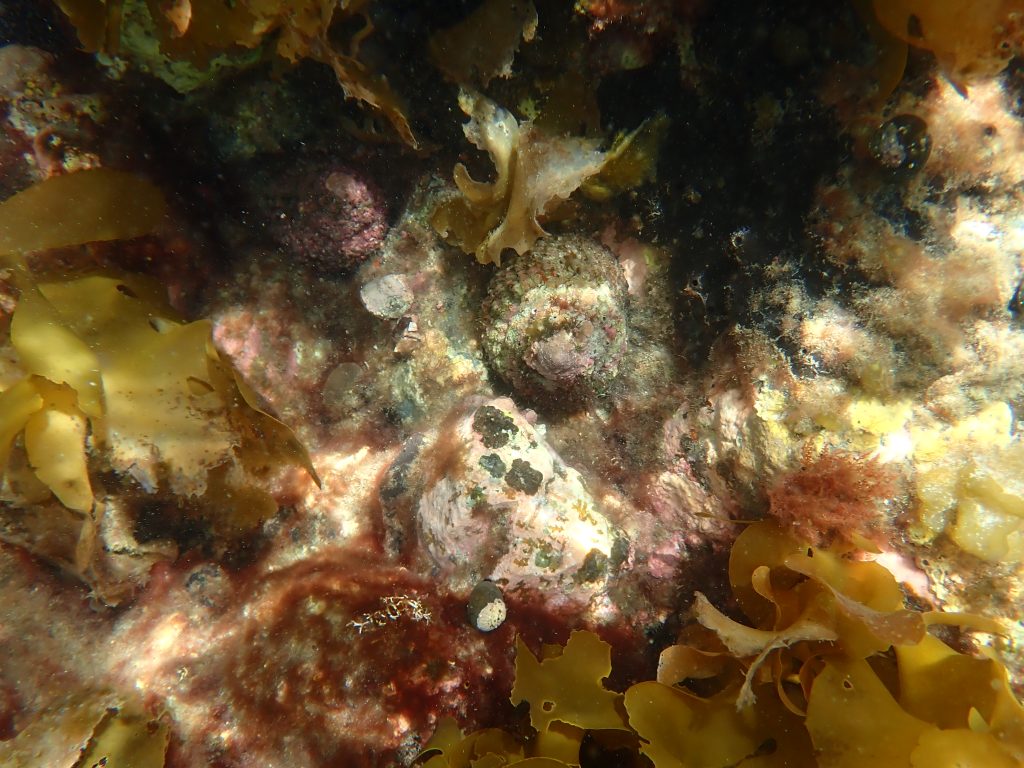
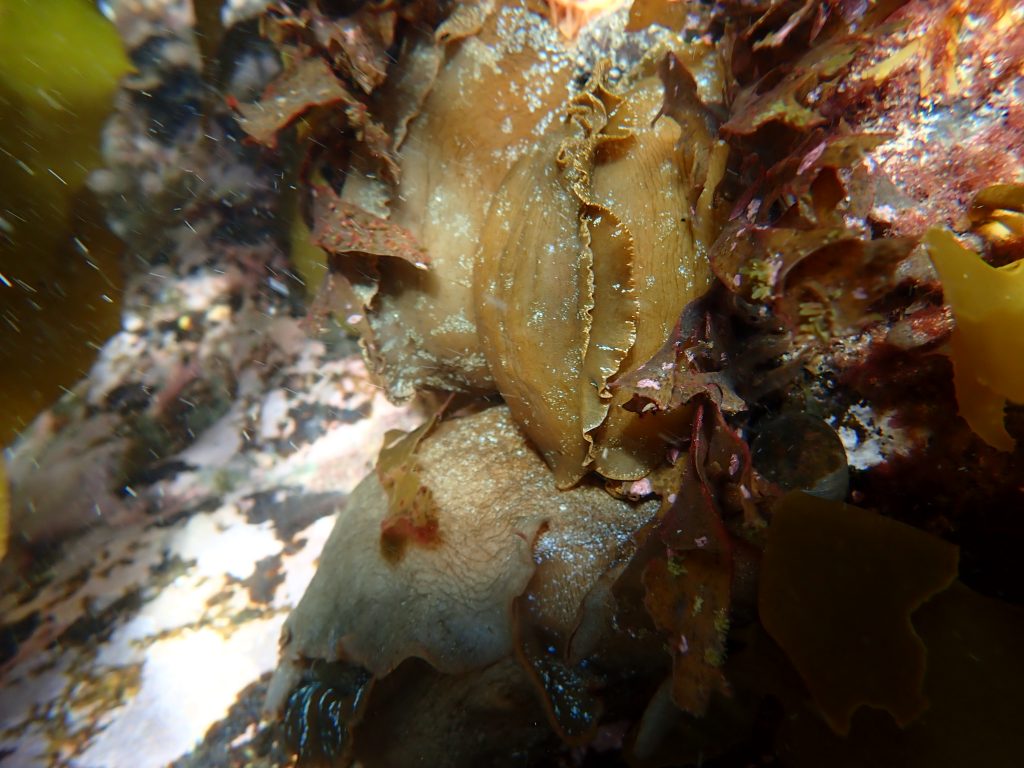
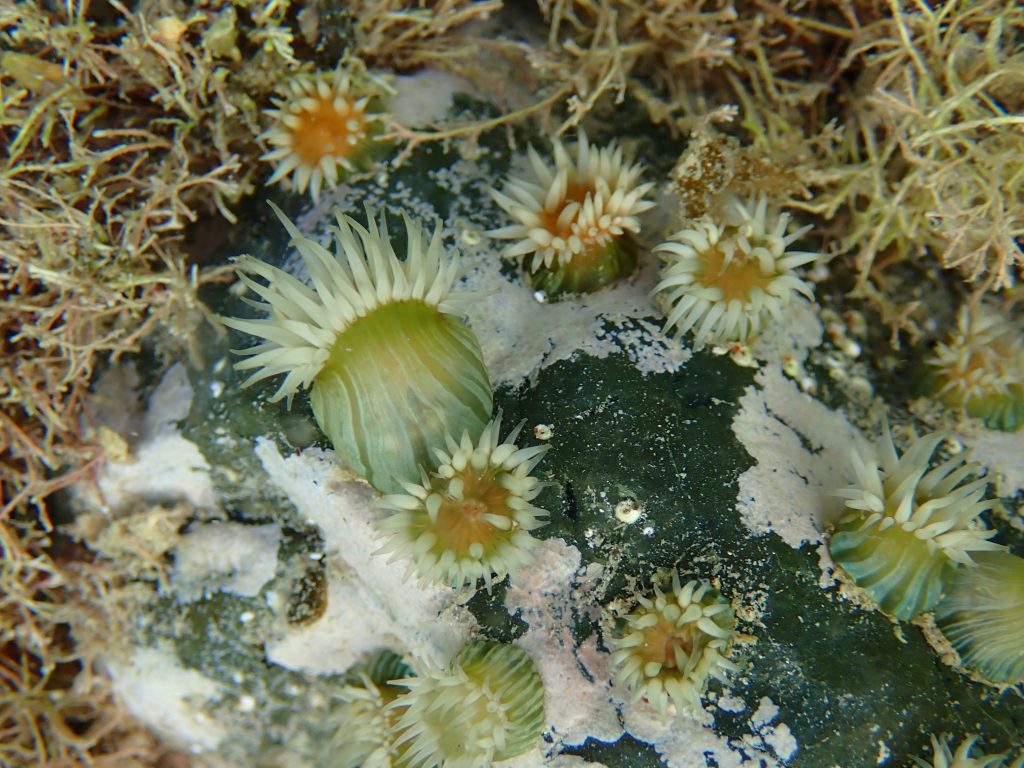
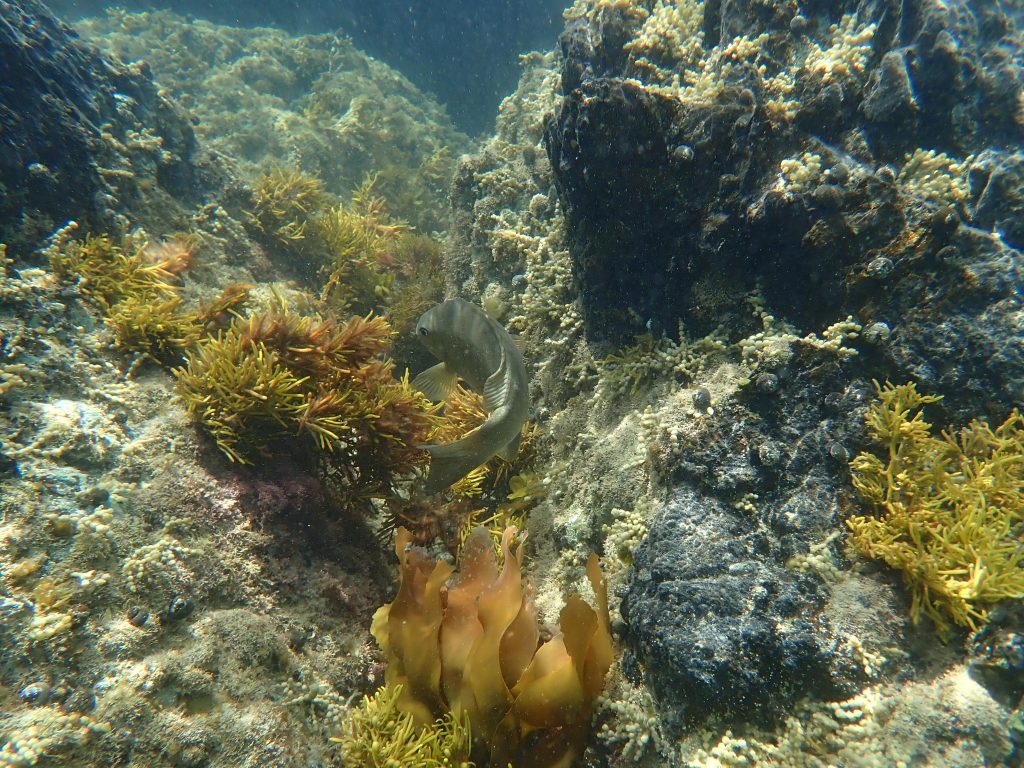
Octopus pretending to be a speckled rock.Tentacular extension.Heading for the seaweed.Red Moki.Parore and red moki crossing paths.Squid eggs!A clutch of decent sized turban shells.Walking Seahares in the kelpHiwihiwi (kelp fish) fleeing my rude intrusion.Goat fish. Only one charming yellow whisker on display.Yet more beautiful white striped sea anemones.Silver sweep.Close-up of another black dorid nudibranch! One of three hanging out together..Parore in the seascape.
Images of some recent snorkeling in the rocky reefs of Rakino. Many, many thanks to the Waiheke Local Board for funding the underwater camera so we can continue to document the flora and fauna of underwater Rakino.
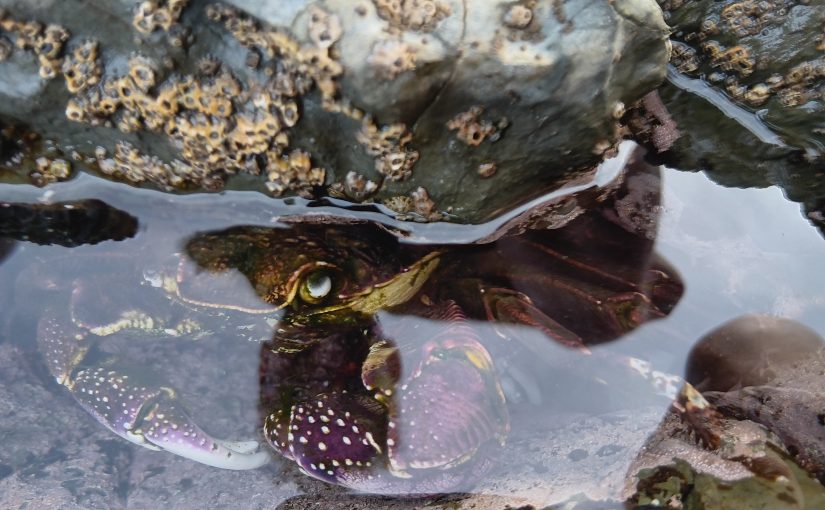
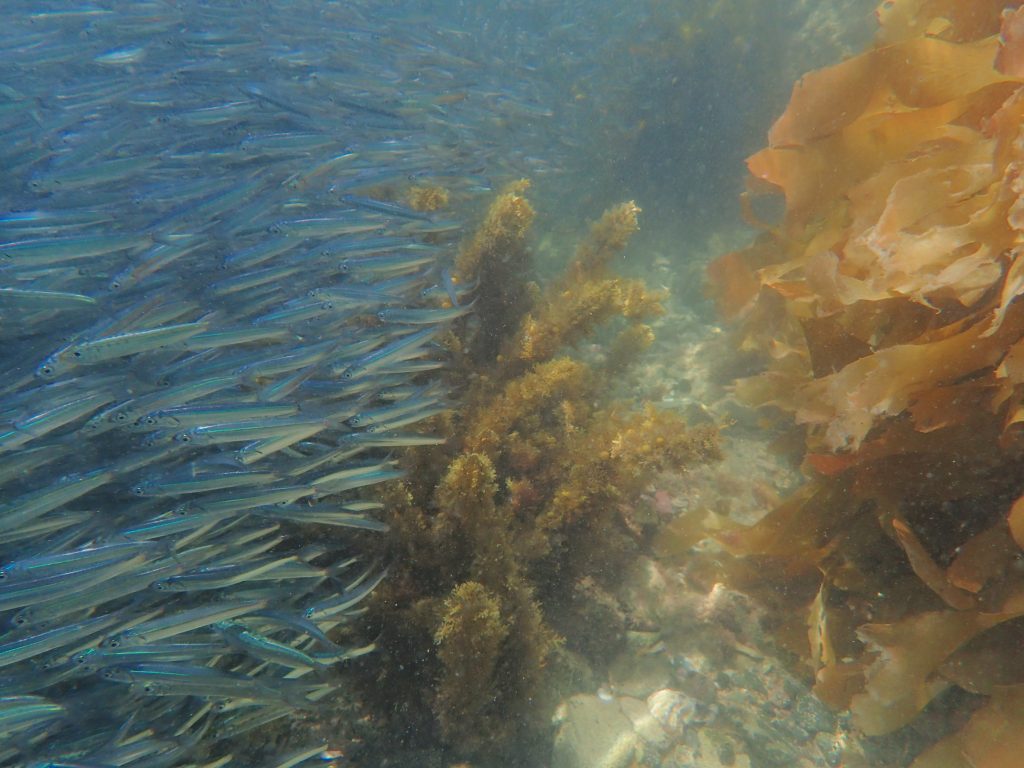
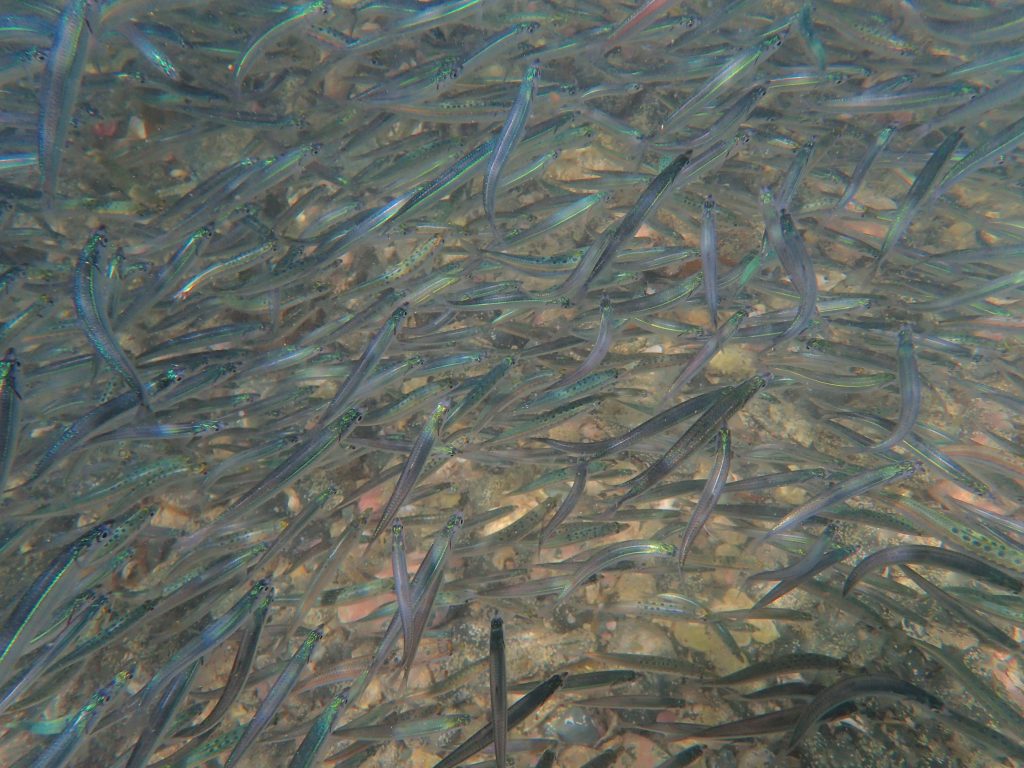
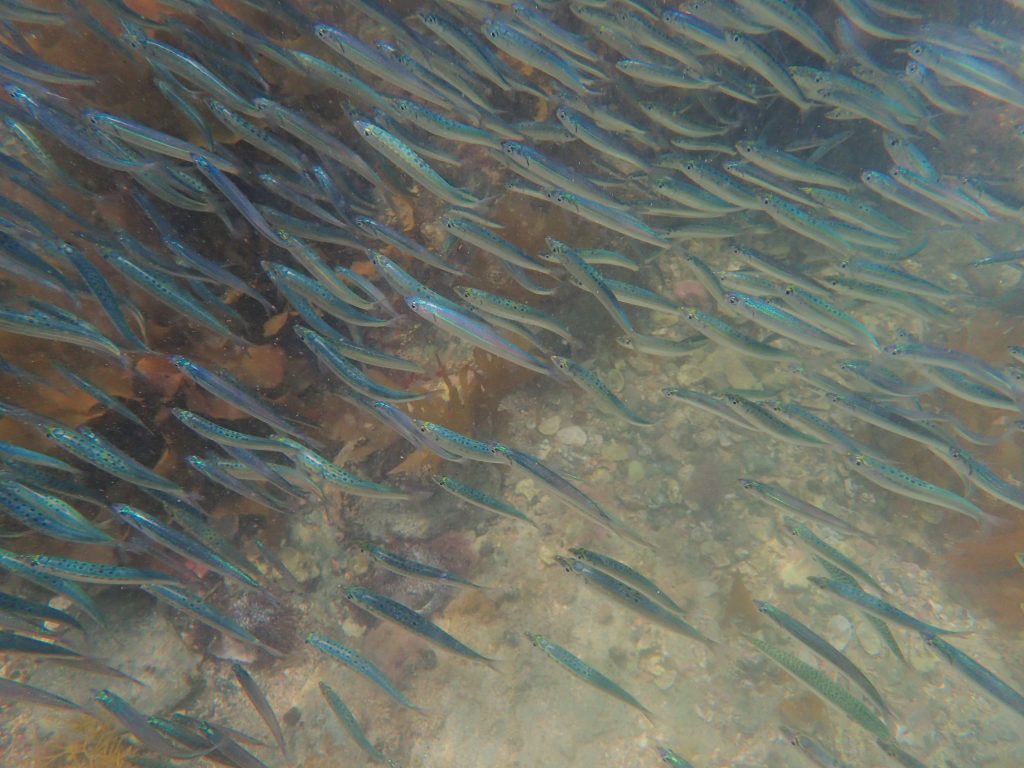
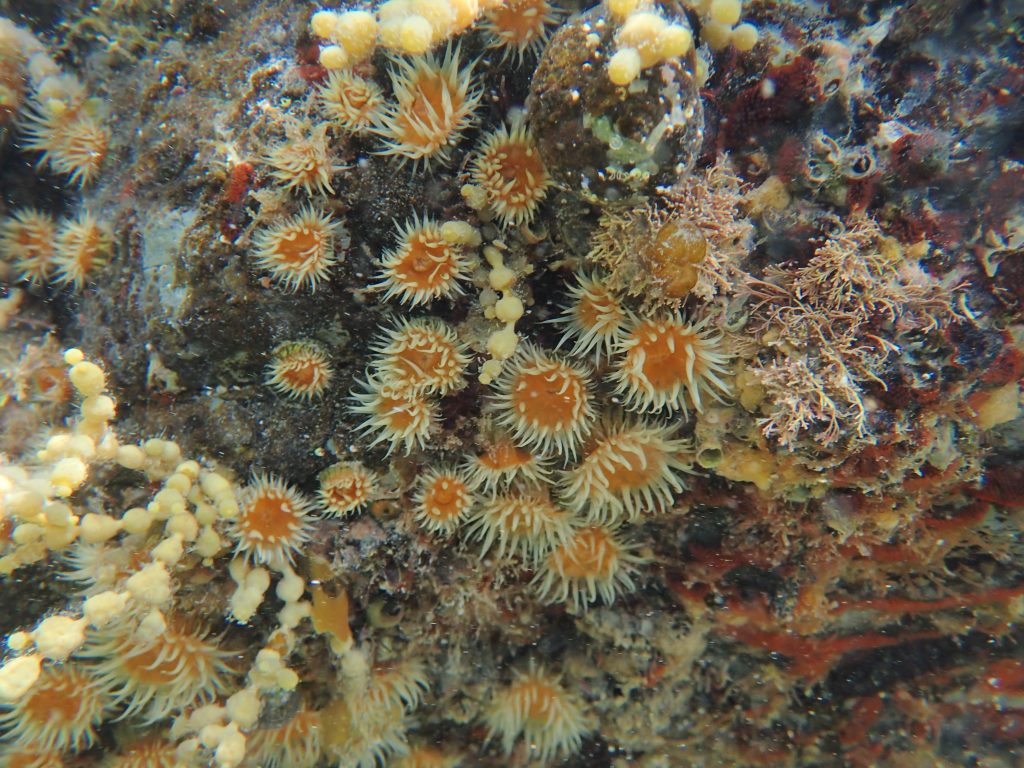
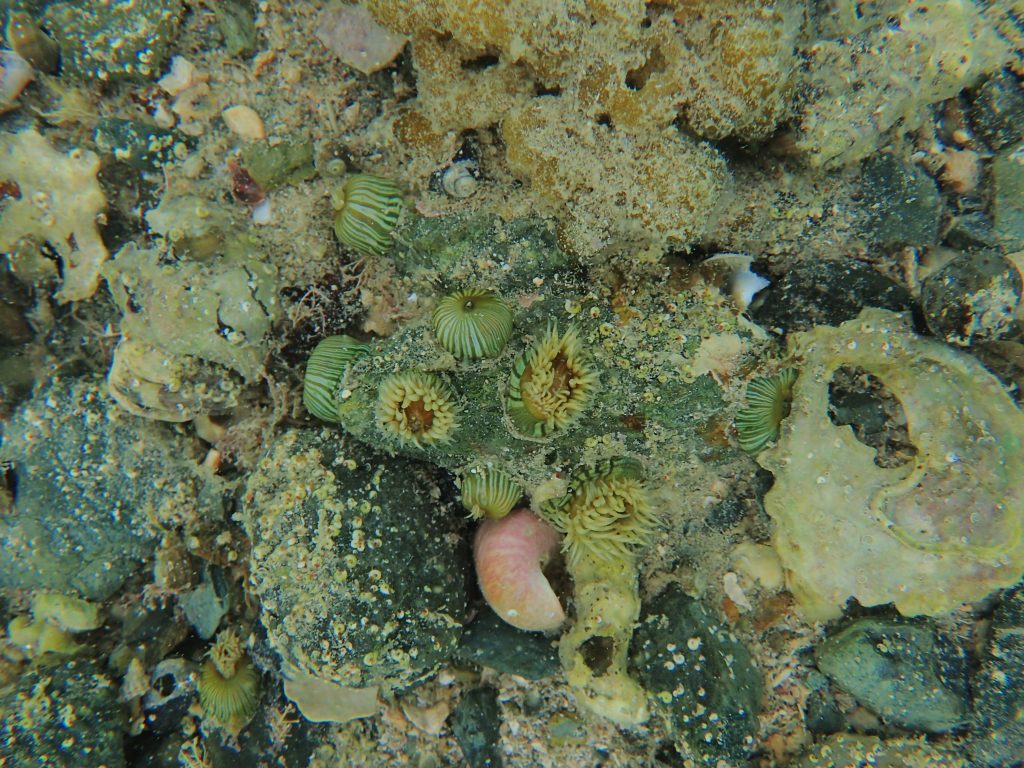
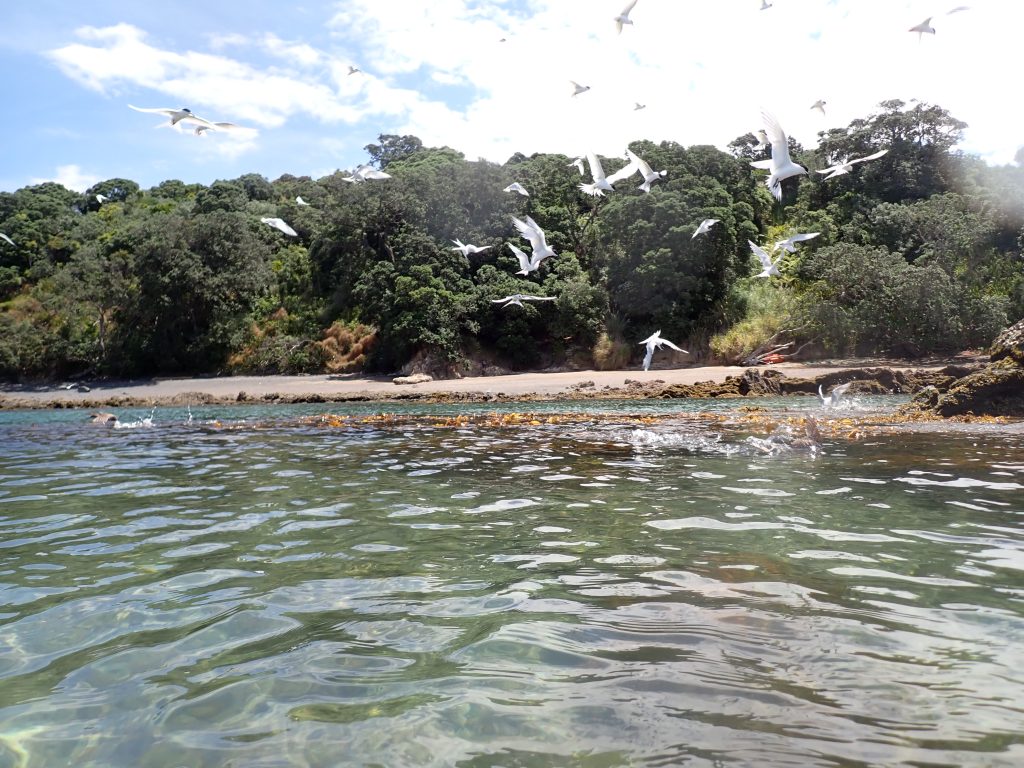
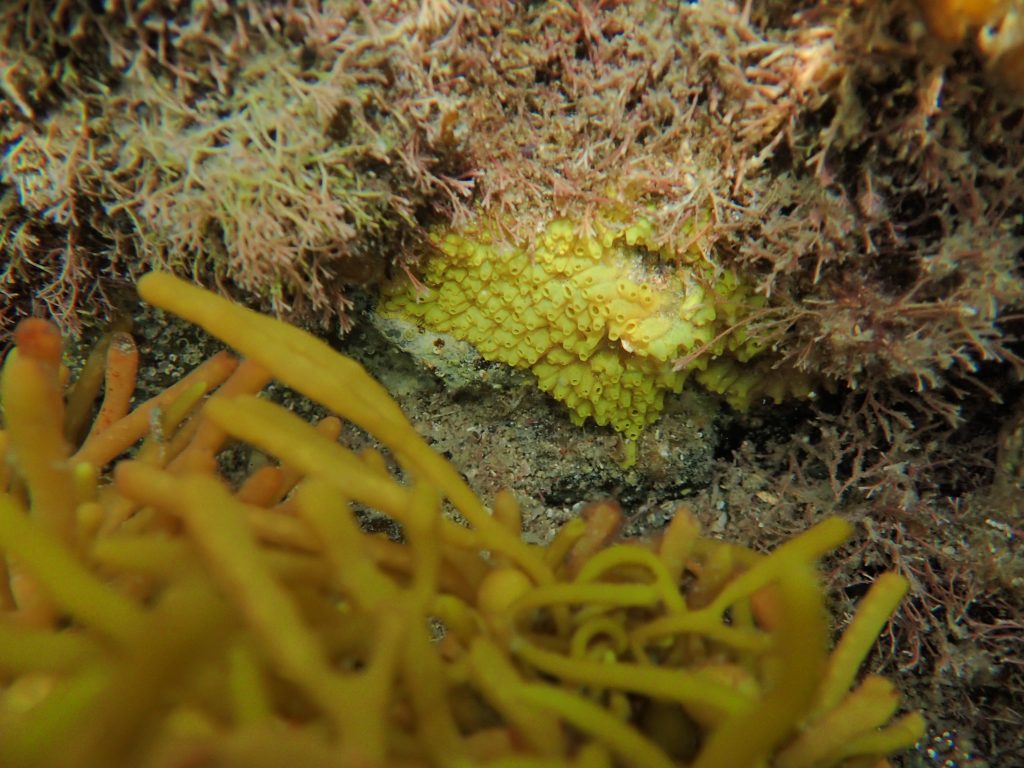
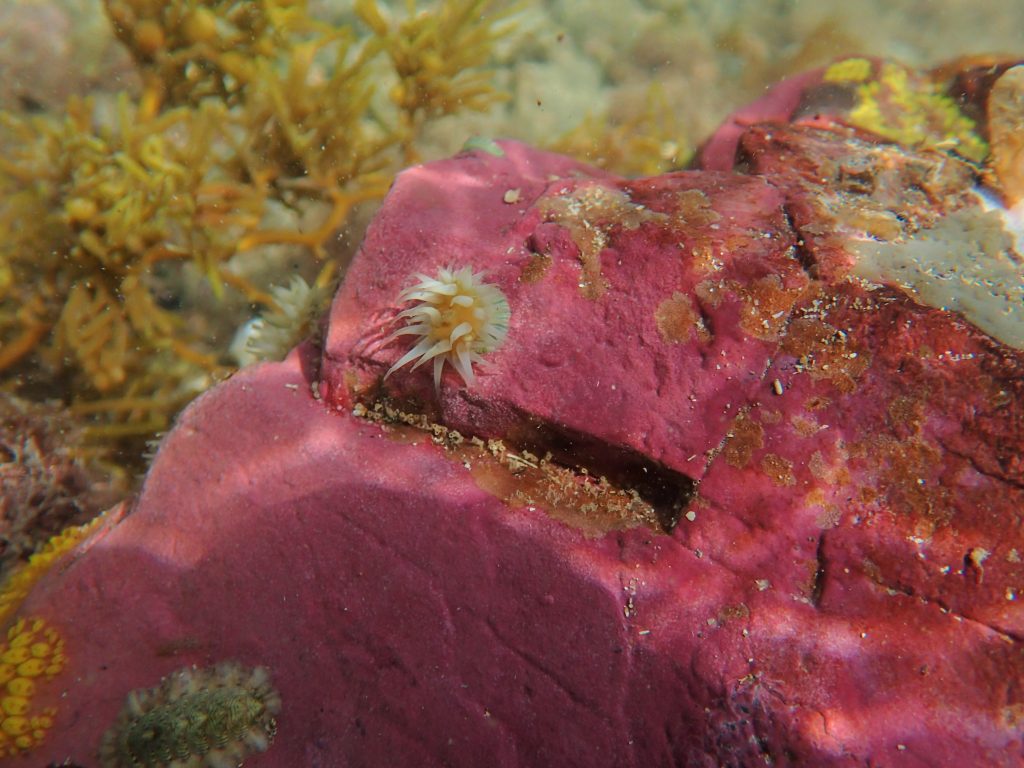
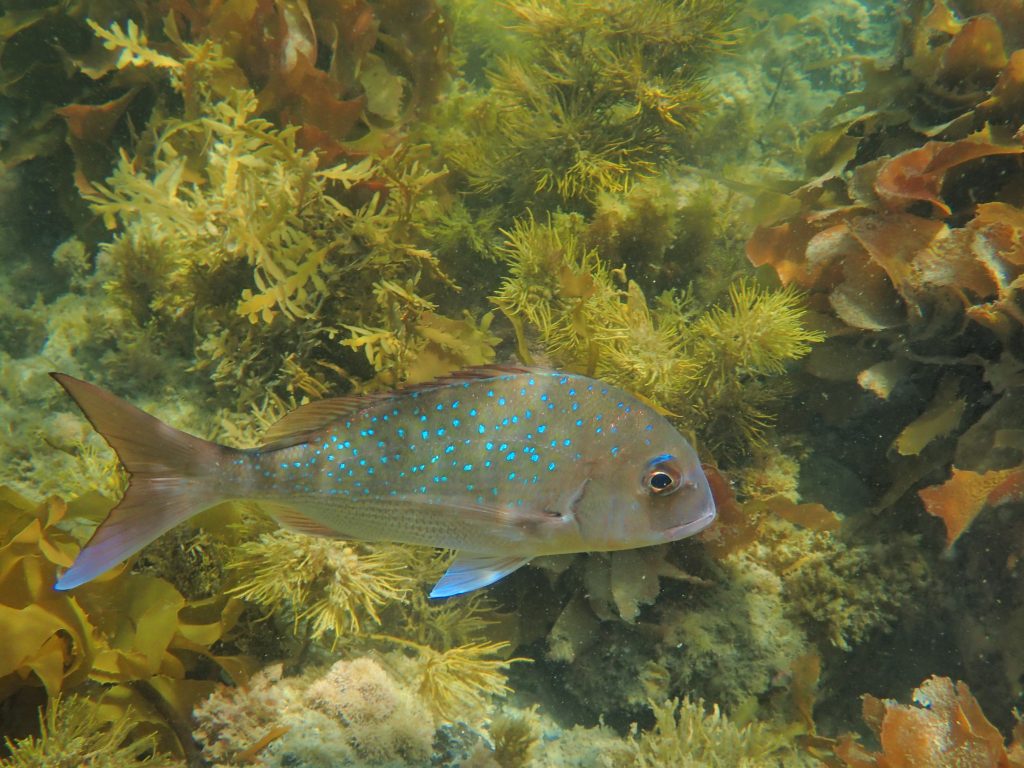
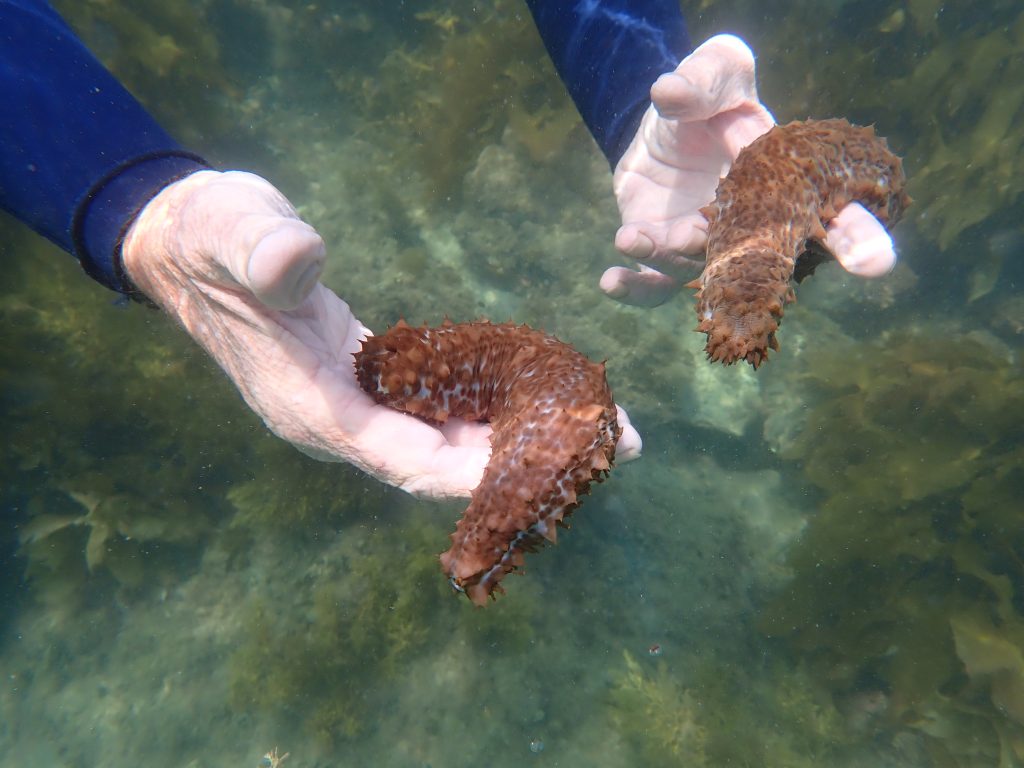
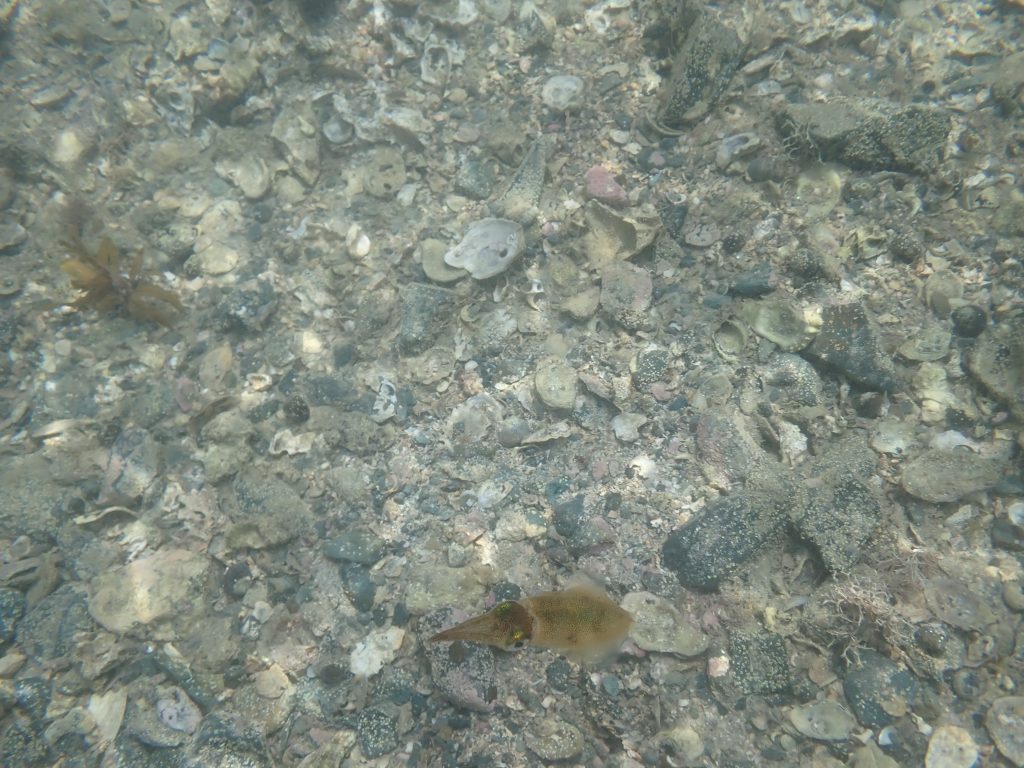
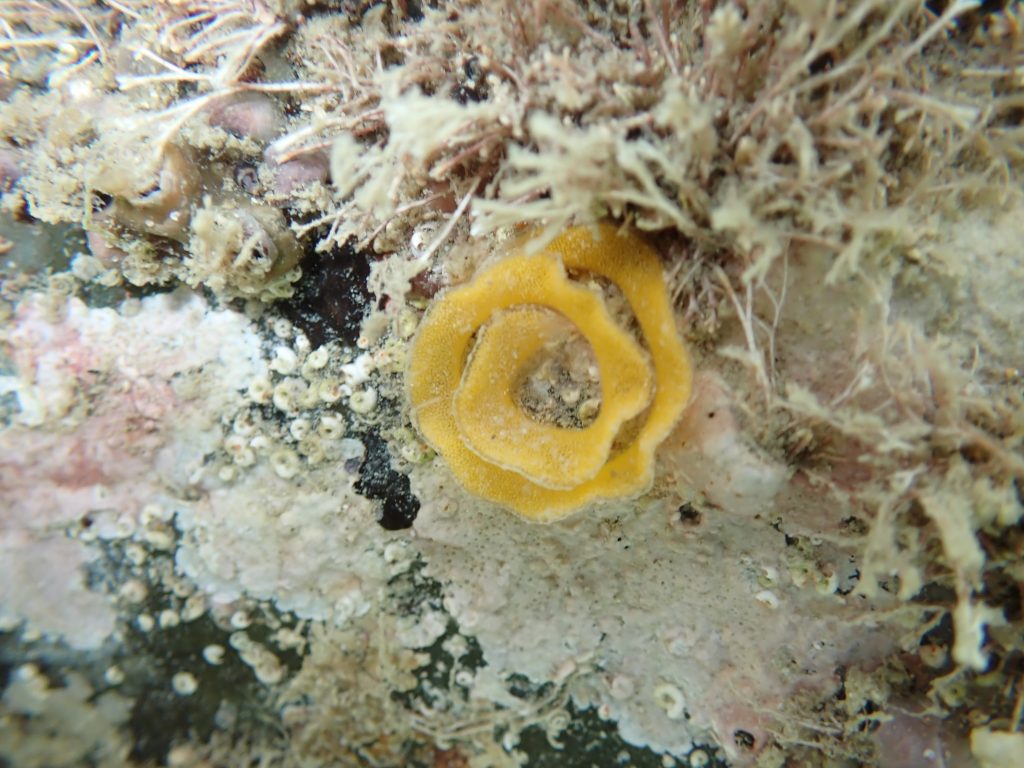
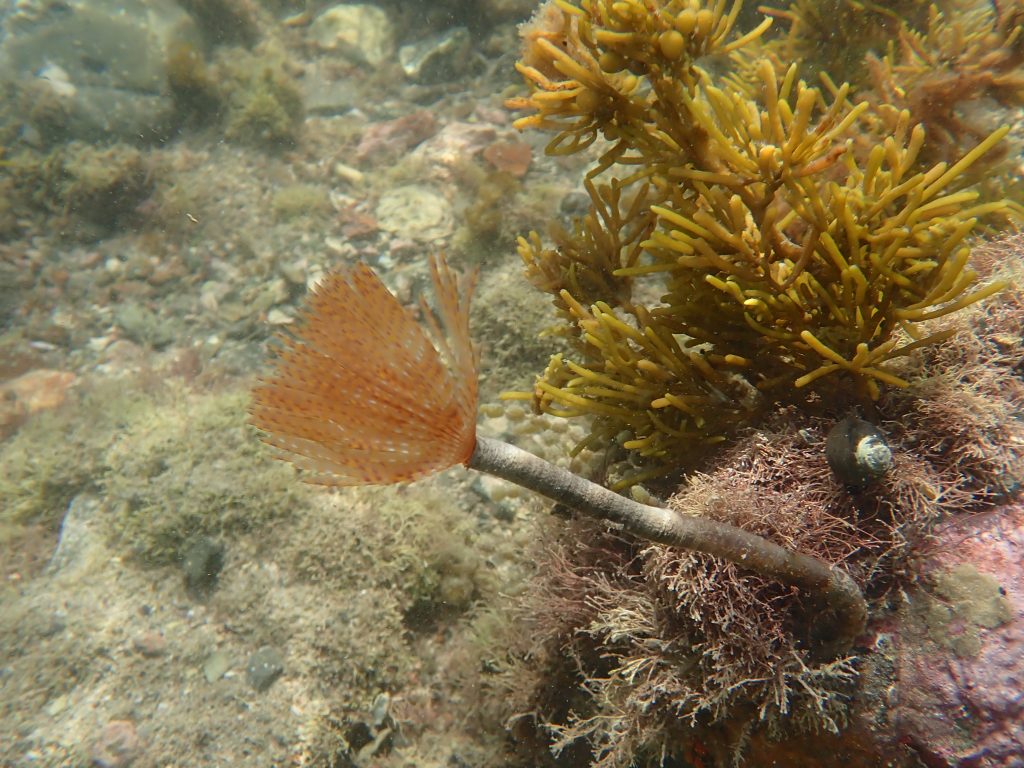
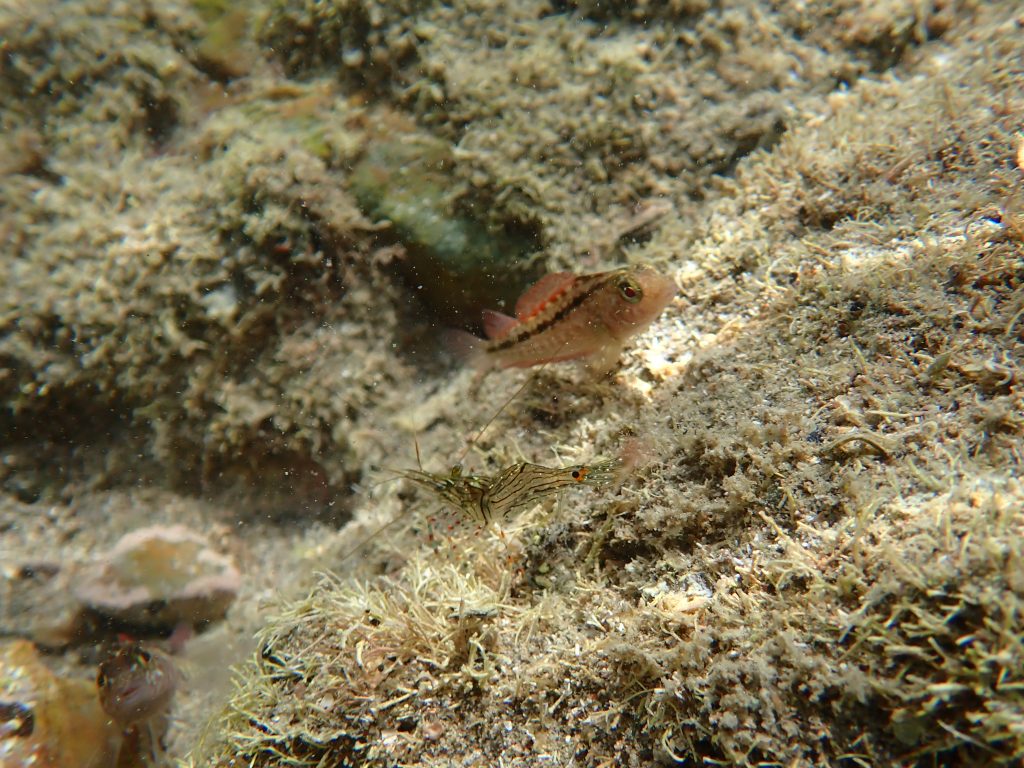
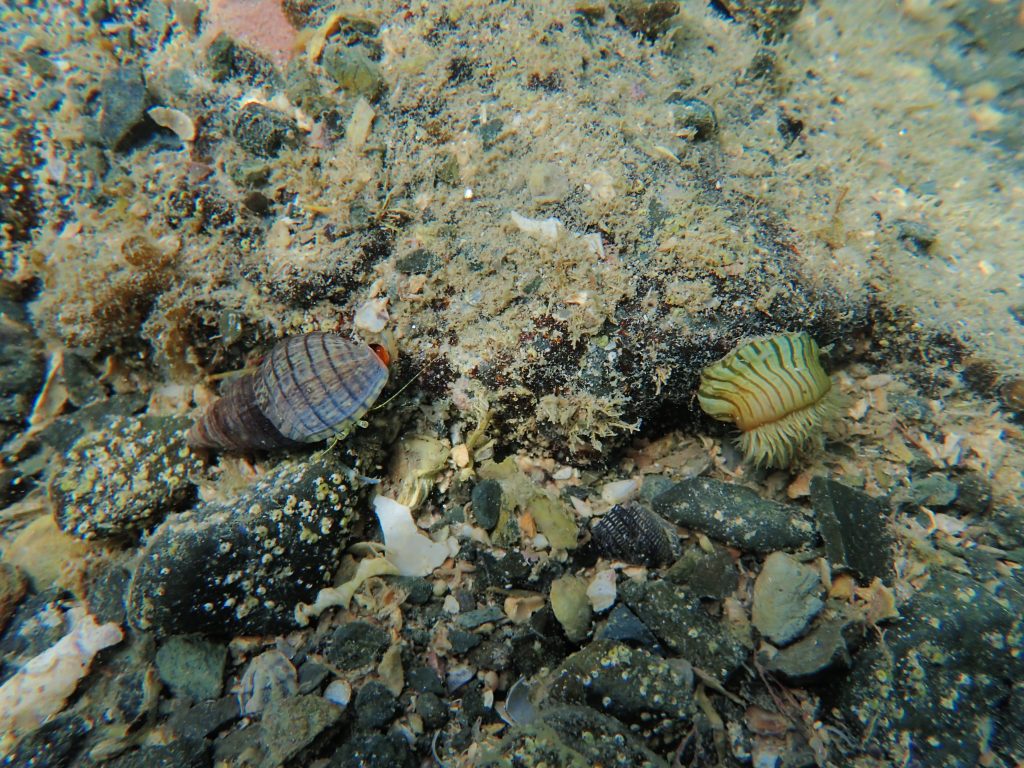
Edge of a huge bait ballA confusion of mackerel? and anchovy.Close up inside bait ball.Wall of white-striped sea anemone.Beautiful sea anemones.Close-up of a white-striped sea anemone.Triple fin feasting on kina.Nudibranch egg ribbon with some kind of warty sea slug photo-bombing.Two handsome black dorids.White-fronted terns feasting on a boil-up.Egg sacs, (I think!) Update, an invasive sea squirt, regretfully. 🙁Anemone and chiton on a lolly pink rock.A young snap.Parore and friends, coming at ya..Simon’s sea cucumber friends.A curious reef squid.One of 5, but alas my camera setting was set to close-up!Close up of egg ribbon from a nudibranch.EEEEEK!Polychaete worm.Triple-fin close-up.Aforementioned invasive sea squirts, anemones, and chitons.A solitary black dorid.A chiton selection.The large one is a violet chiton.Mediterranean fan worm. A marine pest.Glass shrimp and triple fin.Hermit crab and white-striped anemone.